182: Bookkeeping For Therapists Behind the Scenes: Gatekeeping vs Alignment

182: Bookkeeping For Therapists Behind the Scenes: Gatekeeping vs Alignment  
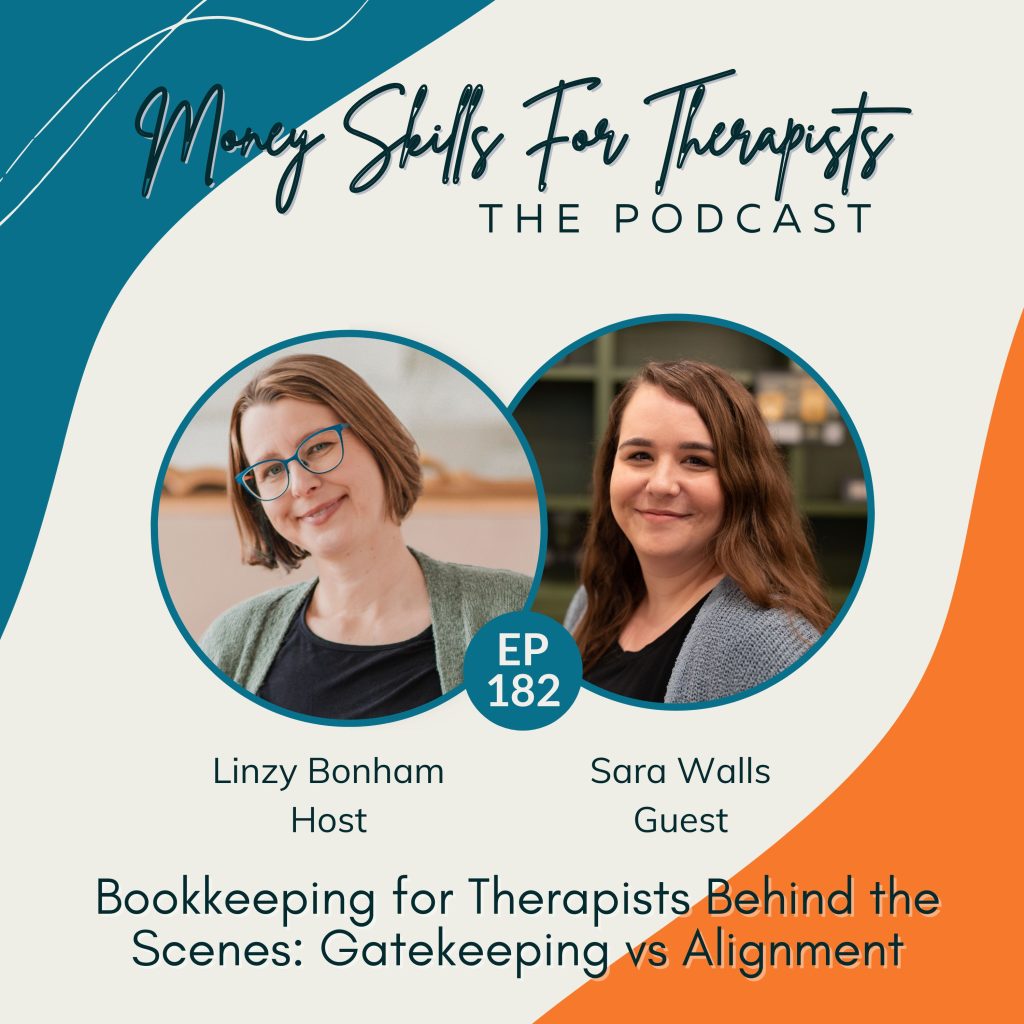
As therapists, we often see bookkeepers as the magicians of our business finances — the ones who keep everything organized, balanced, and under control. I’ve noticed, though, that many of us feel a gap between what our bookkeepers know and what we understand about how money actually works in our own practices. 

In this episode, I talk about some of the defensiveness and gatekeeping that can show up in the financial world — especially around bookkeeping — and how it mirrors what therapists and counselors experience when it comes to how our work is valued and compensated. 

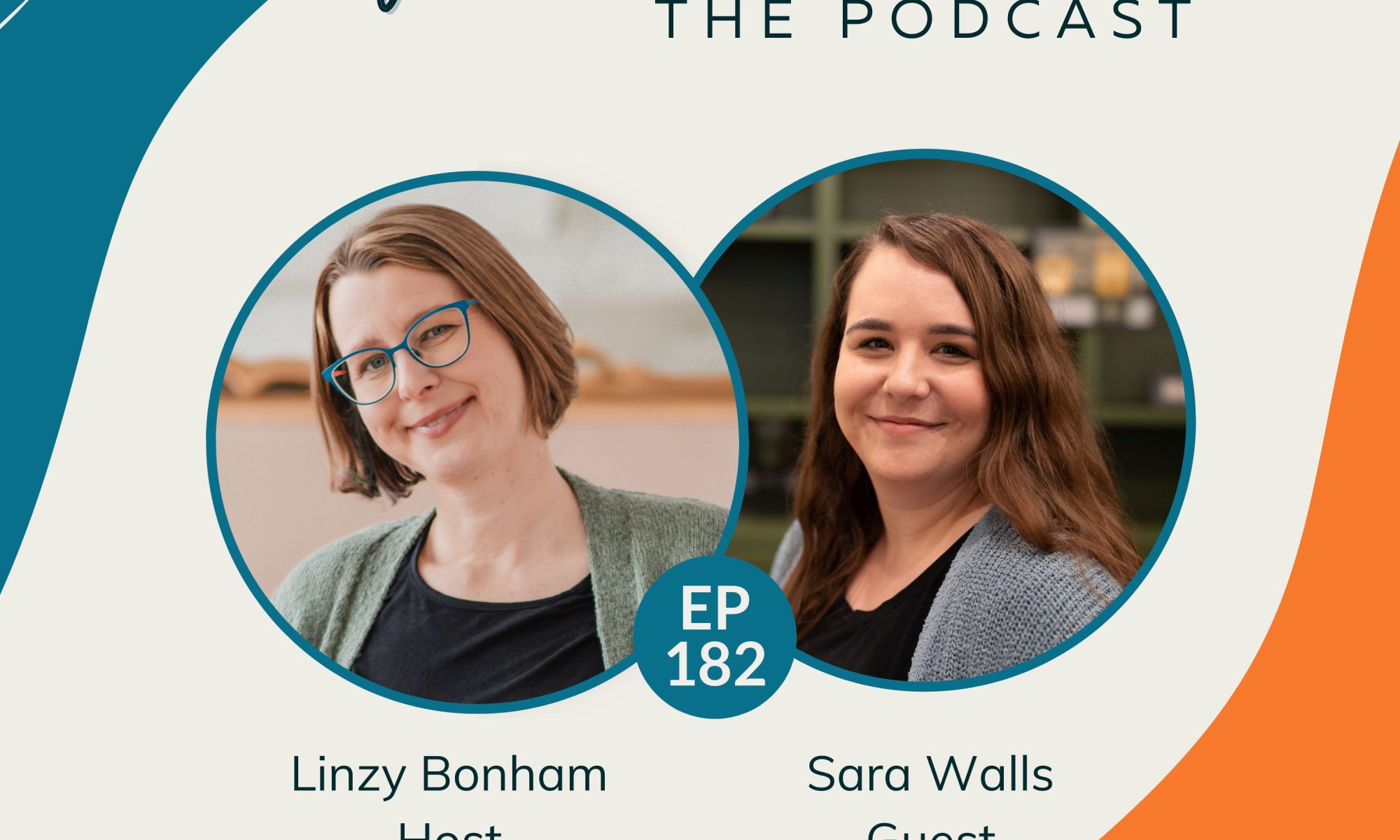
My guest, Sara Walls, has experienced both sides of that story. She started out as a therapist who needed help managing her practice finances and eventually became a bookkeeper who now supports other therapists with their money. Sara actually stepped away from private practice for a while, until she discovered tools like Profit First by Mike Michalowicz and my course, Money Skills for Therapists. Those resources helped her find clarity and confidence with her finances. 

One of Sara’s biggest realizations during that process is summed up beautifully in this quote: 

(00:06:17) “It became clear the more I got into it that what I didn’t know was how much I could actually afford to pay myself, when I could pay myself, how consistently I could pay myself, exactly how much I should be saving for taxes.” — Sara Walls 

In our conversation, Sara shares her journey from therapist to bookkeeper, practical financial habits that therapists and health practitioners in private practice can build, and some helpful ways to make yourself work on your money — especially if you have ADHD or are neurodivergent. 

Reducing Stress and Enhancing Financial Management with Accountability

(00:02:45) Bookkeepers’ Unrecognized Complexity in Accounting Profession 

(00:08:45) Therapist turned Bookkeeper shares financial insights 

(00:19:10) Bookkeepers: Undervalued and Underpaid Professionals 

(00:20:58) Routine Financial Engagement for Reduced Money Stress 

(00:28:44) Financial Co-Regulation for Enhanced Accountability 

(00:30:37) Financial Literacy Training for Therapists   

Establishing Open Lines of Communication & Good Financial Habits for Long-Term Success

Finding the right financial professional for your practice often means having an honest conversation or even an interview to get a feel for how transparent and open they are when you ask questions, and how they view your roles in the business relationship. Some bookkeepers may hold their cards close as a way to “protect” their value, while some practice owners might not realize just how complex the work of keeping finances straight really is. 

Here are a few ways you can start improving your bookkeeping and financial management skills right now in your therapy practice:  

  • Establish a financial routine: Regularly approach your finances, whether it’s checking your bank app, updating spreadsheets, or using accounting software like QuickBooks.  
  • Systemize & organize: Keep track of your income and expenses in a consistent way. A little automation and delegation can go a long way in helping you stay on top of things. 
  • Learn basic accounting: Understanding simple accounting concepts like debits and credits can give you confidence and make your financial decisions much easier. 
  • Find assistance & accountability: Work with a bookkeeper who understands the unique needs of therapists and small business owners, and who’s open, transparent, and happy to answer your questions. 
  • Avoid the “it’s a write-off!” trap: Deductions can be helpful, but make sure you’re also paying yourself consistently and setting aside enough for taxes. 
  • Evaluate your support: Take a moment to reflect on your current financial professionals. If they’re not responsive, transparent, or aligned with your goals, it might be time to find a bookkeeper, advisor, or CPA who’s a better fit. 


Get to Know Sara Walls:  

Sara Walls is a clinical social worker and entrepreneur based in Houston, Texas, who has expanded her professional repertoire to include a specialized bookkeeping service for therapists. A graduate of Money Skills for Therapists, Sara started Little Frog Financial, a year and a half ago to help fellow therapists and small business owners navigate the often-daunting world of financial management. Her personal experience with the financial challenges common in the therapeutic field has uniquely equipped her to assist others in overcoming similar obstacles.  

Follow Sara Walls:

Ready to feel confident with your money?

Are you a Solo Private Practice Owner?

I made this course just for you: Money Skills for Therapists. My signature course has been carefully designed to take therapists from money confusion, shame, and uncertainty – to calm and confidence. In this course I give you everything you need to create financial peace of mind as a therapist in solo private practice.

Want to learn more? Click here to register for my free masterclass, “The 4 Step Framework to Get Your Business Finances Totally in Order.”

This masterclass is your way to get a feel for my approach, learn exactly what I teach inside Money Skills for Therapists, and get your invite to join us in the course.

Are you a Group Practice Owner?

Money Skills for Group Practice Owners is a six-month course that takes you from feeling like an overworked, stressed and underpaid group practice owner, to being the confident and empowered financial leader of your group practice. Click here to learn more and join the waitlist.

Episode Transcript

 00:00:00 – Sara Walls 

But the thing with dishes and also the thing with money is that there’s going to be more dishes tomorrow or this afternoon. Yeah. So it’s not necessarily something that we can always kind of check off. It’s this thing that’s going to kind of keep coming. And so we have to figure out how to maybe have an ongoing relationship with it. Otherwise we get into that cycle right, where it piles up and it becomes this giant, overwhelming thing that feels terrible and we avoid it. And then we slog through it and it feels gross and horrible and we never want to do this again. 

00:00:39 – Linzy Bonham 

Exactly. Yes. Welcome to Money Skills for Therapists, the podcast that helps therapists and health practitioners in private practice go from money confusion and shame to calm clarity and confidence with their finances. If you’ve ever felt overwhelmed by numbers or avoided looking at your business money, you’re in the right place. Hi, I’m Linzy Bonham, therapist turned money coach and creator of Money Skills for Therapists. Before we jump in, check out my free On Demand masterclass. You’ll find the link in the show notes or@moneynutsandbolts.com under masterclass. It’s the best first step to finally feeling empowered with money in your private practice. Let’s get started. Hello and welcome back to the podcast. Today’s guest is Sara Walls. Sara Walls is a therapist and bookkeeper for therapists. She’s also a graduate of Money Skills for Therapists. So I had the pleasure of working with her a couple years ago, and since our work together, she has started doing this bookkeeping work for therapists, which is so exciting. So it’s so exciting to be able to have her on the podcast today and for me to hear more about what she’s built and the continued work that she’s done growing her financial skills since I last got to work with her. Today, Sara and I talk about her own journey of going from a therapist who was avoidant of money and overwhelmed and even ended up having to shut down her first version of her private practice because the money wasn’t working. Going from that to now. Being a bookkeeper for therapists, we talk about gatekeeping in the bookkeeping world and dig a little bit more into some of the dynamics in bookkeeping that can sometimes lead folks to maybe be a little bit defensive. We talk a little bit about experiencing some defensiveness and some gatekeeping from the financial world, but specifically talking about bookkeepers and some of the parallels between bookkeepers and how their work is valued and compensated and therapists and counselors and how our Work is also not always valued or well compensated. A disclaimer on this. We are talking about kind of like the, you know, a little bit of the. Maybe the dirt, the grist in the bookkeeping world. So if you’ve had an experience with a bookkeeper where bookkeepers have ever been defensive or kind of gatekeeping, not letting you really understand your numbers, we dig a little bit into some of the context that might inform those experiences. But also, of course, huge disclaimer. Many bookkeepers are not defensive and are lovely and willing to answer your questions. And that’s something for you to look for as you’re looking for financial professionals in general is people who are able to answer your questions clearly, be with you in your numbers, give you the communication that you need. So there are many great bookkeepers and accountants out there like that, Sara being one of them. But we dig into some of the context around bookkeeping and why sometimes bookkeepers, you know, it might be hard to be a bookkeeper sometimes. We also talk about what are some of the financial habits that therapists and health practitioners in private practice can develop and specifically how to make yourself work on your money if you have ADHD or are neurodivergent. So Sara herself shares a little bit about her experience and her learning from other people in the ADHD space and how that applies to money. Lots of great things that we covered today. Here is my conversation with Sara Wall. So, Sara, welcome to the podcast. 

00:04:18 – Sara Walls 

Thank you. I’m excited to be here. 

00:04:20 – Linzy Bonham 

I am very excited to have you here. I think that this is maybe the first time, maybe the first time on the podcast or in general that we’ve had, like, someone who I’ve got to see at the beginning of the journey and then has come back and been like, oh, hey, I built a financial business, which is like, so cool. So for folks listening, can you tell them just a little bit about yourself and what you do? 

00:04:44 – Sara Walls 

Yeah. Yeah. So my name is Sara Walls. I am a clinical social worker in Houston, Texas. I have a solo practice and I’m a grad of money skills for therapists. And about a year ago, well, given the timing of when this will come out. A year and a half ago, Sure. I started a bookkeeping business to support other therapists, other small business owners with getting their money in order and feeling better. 

00:05:16 – Linzy Bonham 

Yes. 

00:05:16 – Sara Walls 

About their money. 

00:05:17 – Linzy Bonham 

And you’re currently both ending. Do I understand that you have clinical clients and you also have bookkeeping clients who are other therapists? 

00:05:24 – Sara Walls 

Yes. 

00:05:24 – Linzy Bonham 

Okay. Okay. So you have, like, walked the journey and been in the same position as so many other therapists. Like, trying to figure out money, making mistakes, feeling overwhelmed. Can you share a little bit about that journey and, like, what finally shifted things for you with money? 

00:05:43 – Sara Walls 

Yeah, absolutely. So I kind of have like a part A and part B of my journey. Really. The first part was right after I got my provisional license. I was working for a group practice as a 1099 contractor and so set up my own LLC to run everything through that and thought I was doing okay. I kind of had a system to track my income and my expenses and those kinds of. Of things. It would pile up, I would avoid it here and there, but I’d kind of eventually catch up. But it became clear the more I got into it that what I didn’t know was how much I could actually afford to pay myself, when I could pay myself, how consistently I could pay myself, exactly how much I should be saving for taxes. And I also really fell into the, like, it’s a write off trap. Right. Like, I thought I was doing all of these good things by taking these trainings, and I even went on, like, conference trip across the country. I was like, I can write all this off. This is great. And while that was true and I did pay less in taxes, I also didn’t have money to, like, pay my bills and all of those things. 

00:07:04 – Linzy Bonham 

Yes, yes. 

00:07:06 – Sara Walls 

So, yeah, it eventually got to the point where I just decided I needed to go get a W2 paycheck agency job and just kind of, just kind of call it so that I could have some predictability on the personal side. 

00:07:23 – Linzy Bonham 

And I think a lot of therapists go through that journey. Like, I was recently at the aca, the American Counseling association with Diane, who coaches with us, and we were chatting with folks coming through the booth, and sometimes we’d be like, do you have a private practice? They’re like, I used to. Used to have a private practice. So, yeah, I think there is a segment of therapists who go into private practice and they’re like, whoa, whoa, whoa, whoa, whoa. And then like, back. Back out into. Into the W2 or the employee world again. 

00:07:50 – Sara Walls 

Yeah. Because it’s so much. 

00:07:52 – Linzy Bonham 

Yes. 

00:07:52 – Sara Walls 

There’s so much to learn. And we don’t really have. We don’t get a lot of that education, as you know, and as I’m sure has been talked about a lot on this podcast. But also it’s hard to know where to go sometimes, too. 

00:08:04 – Linzy Bonham 

Yes. Okay, so you got back into W2 land. 

00:08:08 – Sara Walls 

Yes. And then, long story short, a few years later, started to get an inkling to kind of give it a try again. And I can’t remember exactly how or why or when I ran across it, but I ran across your work and I ran across the Profit first book by Mike Michalowicz. And that was a game changer for me because it gave me a starting place, it gave me a structure on like, hey, maybe like about this much is how you should focus on paying yourself. About this much is what’s reasonable to spend on expenses. And so just having that kind of not like rigidity but just kind of a guideline, a place to start was really, really helpful for me and definitely shifted the success of the second go round. 

00:09:00 – Linzy Bonham 

Yes. Yeah. Having a framework. Because I think too, I think about how you were tracking. There’s certain things that are figureoutable in terms of the tracking is the details. So it’s like, okay, we can capture the details. I made this much and I spent this much. But this is how I remember feeling too. When I started in private practice, I was like, and then what is the grand picture? What is the bigger picture? And I felt that way too when I came across Profit first, which was actually right around the time I was starting this business is when I also came across profit first. I did a training with Tiffany McLean and Allison Perior in San Francisco. That was one of my, it’s a write off things. That was actually an excellent, excellent investment working with them, being like, my private practice is full. I can’t do more clinical work than I’m doing. I kind of want to help therapists with money. Ended up reaching out. Tiffany McLean ended up in their program and at their retreat they had like a financial person to like sit with. And a lot of people sat with the financial person and they were like, oh no, I have to do everything. But I was like, little Achiever went and sat with like the financial coach who’s like so lovely. And she went through her checklist and I was like, got it, got it, got it, got it, got it. My little, like a student. It’s a certain vibe. It’s not a great vibe. But then at the end she was like, okay, then you want to check out Profit First. She’s like, if you got all this stuff sorted out, you’re really going to want to read Profit First. And that’s when the book was quite new. Like it had only been around for maybe a year or two. And yeah, for me, when I, when I discovered Profit first, it also was like, okay, here’s the thing that I’ve been looking for which is that that broader logic to how money can and should move. And as you say, like, it’s a starting point. Right. It’s not. It’s not rigid. It doesn’t have to be rigid. Some people, I think, misunderstand that about profit first, but it gives you boundaries and guidance. 

00:10:51 – Sara Walls 

Yes. 

00:10:52 – Linzy Bonham 

Which is nice. We need that. 

00:10:53 – Sara Walls 

It is nice. Yes, it is nice.

00:10:55 – Linzy Bonham 

So the second go around, you were more successful. I’m hearing, like, my work, profit first. And I’m curious, like, where did you end up in that work that you ended up actually moving towards your own bookkeeping business? Because this is something that’s evolved, like since you and I worked together. So there’s a whole part of the story that I don’t know at all. 

00:11:13 – Sara Walls 

I’ll be honest. I think it’s always kind of been something in the back of my mind because even that first go round, I’ve always been kind of curious about this stuff and interested in this stuff. I’ve used YNAB, the you need a budget software for over 10 years and follow personal finance stuff on Instagram. So friends and colleagues have always kind of. I get questions. I get questions and I’ve enjoyed answering them and talking to them about it, right? 

00:11:42 – Linzy Bonham 

Yes. 

00:11:43 – Sara Walls 

But I think the turning point for me or the thing that really kind of kicked me in the butt, I guess, to really pursue this was in a networking community that I’m a part of. I got the opportunity to run a workshop. Basically. We had had some CPAs come talk, one of which Julie Harris, the Prophet first for therapist author. And my task was to kind of say, like, hey, we got all this great information from these CPAs. Now let’s maybe figure out what we can actually do with that or how we can actually put that into practice in our businesses. So I put together a little walkthrough of some profit first stuff and just had so much fun. My little, you know, socially anxious introvert self was not excited about, like giving a workshop about money stuff and talking to all these people, and I had a blast. 

00:12:40 – Linzy Bonham 

Yes. 

00:12:40 – Sara Walls 

So, yeah, decided like, maybe I need to look into this more and figure things out. So I took some bookkeeping classes, some accounting classes, got some certifications, and really loved debits and credits, which I feel like makes me really weird. 

00:13:02 – Linzy Bonham 

Yeah, you’re a unique breed of therapist, you know. Welcome to our little club. 

00:13:07 – Sara Walls 

Yes. Yes. Yeah, yeah. Weird in the therapy world and also weird in the finance world. 

00:13:12 – Linzy Bonham 

True story. 

00:13:12 – Sara Walls 

Yeah, it’s fun. So, yeah, when I was like, if I’m liking This. And I’ve heard a lot of people hate debits and credits. It’s probably a sign I need to, like, lean into this. 

00:13:24 – Linzy Bonham 

Totally. Yeah. I think in business, that’s often an area of opportunity when you’re like, what? You guys hate this? 

00:13:30 – Sara Walls 

Really? 

00:13:31 – Linzy Bonham 

This is so fun. Like, okay, all right, you want me to talk about this? I feel like that with the work that I do all the time at this point where it’s like, I get to do a call and we just get to talk about money. You’re paying me for this. This is so great. So, yeah, it’s a sign of opportunity in business. So thinking about your clients that you work with, like, I’m curious, what have you seen change for them when they get the right booking keeping support? Because I also know sometimes folks have maybe worked with financial professionals who aren’t a great fit. That’s actually something that comes up a lot in both money skills for therapists and money skills for group practice owners. Is sometimes folks having to reassess, like, oh, my bookkeeper never replies to me, or I asked her this question and she just got really defensive and gave me this evasive answer. And sometimes there is this kind of come to Jesus that ends up having to happen about that relationship of like, oh, is this actually the right fit for me? And if it’s not having to find somebody else for the folks that are working with you, where it is a right fit and obviously you get what they do. Being a therapist, what do you see change for people when they find the right bookkeeper? 

00:14:39 – Sara Walls 

I think a few things. One is just kind of. I mean, very broadly, just how they feel about their books and about their money and their business finances. There’s. There can be this kind of. I’m reluctant to really paint this in broad strokes, but I guess a flavor of gatekeepiness sometimes from some folks in the accounting world. 

00:15:01 – Linzy Bonham 

Don’t be reluctant. It’s the truth speak truth to power. 

00:15:03 – Sara Walls 

All right. Yeah, yeah. Some gatekeepiness, right? 

00:15:06 – Linzy Bonham 

Yeah.

00:15:08 – Sara Walls 

A lot of jargon or just a. I don’t know, it may not feel great to ask questions. And so once folks feel like they can ask those questions, I don’t know, it just kind of unlocks something. It unlocks that empowerment or just confidence that, like, oh, okay, I can understand this. This is not a super complicated thing that I’m not smart enough to understand.

00:15:34 – Linzy Bonham 

And I do see that get activated a lot in folks when they do encounter gatekeeping and jargon. Sometimes, like, I think about this more with, like, Financial advisors. But I think about, like, you know, the, like, old white dude behind the big oak desk, which, like, let’s be fair, it’s a nice desk. But it’s like that, like, this is the space between you and I, you know? And, like, people who, like, end up working with their father’s financial advisor, there’s a certain, like, kind of archetypical story. There’s. But where it’s just almost like they want to pat you in the head and be like, don’t worry about that little girl. 

00:16:02 – Sara Walls 

I got this.

00:16:03 – Linzy Bonham 

Which is such fucking bullshit. And I do think that shows up in other spaces in different ways. That’s not what I’ve experienced as more of the flavor in accounting and bookkeeping. But what I do see. And let’s dig into the gatekeeping. I know you were reluctant, but I really want to talk about the gatekeeping. What I do see is this kind of. Other people couldn’t possibly understand this. You can’t understand this or this. Like, almost like. Like it’s a science that is complex. But I would say that bookkeeping is more of an art. Controversial statement, I’m sure, for bookkeepers, none of whom listen to this podcast, except a couple of lovely ones that I can think of who do, like, therapists and bookkeeping combo. But a little bit of this defensiveness around their work that then by putting up a gatekeeper, like the slamming down the gate, they don’t have to answer questions. I’m curious for you, like, what do you think that is? Where does that come from? Because we experience the slamming of the gate and the feeling of like, oh, I must not be smart enough to understand this. What do you think is happening on the other side, as somebody who has a foot in each world. 

00:17:11 – Sara Walls 

Oh, that’s a really good question. That’s a really good question. And that’s one that I’m gonna have to think about for a second. I do think in some ways, bookkeepers maybe are similar to therapists in that I say we. I guess I’m part of both worlds. Sometimes feel a little devalued by clients sometimes. Or by CPAs and tax preparers and people kind of higher up on the ladder in the accounting world. 

00:17:40 – Linzy Bonham 

Yeah, yeah, yeah. 

00:17:41 – Sara Walls 

And so there can be this kind of. Yeah. Defensiveness or protectiveness or like, I need to prove myself or justify my worth or my knowledge or something. Right. 

00:17:51 – Linzy Bonham 

Yeah. And I totally see that. Like. And I’ve sometimes talked to my students about bookkeepers. I think bookkeepers are. They’re used to being ignored by their clients, which also can’t be a good feeling. Right. To be like, you know, you reach out to a client to be like, hey, I’m like missing this thing, or da, da, da, hey. And they just like, they see your email and they’re like, so I can also see you there. Where there would be like, that’s not a fun position to be in as a professional who’s trying to help, because again, you’re helping somebody with something that they don’t enjoy and they find stressful, which is often why they have outsource that task in the first place. But I can also see how relationally that would be a hard position to be in as a bookkeeper, where you’re chasing people and your clients are kind of resentful, or resentful is not the right word. They’re a bit scared of you. You make them do hard things. It kind of makes me think of dentists, right? Where it’s like, nobody is like, yeah, I’m going to the dentist today. Although my dentist has a really nice office and they give you hand massages. Although the hand massages have deteriorated in quality over time, I do have to say. But most people fear going to the dentist. And it’s the same thing. Like, dentists are depressed because nobody’s happy to see you and you’re doing things that are hard. And like, I do wonder if there’s a dentist bookkeeper overlap in that sense. Although dentists get paid way more than you folks, so at least they have like their BMW to drive around to feel better. 

00:19:10 – Sara Walls 

But. 

00:19:10 – Linzy Bonham 

Yeah, exactly. I would argue that. I think, like, bookkeeping is an underpaid profession. 

00:19:14 – Sara Walls 

Yeah. 

00:19:15 – Linzy Bonham 

I think it’s kind of like the counseling of the accounting world. 

00:19:19 – Sara Walls 

100%. 100%. There’s a lot of talk in bookkeeping groups, too, about is your fee really supporting you and your business. 

00:19:26 – Linzy Bonham 

Yeah, sometimes the math seems really bad to me. If I even think about my bookkeepers and what I pay them, which is a pretty typical rate. It’s not a low rate, it’s not a high rate. I’m like, wow, how many clients do they have to have to make the numbers of their business work? And it must be a ton for their particular business that I’m thinking about where you have the head bookkeeper, the owner of the company, and then there’s like three different people I talk to. So that’s a lot of humans. And so, yeah, it seems to be a business where, generally speaking, those services are not highly valued and therefore there’s not A lot of compensation for those services, which I’m sure. Yeah. Also contributes to defensiveness or a lack of goodwill maybe, on the part of bookkeepers. Is that fair to say? 

00:20:09 – Sara Walls 

I think that is fair to say. And I also think, too, there is maybe, I don’t know, feeling misunderstood or feeling sometimes there maybe clients are oversimplifying their understanding just a little bit. Right. Like, I’m not trying to make bookkeeping out to be this complicated thing, but when I did kind of lean in and take some of those accounting classes, I was like, oh, okay. There are some more complex things that I didn’t know. I didn’t know. 

00:20:37 – Linzy Bonham 

That’s it. Yeah, certainly. And I think also as soon as you get into any kind of scale in your business or more complicated incorporation statuses. 

00:20:46 – Sara Walls 

Yeah. 

00:20:46 – Linzy Bonham 

There are some more complicated pieces where. Exactly. Like, you don’t know what you don’t know. And so, yeah, I could see clients not necessarily understanding what you’re doing for them because they don’t speak that language. 

00:20:56 – Sara Walls 

Exactly. Yeah, yeah, yeah. 

00:20:58 – Linzy Bonham 

So for therapists who are listening, first of all, takeaway message. Bookkeepers are people, too. Yeah. And thinking maybe, you know, there’s. Yeah. That piece of just, you know, just appreciating what your bookkeeper does for you. They’re doing things that you don’t like to do. What are some financial habits that you would suggest for folks listening, whether or not they’re considering working with a bookkeeper? What do you see as some good financial habits for therapists to put in place to bring down some of the stress around money? 

00:21:27 – Sara Walls 

Really just finding a way to regularly approach your money in some way, whether that’s opening your bank app and looking at it or attending to your spreadsheet or your QuickBooks or whatever. I think having that routine or that consistency does a couple of things. I mean, they’re like little exposures. Right. To kind of help with the anxiety. And also, too, when we do it more, we know what we’re doing. For example, there’s this great decluttering person that I follow. Her name is Dana K. White, and she’s kind of in the ADHD world, and she talks about neurodivergent folks tendency to maybe let the dishes pile up here and there until they become this, like, giant project. And then we have this big festival where we clean all the dishes and spend all day, like, I’m gonna do the thing. 

00:22:25 – Linzy Bonham 

Yes, totally. Totally. 

00:22:26 – Sara Walls 

Yeah. And it’s kind of clunky because we’re like, oh, we’re out of dish soap. Or, like, where did I put the dish wand again? 

00:22:34 – Linzy Bonham 

And also, there’s so many dishes. Where do you stack them all? And you have to start. Yeah, it’s a process. Not a process. It’s a massive project by that project. 

00:22:42 – Sara Walls 

Yes, exactly. Yeah. It’s a project. And sometimes it can be really satisfying to check off the project and complete it and get it off our list. But the thing with dishes and also the thing with money is that there’s gonna be more dishes tomorrow. 

00:22:57 – Linzy Bonham 

Yes. Yes. 

00:22:58 – Sara Walls 

Or this afternoon. Yeah. So it’s not necessarily something that we can always kind of check off. It’s this thing that’s going to kind of keep coming. And so we have to figure out how to maybe have an ongoing relationship with it. Otherwise, we get into that cycle, right. Where it, like, piles up and it becomes this, like, giant, overwhelming thing that feels terrible and we avoid it, and then we slog through it, and it feels gross and horrible. We never want to do this again. 

00:23:30 – Linzy Bonham 

Exactly. Yes. Which is often tax time for therapists. 

00:23:33 – Sara Walls 

Yes. 

00:23:34 – Linzy Bonham 

That’s when that happens. 

00:23:35 – Sara Walls 

Exactly. 

00:23:36 – Linzy Bonham 

Yeah. 

00:23:36 – Sara Walls 

And then we’ve done all this work, so we’ve earned a break from it. 

00:23:40 – Linzy Bonham 

True. Yes, totally.

00:23:43 – Sara Walls 

We’ll deal with it later.

00:23:44 – Linzy Bonham 

Yeah, yeah. 

00:23:44 – Sara Walls 

You’ll be fine. 

00:23:45 – Linzy Bonham 

Yes. 

00:23:45 – Sara Walls 

And it repeats. Right, so. Right. 

00:23:47 – Linzy Bonham 

So breaking it down into those little, little steps. And I am curious. You mentioned ADHD neurodivergence. I have found over the last, I’m gonna say, two years of money skills for therapists, maybe three. We have so, so, so many folks coming to the course with new ADHD diagnoses. Women in their 30s and 40s. So for them, not only is it they’re in the course because they want to attend to their money, but there’s also this, like. Okay, now how do I work with this? As somebody with adhd, my brain is wired in a specific way that makes these kinds of tasks hard to get to. So I think, especially thinking of folks with neurodivergence, what do you suggest as a way to actually sit down and do the thing? Because I’m not neurodivergent. And so this is something that I’m surrounded by ADHD folks. They’re my peeps. But because I’m like, the grounded, anchored one who’s less spontaneous and creative. So I am curious. What do you suggest for folks who maybe are getting to know themselves in this new way? How do you make yourself do the thing that you don’t want to do? Specifically talking about money?

00:24:52 – Sara Walls 

In this case, I’ll just share something that’s been Helpful for me is actually one of the things that I started doing in your program. Just kind of getting with somebody else to work on it together, having that little bit of accountability, some co regulation, too, and just kind of a designated time to focus on it. Notes is my huge nemesis. And so I have actually, after this, a designated time with a colleague of mine to focus on notes. And if you can find a therapist friend to focus on money with and do it together, that can really be a game changer. That’s kind of part of what I try to offer through my services, too, is after I complete someone’s books, I send them information. I make a little video with, hey, here’s your numbers and here’s what’s going on. And also, here’s my calendar. Let’s see if we can get some time to look at this together. 

00:25:50 – Linzy Bonham 

Yeah. Because I hear their connection, coagulation. I also think about shame reduction. Right. Of just like, also, you know, when. When the dishes pile up and you’re working it on your own, it’s also kind of this thing where you’re trying to, like, reset, hide the evidence. Whereas when you work on things with somebody else, then it takes some of the charge out of it. I think when you’re just like, okay, I’m working on my thing, you’re working on your thing. Because this is a thing that we all have to do and making that progress. We have an accountability buddy duo finishing up money skills for therapist right now, who. They both took time off in the program, actually, and they’ve both come back at the same time. And they are, like, possibly the cutest accountability partnership I have imagined. And there are two people. Christelle matched them. I can’t claim any of the glory here, but I was just saying to one of them yesterday, I was like, you two are the best accountability partnership I think I’ve ever seen. They meet twice a week. I know they meet for, like, half an hour on Tuesdays to, like, be connected. And then they meet longer later in the week, I think to actually do money stuff together, but. And they’re two people from, like, different walks of life. Different again, they’re not people I would have guessed. But when you find that person who you’re just like, yeah, let’s cheer each other on. Let’s be there for each other. And, hey, you were gonna work on that scary tax form. How’s that going? Or, like, did you call your bookkeeper like you said, it’s so powerful to get you out of. I think that frozen shame kind of Space that we can all get into with different things. So, yeah, I’m hearing the power of CO regulation. Body doubling is the phrase I hear a lot in the ADHD space. That’s a great tip. Sarah Walls, I have one more question for you. 

00:27:25 – Sara Walls 

Yes. 

00:27:25 – Linzy Bonham 

Your business is called Little Frog Bookkeeping, which is the cutest name. Tell me why. Why is it called that? 

00:27:32 – Sara Walls 

Yes, yes, yes. So it actually is a nickname I’ve had for my son. Yeah, I just, whenever I think of it, I have this image. There’s this picture of him just kind of laying on my chest with his little legs tucked under him, his little arms tucked in like a little tree frog. Yeah, yeah. And it was when he showed up that I started feeling like maybe I should start to look into this, this more. And. Cause growing up, I was always a big math and science nerd, and so that kind of pulled toward that younger side of myself. 

00:28:05 – Linzy Bonham 

Yes. Bringing it around again. 

00:28:07 – Sara Walls 

Yeah, I love that. 

00:28:08 – Linzy Bonham 

Okay, so for folks who are interested in learning more about you, learning about your services, where can they find you?

00:28:14 – Sara Walls 

Yeah, so my website is littlefrogfinancial.com I also spend some time on Instagram and LinkedIn here and there. Arawallslcsw. Yeah, those are probably the best places to find me. 

00:28:29 – Linzy Bonham 

Thank you, Sarah, for coming on the podcast. It was lovely to see you again today.

00:28:33 – Sara Walls 

Yeah, you too, Linzy. Thanks so much for having me. 

00:28:44 – Linzy Bonham 

Reflecting on the conversation with Sara, something that sticks out to me is both in our conversation of having a bookkeeper and getting that help and her talking about her experience of therapists becoming more confident in their numbers when they have the right person helping them, but also thinking about our conversation about co regulation, about working on your finances with somebody else, like finding an accountability buddy, a business buddy that you can work with.

00:29:10 – Linzy Bonham 

Both of these things make me think about just the importance of connection around money. You know, money can often be this overly personal, kind of like siloed experience where we each feel like we’re alone trying to figure out how to make money work. But we’re all doing that. Every single one of us has to manage money and figure out how to make it worked for us. So bringing other folks that you like and trust into your financial world, getting their. Whether it’s their. Their literal help with, you know, your bookkeeping, getting your. Your finances organized so that, you know, tax time is easier, whether it’s having somebody sit with you as you look at your numbers, make decisions around them, learn about money breaking down, that. 

00:29:50 – Linzy Bonham 

That shame and isolation around money is so. So so important and something that so few of us actually do. So I think that’s a really valuable takeaway from this conversation with Sarah, which is just think about how you can bring more support and connection into your relationship with money. Whether that’s hiring the right professional, maybe looking around for a different professional if you find that yours does not give you that sense of like being supported. And also think about who are people in your life that you can bring into your relationship with money more, who can support support you in you working on that relationship, whether that’s a business buddy or a partner or spouse or a friend, even just like maybe sitting and doing your taxes together at your dining room table with some fun music playing rather than it being this kind of dark, lonely experience. 

00:30:37 – Linzy Bonham 

So, Thanks so much for joining me today. I’m Linzy Bonham, therapist turned money coach and creator of Money Skills for Therapists. If you’re ready to go. From any confusion and shame to feeling clear and empowered, My Free On Masterclass is the best place to start. You’ll learn my four-step framework to get your private practice finances finally working for you. Register today using the link in the show notes or go to moneynutsandbolts.com under masterclass. I look forward to supporting you. 


Picture of Hi, I'm Linzy

Hi, I'm Linzy

I’m a therapist in private practice turned money coach, and the creator of Money Skills for Therapists. I help therapists and health practitioners in private practice feel calm and in control of their finances.

Latest Episodes

As therapists, many of us feel a deep tension when it comes to pricing—especially when we’re creating group offers, workshops, or professional-facing experiences during uncertain social, political, and economic times.

In this coaching episode, I sit down with trauma therapist Kim Torrence to explore what really comes up when we try to assign value to our work: fears about accessibility, old beliefs about service and self-sacrifice, money shame, and the pressure to “get it right” before we ever put an offer out into the world.

Listen to this episode »

As we begin to take our financial needs seriously—raising fees, setting boundaries, and valuing our work—those shifts don’t stay contained to our businesses. They often ripple into our personal lives, especially our friendships. In this episode, I talk about what can happen when we move from self-sacrifice to self-advocacy, and how that transition can quietly (or painfully) change the dynamics of the relationships we’ve built.

Listen to this episode »

In this coaching-style episode, I sit down with Colleen Barrows, a perinatal mental health therapist, mom of two young children, and graduate of Money Skills for Therapists. Together, we walk through the very real tension Colleen is feeling between maintaining financial stability as the primary breadwinner, managing most of the household responsibilities, and wanting more meaningful one-on-one time with her kids—while also nurturing a creative passion project, which will help therapists and postpartum women, that she hopes may one day provide her with passive income.

Listen to this episode »
© Copyright 2026 | Money Nuts & Bolts Consulting Inc. | All Rights Reserved
				
					console.log( 'Code is Poetry' );


181: How ADD Symptoms Affect Your Money and What to Do About It

181: How ADD Symptoms Affect Your Money and What to Do About It 

If you feel like focus, organization, and impulsivity are some of your biggest challenges to managing your finances well, or that procrastination or avoidant behaviors sabotage your intentions with money, this episode will help ease the frustration.  

In the last couple years, I have had this surge of students who have had recent ADD diagnoses. These are usually women, usually being diagnosed in their late 30s or in their 40s. Since ADD doesn’t present the same way for girls as it does for boys during the elementary years, many young girls went undiagnosed in the 90s and have been silently struggling with the symptoms their entire lives.  

So, in this episode, I talk about why ADD makes money so much harder, and how you can handle this challenge with executive functioning. 

Overcoming Executive Functioning Challenges in Financial Management

The result is an entire generation of adult women finally feeling relieved of guilt and frustration around some of their biggest, seemingly disconnected challenges. Some practical advice for those impacted by forgetfulness, hindered focus, or being easily distracted includes:  

  1. Co-regulate or body-double with a trusted “financial buddy” or community where you find accountability and can thrive off of joint energy dedicated to completing your financial tasks for the week during that appointment. 
  2. Create automatic, scheduled “appointments” with yourself for dedicated attention to your finances.  
  3. Let automation help you with repetitive financial tasks – think automatic transfers and bill payments.  
  4. Delegate tasks that require human thought to someone (like a virtual assistant or bookkeeper) who loves that type of work.  


Your energy is not best used doing tasks you hate, but you can never give away the financial leadership part of your business. But you can give away these menial little tasks that to you feel are boring and maybe meaningless that somebody else actually really enjoys doing.  

Instill automation and people to help you so that you can step into the role of the CEO who looks at the big picture, decides on values-aligned actions, and makes big or difficult decisions for the business. Pairing with someone who loves bookkeeping, for example, is a gift for both of you because they get to do what they love to do and create order. And you get to benefit from that without trying to bend your brain into a bunch of shapes that are just really not how your brain works. 

Exposing the Link Between ADD and Feelings of Frustration About Money

(00:01:28) How Executive Functioning Challenges Affect Your Finances 

(00:10:01) Enhancing Focus and Productivity with Scheduled Financial Sessions 

(00:12:24) Streamlining Financial Processes Through Automation 

(00:17:56) Financial Empowerment for Therapists 


When you get the right combination of body doubling, creating set time to do the work, automation, and delegation working in your private practice, helping you with your finances, this thing that can feel overwhelming and kind of the opposite of what your brain wants to do can become much more neutral or even positive.  

The more you can take away the tasks that make it feel like your brain doesn’t work well because you’re asking it to do something it’s not naturally good at, the more you can build systems and supports and bring in help to take care of those things, the more you can show up and shine and in your business and in your life in the ways that your gifts allow you to. 

Follow Linzy Bonham:

Ready to feel confident with your money?

Are you a Solo Private Practice Owner?

I made this course just for you: Money Skills for Therapists. My signature course has been carefully designed to take therapists from money confusion, shame, and uncertainty – to calm and confidence. In this course I give you everything you need to create financial peace of mind as a therapist in solo private practice.

Want to learn more? Click here to register for my free masterclass, “The 4 Step Framework to Get Your Business Finances Totally in Order.”

This masterclass is your way to get a feel for my approach, learn exactly what I teach inside Money Skills for Therapists, and get your invite to join us in the course.

Are you a Group Practice Owner?

Money Skills for Group Practice Owners is a six-month course that takes you from feeling like an overworked, stressed and underpaid group practice owner, to being the confident and empowered financial leader of your group practice. Click here to learn more and join the waitlist.

Episode Transcript

00:00:00 – Linzy Bonham 

This is what I see happen is women in their 30s and 40s, sometimes 50s, realizing that, you know, this and this and this in their life. All these disparate challenges that seemed unconnected all come back to symptoms of add. So let’s talk about why ADD makes money so much harder. All of it really comes back to the fact that ADD is a challenge with executive finance functioning. Welcome to Money Skills for Therapists, the podcast that helps therapists and health practitioners in private practice go from money confusion and shame to calm clarity and confidence with their finances. 


00:00:38 – Linzy Bonham 

If you’ve ever felt overwhelmed by numbers or avoided looking at your business money, you’re in the right place. I’m Linzy Bonham, therapist turned money coach and creator of Money Skills for Therapists. Before we jump in, check out my free on Demand masterclass. You’ll find the link in the show notes or@moneynutsandbolts.com under masterclass. It’s the best first step to finally feeling empowered with money in your private practice. Let’s get started. Hello and welcome back to the podcast. Today I am recording a solo episode for you about ADD and money. We’re gonna talk about how ADD impacts managing money and what you can do about it if you’re somebody who has identified that you have ADD or suspects that you have add. And we’ll talk about that in a moment in Money Skills for Therapists and Money Skills for Group Practice Owners. 


00:01:28 – Linzy Bonham 

In the last couple years, I have had this surge of students who have had recent ADD diagnoses. These are usually women, usually being diagnosed in their late 30s or in their 40s. I can think of a few students, too, who were therapists I worked with way back at the beginning of Running Money Skills for therapists back in 2018, who, in the intervening time, you know, before we worked together again more recently in a group practice course, had been diagnosed with add. 


00:01:56 – Linzy Bonham 

So a lot of folks, I think, who are looking for support around money may have ADD as part of the picture. Right? Because ADD makes money hard. There’s also this missed generation of women who weren’t identified as having ADD going through school. Adhd, of course, is the actual clinical diagnosis. I’m going to use the term ADD here because that’s how I generally see it presenting for folks. There’s this MIS generation of women with ADD who were not identified back when schools started to identify young boys with add in the 90s. And I remember, you know, my brother was part of that kind of wave of them being able to start to identify and, and support Kids with these behaviors. We know that girls with ADD don’t tend to show that hyperactivity. They are like low H or no H, which means that they’re not acting out in the classroom, they’re not identified by teachers, and a lot of what they’re experiencing is internal. And you can end up going through decades of your life before you realize that ADD is what’s happening for you. And this is what I see happen is women in their 30s and 40s, sometimes 50s, realizing that, you know, this and this and this in their life. 


00:03:12 – Linzy Bonham 

All these disparate challenges that seemed unconnected all come back to symptoms of add. So let’s talk about why ADD makes money so much harder. All of it really comes back to the fact that ADD is a challenge with executive functioning. So all of the main hallmarks of add, and I’m not an ADD expert, to be clear, but all the main hallmarks that I’m aware of impact your ability to manage money. 


00:03:41 – Linzy Bonham 

So, for instance, like that difficulty with focus and being able to keep your attention on something that’s not particularly interesting to you, that’s really difficult when it comes to money, because working on our finances and learning about money requires focus. You know, we need to be able to sit with that thing for a while, and that’s going to be more challenging if your brain already has trouble focusing on things that you know are not that interesting to you. Challenges with organization are another part that makes money much harder. Having an organized system when it comes to money really helps to ease and clarify what’s happening. And creating that kind of organization is more challenging, right, with the ADD brain. So there’s another point where it can be more challenging. Forgetfulness with add, you know, like getting absorbed into a task and forgetting what you’re doing, forgetting to do a daily task, missing things also relevant when it comes to money. You know, with money, we have these points that come up where things need to happen, you know, like quarterly remittances need to be made, bills need to be paid. 


00:04:41 – Linzy Bonham 

And having forgetfulness as part of your experience of your daily life is going to make money more challenging. Being easily distracted, of course, makes money harder. Especially, again, if money is not something that you find interesting, if it’s not the most interesting thing going on and something more interesting comes across, your attention, you know, your attention is probably going to easily go to that more interesting thing also, because money’s not always fun, and sometimes it’s uncomfortable and hard to sit with. 


00:05:08 – Linzy Bonham 

And we’ll talk about that in a moment. Then there’s the piece of avoiding tasks that require mental effort. Especially when we are first learning about money and finances, it can be challenging. There is learning there to do. You are learning a new language. And learning a new language is always hardest at the beginning, where you’re starting to forge those brand new neuropathways that were not there before and understand okay, when I look at this, because of how this is organized, this is what this is telling me. The beginning of learning about money is so difficult. That kind of building your literacy when it comes to money takes time and it’s hard. 


00:05:46 – Linzy Bonham 

It requires mental effort. So that’s another point where one of those hallmark symptoms of ADD can get in your way when it comes to learning about money and getting to that place of being able to manage it. Well, the hyperactivity part of ADHD can also make it, of course, hard to sit still and do the work right. Like, money often requires actually, like sitting in one place. If you have a body that has a lot of energy in it and wants to move around, that’s gonna be challenging too. 


00:06:15 – Linzy Bonham 

And then impulsivity could lead to challenges in making grounded financial decisions. Since, you know, you make decisions on the fly without ever stopping to think about, like, does this make sense for you? Does this fit your bigger goals and values and plans? You know, that might be your intention, but if you have an impulsive part of you that comes with your add, overspending and impulsivity tend to go hand in hand. Right. We make fast decisions because something is interesting or fun or it feels like it’s going to fix something. And often those decisions in retrospect don’t actually turn out the way that we want. But that can really lead us to overspend and be spending money in ways that we don’t feel good about, which actually could then lead to this cycle of you don’t really want to look at your numbers because you don’t want to see what’s going on, because you’re not going to like what you see, which feeds into the need to avoid, which feeds into more anxiety. 


00:07:00 – Linzy Bonham 

So there’s a loop that forms there as well, which can also happen with folks who don’t have add, but can be that much more intense when you have maybe some impulsiveness in the mix and it’s already hard to sit down. Now you have a recipe for just like, avoiding it for the rest of time might feel quite tempting. So what can help you when it comes to ADD and money? I’m going to share what I have seen work for the therapists who have worked with me inside of Money skills for therapists and money Skills for group practice owners. And there are four things that I’m going to talk about. There is body doubling and CO regulation. 


00:07:34 – Linzy Bonham 

That’s one thing. Creating set times to do the work, automation and delegation. So let’s get into each of those things. First of all, body doubling and CO regulation, it can be very challenging to make yourself do something that you don’t really want to do, right? Especially something that’s going to require that mental effort that we were just talking about that is going to possibly bring up emotions that are gonna be unpleasant to sit with, maybe like guilt or shame or fear. You know, like these are emotions that none of us wants to just like willingly dive into on a daily basis. 


00:08:07 – Linzy Bonham 

And it’s gonna be that much more tempting to avoid them because of all the pieces we just talked about. So using that power of CO regulation can be huge to make you do things that you’d otherwise avoid. The way that I tend to see this work really well with folks is either by being part of a group where there is the, the group atmosphere, like there’s a group co working. So for instance, in money skills for therapists we have group co working calls where it’s like you can go and you can plug yourself into that group. You know that you’re going to go at this certain time and during that time you’re going to be able to do the work. You’re going to be with other people who are also doing the work, you’re going to see them, your nervous system is going to be able to attune into their nervous system to keep you focused and on track. 


00:08:48 – Linzy Bonham 

And in that group context, with a set period of time, you know, there’s a container there, you can plug yourself in to that to get yourself going on doing the work. The other thing that I’ve seen work really well is accountability buddies for body doubling and co regulation. So having a good friend, a good colleague who you can be accountable to in terms of specifically finances. And this is something that we do for folks both in money Skills for therapists and money skills circuit practice owners as we offer accountability buddy matching. 


00:09:18 – Linzy Bonham 

Because having that more intimate personal relationship with somebody you know and being able to share with them why it’s worth it for you to learn these skills, why it’s worth it for you to be doing this work, getting to know them, getting to know each other’s goals, cheering each other on, and then also being able to sit down and cowork and check in and be like, hey, you know, how did that hard conversation at the bank go? Did you do it? What is your decision? What are you doing next? Or, you know, did you have that hard conversation with a team member? If you’re a group practice owner, having somebody to check in with to help you keep doing the work and help you keep doing the things you don’t want to do and even just to sit down and do your regular finances with can be a way to make something happen that otherwise, left to your own devices, might feel absolutely impossible. 


00:10:01 – Linzy Bonham 

Another piece that fits with that, but is a slightly different aspect of it is creating set times to do the work right? If you don’t make working on your finances and working on your group practice finances something you don’t want to make working on your group practice finances something that you’re going to have to just find time to fit in somewhere, because if it’s not compelling to you, if it’s not interesting, it’s likely never going to rise to the top of your to do list until there’s some sort of crisis, right? Until the situation is dire, until you’re right down to the wire and it’s like tax time and now you have 10 months of stuff to catch up on or 12 months of stuff to catch up on. 


00:10:36 – Linzy Bonham 

Add generally, and I see this in my own relationship with my spouse who has addicted to is, it can often be very hard to make yourself do something until it’s absolutely. 


00:10:47 – Linzy Bonham 

There’s no time to hesitate anymore. You’re down to like the last minute. And that’s a really stressful way to engage with money because then you’re only ever touching your money at a time where basically now things are kind of on fire or about to fall apart, which of course is not going to give you a positive relationship, not going to make you want to work on it. Going to be a great reason to avoid again until a year from now when it’s tax time again. And then you’re in this terrible cycle, right? So getting those set times into your calendar. You know, in money skills for therapists, we call this money time. In the group practice course, we call this CFO time chief Financial officer. Because in a group practice, you’re going to have other large financial decisions that you’re going to be making and other pieces that are going to be part of this work with a more complex business, having that set in your calendar so you don’t have to make the active decision on any given day that it’s time to work on your money, but it’s already there. Takes away that need to make a decision and then it’s about making sure that you actually have the supports to follow the plan. 


00:11:44 – Linzy Bonham 

So probably a combination of having set times to do the work and some body doubling, co regulation, accountability is what I see most helpful for most people with ADD is that combo, right? We don’t want you to have to make fresh decisions all the time. When it comes to money, decision fatigue with money is huge. You shouldn’t have to decide what day you’re gonna work on money. It should be a default that you work on it every Tuesday from 2 to 3, right? And then your accountability buddy can also be there. Or if you can check in with them afterwards, or if you can plug yourself into a co working call with a bunch of people, that’s going to make it that much easier to go follow through on what you’ve actually promised to yourself because it feels good to seeing yourself also do the things that you’ve told yourself you’re going to do. 


00:12:24 – Linzy Bonham 

The last two pieces here, automation and delegation certainly go hand in hand. They’re two ways to kind of solve the same problem. Talk about automation. First, this is where I sometimes see the perfectionism of therapists and maybe a little bit of like the shame based idea that people like need to be doing this all themselves to like atone for lost time can really get in their way, right? We can really get this idea in our head that we need to be doing it manually, we need to be touching everything. 


00:12:54 – Linzy Bonham 

We need to understand how every little thing works. And it is important to understand how money works. But automation is also your friend, right? Let the robots help you. Since executive functioning, that ability to stop and organize yourself, to focus on the things that you’re not really that interested in is a challenge. Creating automation in your financial systems as much as possible is a gift to yourself, right? Like using a banking system like Relay, for instance, that allows you to have those profit first accounts. And this is only for Americans, unfortunately. But for Americans, you know, using a bank like Relay that has those automatic profit first accounts, if that’s a system you’re using and lets you automate the transfers. 


00:13:31 – Linzy Bonham 

And I’ve helped people set this up before where it’s like, okay, Every Tuesday at 10am the money’s gonna be divided up along these percentages and then it’s just being done. And you don’t have to stop on Tuesday and remember that you have to go and do your transfers because between like forgetfulness and the challenge with Focusing, you’re kind of setting yourself up for a challenge that doesn’t need to be there if it could be automated instead. So finding automations in your systems, having it so that bills are paid automatically. For instance, you’ve got your credit card on file with all your major bills. You are as much as possible taking that need to sit down and remember to do a task off your plate. It’s not making your life better for you to do that yourself. So automating those pieces is just going to save you so much bandwidth that really is way better serving you somewhere else. Delegation is automation’s cousin that involves humans, right? So you are never going to be the king or queen of executive functioning, right? Nor should you be. 


00:14:30 – Linzy Bonham 

This is not how your brain works. So bring someone onto your team who just loves this shit. Like you never have to do this alone. A good VA in your business is worth their weight in gold. And asking someone to help you in your solo practice or in your group practice with some key financial tasks or having a bookkeeper doing your monthly finances, it allows someone who loves order and loves making things like tidy bring their magic to your business and make that happen in your business while you focus on doing your own magic in the other areas of the business that you thrive. 


00:15:03 – Linzy Bonham 

Your therapeutic magic, your leadership, all the other cool shit that you’re making using your creativity and your vision. That is where your energy is best served to not in doing a bunch of tasks that you hate. Now. You can never give away the financial leadership part of your business. 


00:15:19 – Linzy Bonham 

You are always going to have to be that person who looks at the big picture, decides what his values aligned for the business, makes the big decisions, maybe makes the hard decisions. You can never give away the financial leadership of your business that is yours. But you can give away these menial little tasks that to you are going to feel boring and maybe meaningless that somebody else is actually gonna really enjoy doing. There’s people who really thrive on creating order out of chaos. They just like love it. And pairing with one of those people, bringing one of those people into your business is a gift for both of you because they get to do what they love to do and create order. And you get to benefit from that without trying to bend your brain into a bunch of shapes that are just really not how your brain works. 


00:16:09 – Linzy Bonham 

You’re always going to be responsible for those big picture decisions, but you can leave those little financial tasks to someone else. So to do a quick review of those four pieces that I found helpful for folks with ADD to help them with money. The first one was that body doubling and co regulation. The second one was that creating that set time to do the work. 


00:16:29 – Linzy Bonham 

The third was automation. And the fourth was delegation. And when you get the right combination of those things working in your private practice, helping you with your finances, this thing that can feel overwhelming and kind of the opposite of what your brain wants to do can become much more neutral or even positive, right? The more that you can take away the tasks that make it feel like your brain doesn’t work well because you’re asking your brain to do something that is just not what it’s naturally good at, the more you can take those away, the more you can build systems and supports and bring in help to take care of those things, the more you can show up and shine and in your business and in your life in the ways that your gifts allow you to do right? And with add, I will say I spend my life surrounded by folks with add. 


00:17:16 – Linzy Bonham 

It is a great counter to my kind of personality, which tends to be more maybe overly grounded, maybe a little overly serious. Maybe sometimes I get a little sad if left to my own devices. So I tend to be surrounded in my life with folks with ADD because they’re sparky and smart and spontaneous. They make really cool shit happen that I would never think to do. And so lean into those strengths in yourself. Don’t feel like you have to be somebody else. Don’t feel like you have to make your brain do things that it can’t do. It’s putting the right supports in place so that you can take care of the money, so the money can take care of you while you do the amazing things that you do in this world. 


00:17:56 – Linzy Bonham 

Thanks so much for joining me today. I’m Linzy Bonham, therapist turned money coach and creator of Money Skills for Therapists. If you’re ready to go from money confusion and shame to feeling clear and empowered, my Free On Demand Masterclass is the best place to start. You’ll learn my four step framework to get your private practice finances finally working for you. Register today using the link in the show notes or go to moneynutsandbolts.com under masterclass. I look forward to supporting you. 


Picture of Hi, I'm Linzy

Hi, I'm Linzy

I’m a therapist in private practice turned money coach, and the creator of Money Skills for Therapists. I help therapists and health practitioners in private practice feel calm and in control of their finances.

Latest Episodes

As therapists, many of us feel a deep tension when it comes to pricing—especially when we’re creating group offers, workshops, or professional-facing experiences during uncertain social, political, and economic times.

In this coaching episode, I sit down with trauma therapist Kim Torrence to explore what really comes up when we try to assign value to our work: fears about accessibility, old beliefs about service and self-sacrifice, money shame, and the pressure to “get it right” before we ever put an offer out into the world.

Listen to this episode »

As we begin to take our financial needs seriously—raising fees, setting boundaries, and valuing our work—those shifts don’t stay contained to our businesses. They often ripple into our personal lives, especially our friendships. In this episode, I talk about what can happen when we move from self-sacrifice to self-advocacy, and how that transition can quietly (or painfully) change the dynamics of the relationships we’ve built.

Listen to this episode »

In this coaching-style episode, I sit down with Colleen Barrows, a perinatal mental health therapist, mom of two young children, and graduate of Money Skills for Therapists. Together, we walk through the very real tension Colleen is feeling between maintaining financial stability as the primary breadwinner, managing most of the household responsibilities, and wanting more meaningful one-on-one time with her kids—while also nurturing a creative passion project, which will help therapists and postpartum women, that she hopes may one day provide her with passive income.

Listen to this episode »
© Copyright 2026 | Money Nuts & Bolts Consulting Inc. | All Rights Reserved
				
					console.log( 'Code is Poetry' );


180: Managing Time Off Without Compromising Your Practice’s Stability with Edgar Frias

180: Managing Time Off Without Compromising Your Practice’s Stability with Edgar Frias 

Have you ever felt guilty for taking a break from work? Do you find it challenging to balance your creative pursuits with your professional responsibilities? If so, you’re not alone. Many therapists struggle with feelings of guilt or abandon if they take time away from their practice and worry that clients will need them while they’re gone or not come back to therapy once the vacation has ended.  

Edgar Fabián Frías, LMFT, and graduate of the Money Skills for Therapists course, brings their current challenge of allowing themselves permission to rest, trust the systems, and redefine what sustainability looks like in their work and life to the show. Edgar has built financial buffers and created sustainability in their practice, but not yet allowed themselves a real break.  

During our conversation, Edgar shares that they’ve noticed when clients take time off, they do sometimes come back with new insights or they’ve made progress on goals. This realization helped Edgar feel “lighter” about taking time off since it would likely benefit clients too. 

Balancing Rest and Business Growth

If you are someone who finds it hard to take time off, and you know you need a break but you keep pushing that vacation into the future, here are a few questions Edgar and I work through:  

  • What if I lose connections with my clients during my time off? 
  • Will I have to start over again after taking a vacation? 
  • Will my clients seek support elsewhere if I’m not available for a month? 
  • What if my absence affects the progress and goals of my clients? 
  • What if taking time off leads to missed opportunities or setbacks in my practice? 
  • How can I take time for myself but also serve my clients well? 


Conquering the Fears Around Taking Time Off

(00:00:10) Balancing Creativity with Professional Responsibilities 

(00:09:33) Therapists’ Emphasis on Personal Growth Practices 

(00:14:06) Creative Breaks: Nurturing Therapist’s Business Growth 

(00:16:28) The Transformative Power of Rest and Exploration 

(00:17:27) Creative Time Management for Productivity and Balance 

(00:22:35) Maintaining Financial Security During Extended Absences 

Elevating Your Therapy Services from a Place of Rest

Overcoming the fear of taking time off is a journey that requires self-awareness, resilience, and a willingness to prioritize your well-being. As a therapist, it’s essential to find a balance between work responsibilities and creative pursuits, while also ensuring financial stability and taking breaks to recharge. 

One practical tip is to create a schedule that allows for dedicated time for both work and creative activities. Set boundaries and stick to them, ensuring that you have time for self-care and relaxation. Remember, you deserve time off to rest, relax, and rejuvenate. Taking breaks can actually boost your creativity and productivity in the long run.  

(00:23:34) “And I honestly as like, you know someone who was so tainted by money and felt so out of control with it. It’s been so amazing to be on the other side of it and be like, oh, my gosh, I’m comfortable with money. And I also feel like I have this ability to dream.” – Edgar Fabián Frías 

(00:28:13) “When we never take time away, when we don’t show them that we’re living expansive lives, they know that on some level, you know, that we are someone who works all the time and isn’t actually out exploring and enjoying the world, as we are often supporting our clients to be able to do so.” – Linzy Bonham 

Get to Know Edgar Fabián Frías: 

Edgar Fabián Frías, LMFT, is a queer, nonbinary, Indigenous (Wixárika), and Latinx therapist offering virtual care throughout California. They specialize in somatic, mindfulness-based, and trauma-informed therapy for artists, LGBTQ+ and neurodivergent individuals, and those exploring identity, spirituality, creative resilience, and non-traditional relationships—including polyamory, kink, and ethical non-monogamy. 

Follow Edgar Fabián Frías:

Ready to feel confident with your money?

Are you a Solo Private Practice Owner?

I made this course just for you: Money Skills for Therapists. My signature course has been carefully designed to take therapists from money confusion, shame, and uncertainty – to calm and confidence. In this course I give you everything you need to create financial peace of mind as a therapist in solo private practice.

Want to learn more? Click here to register for my free masterclass, “The 4 Step Framework to Get Your Business Finances Totally in Order.”

This masterclass is your way to get a feel for my approach, learn exactly what I teach inside Money Skills for Therapists, and get your invite to join us in the course.

Are you a Group Practice Owner?

Money Skills for Group Practice Owners is a six-month course that takes you from feeling like an overworked, stressed and underpaid group practice owner, to being the confident and empowered financial leader of your group practice. Click here to learn more and join the waitlist.

Episode Transcript

00:00:00 – Linzy Bonham 

What are the fears that come up about the idea of, let’s, let’s say next month you take a month off. What are the fears about what would happen? 


00:00:10 – Edgar Fabián Frías 

Yeah, I just, like, notice in my body when you asked that question, like, it almost felt like, wow, will my clients be there when I get back? 


00:00:18 – Linzy Bonham 

Okay. 


00:00:19 – Edgar Fabián Frías 

And, yeah, like, kind of wondering that question. And also in the same way as an artist, too, like, will people forget me? Right. Will people not know that I’m around and available for work? You know? And so, yeah, there is this feeling of, like, do I have to start over again? Or like, yeah. 


00:00:35 – Linzy Bonham 

Welcome to Money Skills for Therapists, the podcast that helps therapists and health practitioners in private practice go from money confusion and shame to calm, clarity and confidence with their finances. If you’ve ever felt overwhelmed by numbers or avoided looking at your business money, you’re in the right place. I’m Linzy Bonham, therapist turned money coach and creator of Money Skills for Therapists. Before we jump in, check out my free on demand masterclass. You’ll find the link in the show notes or@moneynutsandbolts.com under masterclass. It’s the best first step to finally feeling empowered with money in your private practice. Let’s get started. Hello and welcome back to the podcast. Today’s episode is a coaching episode with Edgar Fabien Frias. Edgar is a graduate of many Skills for Therapists. They are in podcast speak, a friend of the pod. Edgar has submitted a couple questions over the years for Feelings and Finances episodes. They are a lovely human therapist based in California, as well as a visual artist. And today, Edgar and I dig into the challenges of taking time off. How do you take time away from your business? How do you trust that what you’ve built is still going to be there, that your clients are still going to be there? We get into the questions and obstacles that are coming up for Edgar as they consider taking some significant time away from their practice. So if you are someone who finds it hard to take time off, if you know you need a break but find that you keep putting that off into the future, this is a great episode for you to listen to. Here is my conversation with Edgar Fabian Frias. So, Edgar, welcome to the podcast. 


00:02:24 – Edgar Fabián Frías 

Yeah, thank you so much for having me. It’s such a dream to be on this podcast. 


00:02:29 – Linzy Bonham 

Well, we were just chatting about how it almost feels like you have been on the podcast because I’ve featured your questions a couple times. And also you and I have just been able to have so much face to Face time. That I’m like, oh, we haven’t recorded a podcast episode together, but emotionally, it. 


00:02:44 – Edgar Fabián Frías 

Feels like we’ve definitely been in conversation. 


00:02:45 – Linzy Bonham 

Yes, absolutely. So, Edgar, for our conversation today, what would be helpful for us to dig into? 


00:02:52 – Edgar Fabián Frías 

Yeah, I feel like I have two questions, like, one of them being, I’ve been in private practice now for a little over two years, and I’ve made a lot of changes and feel really good about where it’s at. Like, it feels really stable, and it feels really almost like it’s like running itself, even though I definitely still have to put energy into it for it to keep going. And because of that, I am in a place where I’m both feeling like I need to take time off. I need to, like, give myself permission to do that. And I’m definitely coming up against resistance. And at the same time, I’m also, like, wanting to create more, and I’m, like, feeling inspired to, like, expand my business and expand myself, and I feel like there’s a connection here, and so I kind of just want to explore these two things. 


00:03:39 – Linzy Bonham 

Absolutely. Yeah. So tell me about that. Wanting to take a break and the resistance. What’s happening with that? 


00:03:46 – Edgar Fabián Frías 

Yeah, so just a little bit of background of myself. I come from a family of folks who never had businesses, and so I never really thought I would be a business owner. I kind of came into this almost, like, unintentionally, like, really feeling like, I guess I’m a business owner now. Right. And because of that, I really worked hard in learning about business and finance and, like, getting myself to a place where I feel like I understand my businesses well. And I have two businesses. I’m both a therapist in private practice. I also am a visual artist and do exhibitions and, like, I do artist lectures and events and stuff. And so I’ve kind of gotten myself to a place where, like, I’m like, I understand what it means to be a business owner. I’m, like, kind of putting my ducks in a row and getting myself financially stable. But it’s still something that feels. I guess there’s a part of me that feels, like, afraid or feels like I’m still so new at this or I still don’t know enough about this to, in a sense, have that comfort and ease when I feel like as a worker, I’d be very joyous and very liberal with my pto. Right. Like, I’m gonna take time because I know it’s there, but there’s still a part of me that’s like, does that exist in My businesses, Is that allowed? Will things fall apart? And so I think that is where some of that fear comes up. 


00:05:08 – Linzy Bonham 

Yeah. The word that’s coming up for me is trust. Like, trusting what you’ve built, that it’s actually solid. Because I’m hearing that this is something you’ve had to figure out on your own. Right. Like accessing resources, like, you know, the work that we’ve done together and other resources. You’ve had to work hard because you never had the role model of what being a business owner could look like. Right. You didn’t grow up with that. So you’ve built it. You’ve built it through your own learning and your own work. But now it’s like, can you trust it? Will it still be there if you step away for a minute? 


00:05:40 – Edgar Fabián Frías 

Yes. 


00:05:40 – Linzy Bonham 

Yeah. Yeah. Because I am curious, what is the narrative that comes up? What are the fears that come up about the idea of, let’s. Let’s say next month you take a month off? What are the fears about what would happen? 


00:05:55 – Edgar Fabián Frías 

Yeah, I just, like, notice in my body when you ask that question, like, it almost felt like, wow, will my clients be there when I get back? 


00:06:02 – Linzy Bonham 

Okay. 


00:06:04 – Edgar Fabián Frías 

And, yeah, like, kind of wondering that question. And also, in the same way, as an artist, too, like, will people forget me? Right. Will people not know that I’m around and available for work? You know? And so, yeah, there is this feeling of, like, do I have to start over again? Or, like. 


00:06:17 – Linzy Bonham 

Yeah, okay. Okay. Because what I’m noticing is it the fear seems specifically around being forgotten, like, losing connection. But, yeah. Can you tell me a little bit more about the content of that? Like, how would your clients forget you or not be there? What would happen? What’s the story? 


00:06:36 – Edgar Fabián Frías 

Well, I think, you know, part of it is that thinking that my clients, they expect to see me and, you know, they’re getting something out of our work together. And as I said, have been in practice for a little over two years, and I have not taken, really, a break. I have taken maybe, like, a week or two off, but I haven’t really taken, like, a whole month, you know, And I think even, like two weeks, maybe total, I don’t think I’ve taken. And I think there is this feeling that because I’ve made, like, an agreement with my clients that I need to be there for them. And if I’m not there for, like, a month, let’s say they’re gonna, like, need to get their support somewhere else. Right. And so. And even though, like, I. As I’m saying this, I’M like, also remembering that I have some clients that I’m working with that I’ve seen for those entire two years and have had their own time off, you know, and so they have come back. They’ve had not forgotten me. But there is that, I guess, that feeling in me of like they’re. They need me and so I need to be there, you know? 


00:07:31 – Linzy Bonham 

Right, right. And I am curious about the clients you work with. Do they need you every week? You know, I don’t know the profile of the folks you work with. Right. Tell me about your typical client. How urgent is the work? Is this suicide prevention? Tell me about the work you’re doing. 


00:07:51 – Edgar Fabián Frías 

Yeah, I would say most of my clients are pretty stable. And I work with different folks. Like, I work with folks who are like, highly sensitive neurodiverse. I work with queer and trans folks. And I also work with people who are either artists. And I do have some folks who are in, like, the poly E and M and kink community. And we’re working on relationship stuff. We’re working on family interpersonal dynamics and also roles as an artist or as a person. Right. And so none of it is like, emergency work. 


00:08:21 – Linzy Bonham 

Yeah, I’m hearing that. 


00:08:22 – Edgar Fabián Frías 

So I don’t feel like. Yeah, they don’t. Like they would be okay if I took a little bit of time off. 


00:08:26 – Linzy Bonham 

Yes, yes. Yeah. Because there are certain circumstances where we certainly would want to think about continuation of care. Like, if somebody’s doing an intensive DBT program, you don’t just leave for a month. But I am hearing that the things that people are working on, they’re going to be folks who are generally stable and higher. Higher functioning. I would assume so. Yeah. Like, when you notice that. That your clients are. They’re adults. They would be okay without you. They’re okay without you. I wish I knew how many hours there were in a week. Do you know how many hours there are in a week? I want to do the math of, like, you see them one hour a week, they are without you every other hour of that week. And they’re okay. What do you. What do you notice with the. That information being more present? 


00:09:08 – Edgar Fabián Frías 

I definitely noticed, like, a softening and I feel like a. A little bit less weight and kind of an understanding of like, yeah, it’s. It’s okay if you take time off. Like, they’ll be okay and they’ll be able to continue when you get back. 


00:09:23 – Linzy Bonham 

Yeah. On the flip side, I’m curious about what could actually be positive or helpful from your client’s perspective. About you taking, let’s say, a month off for a little sabbatical. 


00:09:33 – Edgar Fabián Frías 

Yeah. I would say it could give people time to integrate. It could give people time to explore other things. And I have noticed that when clients take time off on their own, that they do sometimes come back with either, like, new insights or they feel reinvigorated or they’ve made progress on some goals that we have together. And so I have noticed how it’s been helpful for them to take time off. 


00:09:55 – Linzy Bonham 

Yeah. A little bit of integration time can be a good thing. 


00:09:58 – Edgar Fabián Frías 

Yeah. 


00:09:58 – Linzy Bonham 

Because it’s also a chance for them to practice skills and make observations without you being there all the time. Right. Like, there can be this little bit of a dependency that we develop as therapists just because of the regularity of the work. So it’s actually, like, a little bit of them getting to use their skills. Yeah. And what do you notice thinking about that, that it could actually be beneficial to your clients? 


00:10:21 – Edgar Fabián Frías 

I definitely noticed a little bit of excitement of, like, oh, my gosh, like, yeah, this. It could be really great for us to do this and actually could be really supportive in the work that we’re doing. And so it’s. I feel like the therapist. Hat part of me is like, oh, wow. Like, I would be interested in this as a therapist to see what would happen. 


00:10:40 – Linzy Bonham 

Yeah, absolutely. Yeah. Okay. Okay. So then I’m curious now if we come back to the idea again of you taking a month off, what rises up now? 


00:10:49 – Edgar Fabián Frías 

I definitely still feel like the. It’s not fear, but more of the unknown there. But it doesn’t feel scary. It’s feeling more, like, potential. And so, like, I feel, like, a little bit excited and both potential in terms of my clients, but also potential in terms of myself of, like, what could happen for me, you know, too. 


00:11:08 – Linzy Bonham 

Because I am curious. Are there any parts of you that have objections about you deserving time off or time off being a good thing? Like, have you gotten to the place where you know that time off is good and you deserve it? And. Or is there any objections inside about that? 


00:11:24 – Edgar Fabián Frías 

I definitely have, like, capitalist conditioning, you know, And I think a lot, like, a lot of us do, where it’s, like, it does feel hard to rest and to not take time off. And I definitely know that there are parts of me that get really upset if I’m not working on projects. Like, I’m someone who’s kind of. I feel like I historically have overloaded myself as a person because there are. There is a part of me that loves that, like, especially as like in my art practice, for example, a lot of people comment to me like, how do you do so much stuff? And it is a. There is a part of me that loves having lots of things to work on. And so I think that part also gets maybe uncomfortable. But I also, like, I think theoretically and also even values wise, I do understand how important it is to not work and to rest and to let your mind wander and play. Those are also big values of mine. So kind of in between, I would. 


00:12:22 – Linzy Bonham 

Say, because I’m hearing there would actually be a strong values alignment to you taking a good amount of time off. Right. And something that occurs to me as I think about that part of you that loves projects and is maybe a little bit anxious about that idea. It’s not to say you can’t do any projects while you’re off. You’re not going to be working in your business. Right. So let’s go to that second piece then that you mentioned about wanting to grow and expand the business. I’m curious, could taking more time off support that? Can these things actually dovetail together? Tell me about how you see those things being related. 


00:12:56 – Edgar Fabián Frías 

Yeah, I do feel like I’m needing that type of space where I’m kind of at the precipice of wanting to create either new offerings or new ways to connect with people. And I do feel like I have the seedlings of those things. But I do need space to let them develop and grow. And I also have. One of the reasons I’ve been thinking about really wanting to take time off is I was offered a book deal by someone and so I need to spend time working on my book. And I’ve just noticed that when I am working as a therapist or working on my art practice and having both of those kind of take up my time, it’s hard to make the space to really work on writing. And writing takes so much time. And so I’ve really been thinking, like I could really benefit from having time off both in terms of working on this project and also just dreaming or having time to explore things and getting inspired. And it feels important because I, as I said, I do feel like my businesses are in a place where they’re wanting to mutate and grow. And I really feel like they deserve that time and space to really honor what they’re wanting to. To be or how they’re wanting to emerge. 


00:14:06 – Linzy Bonham 

Yeah. And there is such a power to stepping away from being in the everyday and letting those things that haven’t had space. You know, those seedlings in Your mind, see which ones start to take shape. And I worked with a therapist a few years ago when I was starting this business full time. I had a lot of anxiety. There was, you know, all the feelings. And something that he would talk about is letting the programs run in the background. Like, sometimes you can’t force it. Like, you can’t sit down and do it. You can’t work all the time. But you’re out for a walk and the program’s kind of running in the background and suddenly an idea floats up or a connection you haven’t made before because your mind is still working on it. But we can’t be always actively working. Right. We can’t always be using that frontal part of our brain. There’s a finite capacity there. And especially in terms of creativity. It makes me think about emdr, which I used to practice. When we allow our brain to free, associate and get out of our normal ways of thinking. All these new connections are possible. But we can’t do that when we’re in our normal thinking, working mode all the time. So, yeah, I see this as twofold. But also something that’s come up for me as you’re mentioning the book is I’m like, you gotta write a book, too. Is that time off, Edgar? 


00:15:15 – Edgar Fabián Frías 

I feel like it’s time off in my world where it’s like, if I’m working on one project that does feel very relaxed. But also, maybe I need both a sabbatical to enjoy myself and also some time to work on this book, too. 


00:15:28 – Linzy Bonham 

Yes. Because I could see those also being two very different types of energy. Right. And I have not written a book. I’m considering writing a book. But all I know from writers and what I hear about writing is I think about kind of you and I are both Cal Newport fans. So thinking about Cal Newport and this idea of deep work and really being kind of having all those files open in your brain that you need to do to do creative, generative kind of work. And that’s a very specific space to be. Which is actually not the kind of restful space we were just talking about with the programs running in the background. That’s very much like a fully online space. And so, yeah, it does make me curious about the different things we’re talking about. Maybe is the writing the book a different chunk of time away from your business or the time is allocated to that in a very specific way that supports that. That’s actually separate from maybe having another two weeks to just hang out with the people that you love and Go for walks or go to a great gallery you haven’t been to in a long time, whatever that is. What do you think about that idea of those maybe being different needs? 


00:16:28 – Edgar Fabián Frías 

Yeah. I completely would understand the importance of that. And I feel like that feels really exciting to, like, imagine what it could be to have actual time to. Yeah. Just rest and explore and get inspired. I do feel like that is so important. And I think what’s coming up is I’m remembering in terms of, like, building and working on my business. Like, when I first got that idea of there’s working in your business and working on your business and really starting to prioritize and, like, make space for working on my business and witnessing, like, how that has transformed my business. 


00:17:06 – Linzy Bonham 

Yes. 


00:17:06 – Edgar Fabián Frías 

I’m feeling that connection where, like, it’s something I didn’t even think about before. Right. And when it emerged and came into my life, it really shifted things. And so in a similar way, like. Yeah, I’m imagining just, like, giving myself space to wander and to play and to explore could be so generative for me. Yes. For my businesses. 


00:17:27 – Linzy Bonham 

So if we think about now moving towards more of an action space, because I know that this is something that intellectually, some parts of you were already on board with this conversation. 


00:17:36 – Edgar Fabián Frías 

Totally. 


00:17:37 – Linzy Bonham 

But there’s a big gap between us knowing something could be good and actually doing it. If we think practically. Let’s break out the writing space from the restful space. How much time do you want to set aside to focus on the book project? How much time off knowing yourself and how you work? What would be a nice block of time to put aside for that project? Project. 


00:17:59 – Edgar Fabián Frías 

Yeah. I feel like I like the two weeks. Two weeks does feel good. 


00:18:04 – Linzy Bonham 

Yeah. 


00:18:04 – Edgar Fabián Frías 

Knowing what I have to do. Yeah. I feel like two weeks feels good. 


00:18:09 – Linzy Bonham 

So two weeks for writing your book. That is not time off, to be clear. That is author time. You’re going to take two weeks of your author time, and then what about for that restful, playful time? How much time do you need for that? 


00:18:24 – Edgar Fabián Frías 

I, like, I immediately heard, like, at least two weeks. 


00:18:27 – Linzy Bonham 

Yes. Okay. Minimum. Minimum two. Okay. 


00:18:31 – Edgar Fabián Frías 

Yeah. 


00:18:32 – Linzy Bonham 

And do these things happen one after the other, or are these two things that happen in separate time periods? 


00:18:39 – Edgar Fabián Frías 

I feel like they could happen in separate time periods. 


00:18:41 – Linzy Bonham 

Okay. 


00:18:42 – Edgar Fabián Frías 

I’m feeling like I know one with writing. I do, because of, like, you know, being inspired by Cal Newport. I do want to, like, go somewhere different, you know, like, put myself in a different environment. Like, I really. I have some ideas around that. And I feel like two weeks was Like a good kind of chunk of time. And for the other time, I would like for it to be maybe have a little bit of travel but also have some restful at home time too. 


00:19:04 – Linzy Bonham 

Okay, so which of these needs to happen first? 


00:19:07 – Edgar Fabián Frías 

The book, I feel. 


00:19:08 – Linzy Bonham 

Okay. Yeah. I was wondering if you have maybe some deadlines with the book. 


00:19:12 – Edgar Fabián Frías 

They’re very loose, but. Yeah, but they exist. Yeah. Whereas my playtime doesn’t have deadlines. 


00:19:19 – Linzy Bonham 

But also we know that there’s parts of you that are needing it. Right. So we don’t want to put that off too far. But I’m hearing okay, so two weeks to work on the book comes first, which I could also see it is going to be restful in a different way. Right. Because you’re going to be out of your normal day to day. It’s going to be exciting and rich. And you know, I’m a project person too, so I understand the yum of projects. So when does that need to happen? How soon does your book time need to happen? 


00:19:44 – Edgar Fabián Frías 

You know, soonish. Like I was already like in my head kind of planning for like late August, early September as like a kind of time that I could potentially do that, take those two weeks off. And I was already kind of planning in my mind with my clients too. And so I was at some point going to bring it up once I like decided, you know, like when I’m going to do this. 


00:20:05 – Linzy Bonham 

Okay. 


00:20:05 – Edgar Fabián Frías 

Yeah. And yeah, that feels good. 


00:20:09 – Linzy Bonham 

Okay, so that’ll be end of the summer. And you know, with where we are right now with recording, you’d be able to give folks more than a month’s notice, which is lots of time I think, for the caseload that you have. I will also say this probably isn’t relevant for you, but I took a six week honeymoon when I got married, which is almost 10 years ago now, crazy to say. And I did have some clients where six weeks was not an amount of time that they could go without support. And so in that case I did connect them with colleagues of mine and my highest needs clients saw other people while I was away, which was also interesting and helpful too because then my colleagues, we were able to consult afterwards with the client’s consent and get a colleague’s perspective on a client, which is also really valuable and doesn’t really happen. So that was an unseen bonus of it. But I will just say that’s always an option too. Right. We are always able to set somebody up. Or maybe your clients might have other work that they’ve been wanting to do that they’re not doing because they’re seeing you that they could do during some time that you’re away. So sometimes that’s clinically indicated. I’m saying that too, for folks listening in case you have, you know, higher needs clients who are less high functioning or stable. But I’m hearing book August, September, and then what about your playful wander time? When does that happen? 


00:21:26 – Edgar Fabián Frías 

Yeah, I have been feeling like towards the end of the year, maybe in like November. I feel like November feels okay to take some time. My partner and I have both been wanting to travel. I’m going to New York in October. I know that, but that’s like, more work. But I was thinking in November of us taking time to actually, like, go somewhere for fun. My partner’s sister lives abroad in England, and so we’ve been thinking about going to London and maybe spending some time in Europe. And so that would be a nice time to. Yeah, I would love to, like, not be working and just like, be able to enjoy myself on a trip like that. 


00:22:06 – Linzy Bonham 

Okay. So November. Ish. Heading to Europe for a couple weeks. 


00:22:12 – Edgar Fabián Frías 

Yeah. 


00:22:12 – Linzy Bonham 

Okay. Okay. What do you notice thinking about that? 


00:22:14 – Edgar Fabián Frías 

It feels good, it feels exciting, and I do feel like the. I know. I’m noticing that there were parts of me that were like, kind of already planning this. And in a sense, it feels really good to feel clear about it. And I’m noticing, like, almost no hesitation, no fear, just like, okay, this. This feels right. Like, this feels good. 


00:22:35 – Linzy Bonham 

Yeah. And then financially, is your practice already set up to cover these leaves? Are you going to have to do a little bit of rejigging your systems? How is that going to work? 


00:22:45 – Edgar Fabián Frías 

Yeah, it’s interesting because I. I was building a big financial bucket in my private practice and I recently got really excited by a training, as happens, you know, and my bucket went down. And so I do feel like I’m slowly building it back up. But thankfully, because of the work that we’ve done together, I just financially feel pretty stable. 


00:23:09 – Linzy Bonham 

Right. 


00:23:09 – Edgar Fabián Frías 

Because even if it’s not in my business, it’s in other places. Right. And so I feel like that is like, one of the rewards of, like, really working on my finances is that even if my business can’t handle it, it’d be amazing if my business could handle all of it. But I just know that I. I can personally handle it. 


00:23:24 – Linzy Bonham 

Great. So the money. The money will be there. You’ve built the systems to make the money be there, which is. Makes me so happy. I love this so much. I know. 


00:23:34 – Edgar Fabián Frías 

And I honestly as like, you Know someone who was so talented by money and felt so out of control with it. It’s been so amazing to be on the other side of it and be like, oh, my gosh, I’m comfortable with money. And I also feel like I have this ability to dream. This is actually something I was thinking about earlier this morning was what’s on the other side of, like, stress and anxiety of money, you know? And it is just, like, ability to dream and to imagine. And I think that’s like, also why I am in a place where I feel like even the possibility of, like, I can have more financial stability, I can have more financial success. And that is huge, too, because I think it is all, like, on the other side of that, like, fear around money, that there is also possibility with money. There’s also dreaming with money, too. 


00:24:23 – Linzy Bonham 

Yes. Yeah. I think. I think the charge that can make money so fraught and stressful, like, all that energy, once it transforms, is so much possibility and potential. Like, money’s powerful, right? So it can be very powerful in the negative. And now you’re on the other side where it’s like, there’s so, so much potential there because of what you’ve managed to do. So, Edgar, coming towards the end of our conversation, what are you. What are you noticing? 


00:24:50 – Edgar Fabián Frías 

I’m just noticing one, like, a feeling of gratitude just for having had this conversation and feeling clarity. And I’m also noticing, like, bubbling up this, like, noticing how excited I am around finances and, like, vocation. And it’s one of the, like, little seedlings that’s in there. Is that one of my first jobs ever as a therapist was as a vocational counselor, and I’ve left it because, like, now I do, like, somatic therapy and existential, spiritual, like, therapy, but I feel like that vocational counselor part of me is, like, very excited by the idea of work and money. And so I do feel like that’s one of the little seedlings that’s in there of, like, wanting to support other people, having noticed how much it’s improved and changed my own life and so wanting to, like, help other people be able to reach that. And so I’m noticing that, like, excitement there, too, as we were, like, finishing this conversation. 


00:25:45 – Linzy Bonham 

Yeah, sparks like that should be followed. There’s always so much fun within those sparks. Edgar, thank you so much for joining me today. It is, like, such a pleasure to actually have you on the podcast as a guest, but to also, like, it’s. It’s been such a pleasure to be able to witness your growth over the couple years that I’ve gotten to know you so far. So I’m just so excited with where you are and writing a book. You’re gonna do your writer’s retreat, you’re gonna live that Cal Newport life that you and I listen to so much, but also being able to just explore and play and nurture all these seedlings. You have done immense work in this area, and it’s just so beautiful to see it paying off for you. 


00:26:27 – Edgar Fabián Frías 

Oh, my goodness. Thank you so much, Linzy. And I just want to thank you for all the work that you do. And your podcast is one of the first podcasts I ever heard, when I started to dream about having a different kind of private practice. And just want to thank you for how much you’ve helped me on this journey and all the folks that you help. And I definitely am constantly recommending your work to people because I know how transformative it is. 


00:26:53 – Linzy Bonham 

Thank you. Thanks, Edgar. Thanks for coming on the podcast today. Something that sticks out to me from the conversation with Edgar is the stories that we can make about our clients, like, the narratives about them and kind of how much they need us or in what ways they need us. It’s so easy as therapists to be overly attuned to the vulnerabilities of our clients because, of course, we sit with them in the most vulnerable parts of them. You know, we hear about all the things that are hard and not working or all the things that have been really difficult in their lives. And what we forget and can forget is that they are resilient humans and, generally speaking, adults who might actually benefit from having time away from us. As Edgar eventually settled on that it could actually be great for their clients to have some time away from therapy and have time to integrate and implement and try out the skills on their own outside of that regular rhythm. But it is so easy for us to make up some stories about our clients and the terrible things that will happen if we take time away from them. And generally speaking, when we actually do take time off, we are modeling to our clients that it is important to take care of yourself. You know, our clients see what we do, they hear what we say, but more importantly, they see what we do. And when we never take time away, when we don’t show them that we’re living expansive lives, they know that on some level, you know, that we are someone who works all the time and isn’t actually out exploring and enjoying the world, as we are often supporting our clients to be able to do so. There’s also, I think a beautiful alignment piece there. When we do take actual time off and we tell our clients that we’re taking time off and maybe they know that we’re going away to Europe for a couple weeks, we’re showing them that we are also living life and that it is important to live life and it’s not just something to talk about, but it’s something to actually do. So I think there’s a lot of beautiful benefits here for Edgar’s clients when they take that time away to work on the book and to go to Europe. And so helpful just to be able to to unpack those stories and remind ourselves that our clients can actually benefit when we take time away from them. And as I mentioned in the conversation with Edgar, if they are folks who cannot be away from therapy for a few weeks, we can also arrange for them to work with somebody else. We’re not the only therapists out there. So I’m so excited for Edgar and all the amazing things that they’re going to be doing with their time in the coming months. Thanks so much for joining me today. I’m Linzy Bonham, therapist turned money coach and creator of Money Skills for Therapists. If you’re ready to go from money confusion and shame to feeling clear and empowered, my Free On Demand Masterclass is the best place to start. You’ll learn my four step framework to get your private practice finances finally working for you. Register today using the link in the show notes or go to moneynutsandbolts.com under masterclass. I look forward to supporting you. 

 

Picture of Hi, I'm Linzy

Hi, I'm Linzy

I’m a therapist in private practice turned money coach, and the creator of Money Skills for Therapists. I help therapists and health practitioners in private practice feel calm and in control of their finances.

Latest Episodes

As therapists, many of us feel a deep tension when it comes to pricing—especially when we’re creating group offers, workshops, or professional-facing experiences during uncertain social, political, and economic times.

In this coaching episode, I sit down with trauma therapist Kim Torrence to explore what really comes up when we try to assign value to our work: fears about accessibility, old beliefs about service and self-sacrifice, money shame, and the pressure to “get it right” before we ever put an offer out into the world.
Listen to this episode »

As we begin to take our financial needs seriously—raising fees, setting boundaries, and valuing our work—those shifts don’t stay contained to our businesses. They often ripple into our personal lives, especially our friendships. In this episode, I talk about what can happen when we move from self-sacrifice to self-advocacy, and how that transition can quietly (or painfully) change the dynamics of the relationships we’ve built.

Listen to this episode »

In this coaching-style episode, I sit down with Colleen Barrows, a perinatal mental health therapist, mom of two young children, and graduate of Money Skills for Therapists. Together, we walk through the very real tension Colleen is feeling between maintaining financial stability as the primary breadwinner, managing most of the household responsibilities, and wanting more meaningful one-on-one time with her kids—while also nurturing a creative passion project, which will help therapists and postpartum women, that she hopes may one day provide her with passive income.

Listen to this episode »
© Copyright 2026 | Money Nuts & Bolts Consulting Inc. | All Rights Reserved

179: Valuing Equitable Dynamics as the Breadwinner of Your Household with Maegan Megginson

179: Valuing Equitable Dynamics as the Breadwinner of Your Household with Maegan Megginson 

Many of my students who identify as female also find themselves in a breadwinner role, which I’m going to say is probably not statistically the norm in general society, that the female partner of a hetero couple is the breadwinner. While this shift in dynamics is not only familiar to me, and a positive step towards gender equality, it can bring its own set of challenges and complexities.

Relationships are challenging anyway, but when you add the layer of one person earning the Lionshare of the household income, honest and open communication about responsibilities, expectations, and goals between both partners becomes even more important.  

Another breadwinning therapist, Maegan Megginson, joins me today to help discuss being the female breadwinner and provide an additional behind-the-scenes perspective on how a couple might navigate a relationship where partners contribute differently. 

Navigating Roles & Responsibilities in a Relationship Where One Person Earns More

(00:03:15) Navigating Unequal Financial Responsibilities in Relationships 

(00:17:08) Imbalanced Financial Contributions in Romantic Partnerships 

(00:19:49) Recognizing the Richness of Non-Monetary Contributions 

(00:30:26) Imbalance in Relationship Responsibilities: Causes and Solutions 

(00:37:01) Navigating Relationship Dynamics as Breadwinner 

(00:41:39) Financial Equity and Communication as the Primary Earner 

Recognizing Non-Monetary Contributions in Relationships

Acknowledging both financial and non-financial contributions helps to create a sense of equity and balance in the relationship. It reinforces the idea that each partner’s role is valued and important, regardless of who earns more money. 

When we’re thinking in terms of our families, the question is, how do we create space in our families and our primary relationships to be so radically honest about who we are at our core? Because the more honest I can be with myself and with my partner and the more honest he can be with me about who he is, the easier it becomes for us to navigate our relationship. 

Even if one partner is the main breadwinner, it’s crucial to share responsibilities in other aspects of the relationship, such as household chores, childcare, and decision-making. This helps to create a sense of equality and balance in the partnership. 

(00:31:02) “I think when two people have explicitly negotiated, here’s who’s going to make the money, and here’s what the other person’s going to be doing. That’s healthy, right? That’s strong. That’s solid.” – Maegan Megginson 

Guiding Your Relationship to Feel More Equitable:

  • Begin having conversations with your partner about financial AND non-financial contributions to the relationship, aiming for both partners to feel valued, heard, and respected for their contributions. 

  • If you find yourself shouldering the emotional and/or financial burden, acknowledge this imbalance and address it with your partner. Avoid staying in a situation that is draining you.  

  • If you’ve unexpectedly become the breadwinner, view it as an opportunity to learn new financial skills. Take the initiative to educate yourself on managing money effectively for your household. 

  • Remember that financial contributions are just one aspect of the relationship. Acknowledge and appreciate all forms of contributions, including non-monetary ones that support the healthy function of your household.


Get to Know Maegan Megginson: 

Maegan Megginson is an accomplished entrepreneur and the host of the “Deeply Rested Podcast,” where she explores the intersection of personal values and professional life. With firsthand experience as a female breadwinner in a hetero relationship, she offers unique insights into the challenges and dynamics faced by women in non-traditional gender roles. Her work is characterized by a deep compassion for the pressures and responsibilities that accompany the role of a family breadwinner. Through her platform at deeplyrested.com, Maegan provides resources and support for those navigating similar paths, advocating for alignment between personal desires and professional commitments. 

Follow Maegan Megginson:

Ready to feel confident with your money?

Are you a Solo Private Practice Owner?

I made this course just for you: Money Skills for Therapists. My signature course has been carefully designed to take therapists from money confusion, shame, and uncertainty – to calm and confidence. In this course I give you everything you need to create financial peace of mind as a therapist in solo private practice.

Want to learn more? Click here to register for my free masterclass, “The 4 Step Framework to Get Your Business Finances Totally in Order.”

This masterclass is your way to get a feel for my approach, learn exactly what I teach inside Money Skills for Therapists, and get your invite to join us in the course.

Are you a Group Practice Owner?

Money Skills for Group Practice Owners is a six-month course that takes you from feeling like an overworked, stressed and underpaid group practice owner, to being the confident and empowered financial leader of your group practice. Click here to learn more and join the waitlist.

Episode Transcript

00:00:00 – Maegan Megginson 

This is a crazy thing to say, but I’m gonna throw it out there. Being in this role has given me more compassion for like, the 1950s husbands than I ever had. It’s like, oh, say more. Yeah, it’s a different, it is a different felt experience to hold in your body the pressure to make sure that your family’s mortgage is paid right and to have that experience of like, that you’re holding. I feel as a breadwinner that I am holding in my body most of the time the energy and the emotional capacity that is needed for me to produce the money that we need to survive. 


00:00:38 – Linzy Bonham 

Welcome to Money Skills for Therapists, the podcast that helps therapists and health practitioners in private practice go from money confusion and shame to calm, clarity and confidence with their finances. If you’ve ever felt overwhelmed by numbers or avoided looking at your business money, you’re in the right place. I’m Linzy Bonham, therapist turned money coach and creator of Money Skills for Therapists. Before we jump in, check out my free on demand masterclass. You’ll find the link in the show notes or@moneynutsandbolts.com under masterclass. It’s the best first step to finally feeling empowered with money in your private practice. Let’s get started. Hello and welcome back to the podcast. Today’s guest is the one and only Maegan Megginson, one of my biz besties. And today Maegan and I dig into the topic of being the breadwinner, specifically being the breadwinner as a female identified person, you know, in a hetero relationship, which is our own experiences. But I share in this podcast and the reason I wanted Maegan to talk about this topic on the podcast with me is I see so many therapists in Money Skills for Therapists, my six month course for therapists in solo practice. So many therapists in that course are female breadwinners or are in queer relationship and the breadwinner in their family. And Maegan and I today talk about our own experiences with being breadwinners. She shares about the negotiations that her and her partner have done over the years to make their relationship situation work in terms of her breadwinning, him being in charge of the household. We talk about my relationship and how it looks different or similar to hers and how to have a healthy relationship when the gender dynamics are not your traditional gender dynamics. But we also talk about unhealthy breadwinning when one partner is really actually carrying the relationship and there is not balance there. And the difference between these things kind of authentic breadwinning and Kind of being left carrying all the things. Here is my conversation with Maegan Megginson. Maegan, welcome back to the podcast. 


00:02:47 – Maegan Megginson 

Linz. I’m so happy to be here. 


00:02:50 – Linzy Bonham 

I’m so happy to have you here. I will say to folks listening, Maegan and I just had to have a little pep talk beforehand that we are going to keep this within a certain time frame because we’re not very good at that. 


00:03:00 – Maegan Megginson 

I’m going to be so well behaved, it’s going to blow your mind. 


00:03:04 – Linzy Bonham 

Okay, so, Maegan, I want to dig in with you today on the topic of female breadwinners. It’s a topic you and I know well. Hi. 


00:03:15 – Maegan Megginson 

Love it. 


00:03:17 – Linzy Bonham 

So I see this as a trend in the folks that I serve in Money Skills for Therapists. Many of my students who identify as female also find themselves in a breadwinner role, which I’m going to say is not probably statistically the norm in general society, that the female partner of a hetero couple is the breadwinner. But I see it a lot. You and I also both know this role well. I wanted to start by asking you to talk a little bit about your own experiences with being the breadwinner in your marriage. 


00:03:53 – Maegan Megginson 

Okay, watch this. I’m going to be so succinct. Here we go. Okay. I love this question. So I definitely did not start out as the breadwinner and my relationship with Jonathan, just to be clear. In fact, it was like, to call, like, the great bait and switch, because when we got together, he was an oil and gas engineer. He drove a BMW. You know, I was like, I could totally be into this lifestyle. Absolutely. I had this, like, teeny, tiny private practice that didn’t need to be prolific in order to provide for our lives. So there was, like, very little stress. And then we reached this point in our life together where we realized kind of simultaneously that he didn’t want to do what he was doing anymore. And I actually felt very, like, under fulfilled in what I was doing. So we started this, like, great gender role renegotiation in our lives where I had to really step into the truth that I carried more of that masculine, doer, ambitious energy in my body than he did. And that actually I wanted to be the one who was sort of leading the charge and creating a business and generating financial wealth for our family. And he really felt more called to be in the caretaker role, to be. We call him the house manager now years and years later. So we started that transition and it was really funny. Like, as we were going through that transition in our marriage, I was growing my therapy business here in Portland. So this was like, 2017, 2018, back when you and I first met, actually. And as often happens when you are a healer in a healing profession, like, the clients that come to you are just mirror images of yourself. So I started calling in all of these couples who shared this dynamic where these. In these. In the cis hetero relationships to be clear, like, that the woman was more ambitious and driven and often the primary breadwinner or, like, the sole breadwinner or the primary breadwinner. And the husbands were these, like, slightly softer personalities. Right. People who were kind of more aligned with caregiving roles. So since then, my world, I feel like I am just surrounded by women who are breadwinners. And like you said, I wouldn’t be surprised if that doesn’t match the actual, like, statistical bell curve of the larger population. But it is the world in which I live, and I have over the years, there’s been a lot of resistance along the way, for sure. But at this point in my journey, I feel so comfortable most of the time being in. In this position. 


00:06:50 – Linzy Bonham 

Yeah. And it has been a journey for you over time. And I know that it’s something that you two really had to work on together as well to figure out what that new version of your relationship looked like. And the bait and switch makes me laugh a little bit. I was thinking about there’s an Ali Wong comedy special, and I can’t remember what it’s called, but her whole premise in the comedy special is that she’s telling the story of meeting her husband and how he was this Yale graduate, and he was gonna make all this money, and she was gonna be kind of like a kept woman. And then by the end of the narrative, it’s, like, reversed, and she’s the one who’s, like, gotten a great TV contract, and she’s making all the money, and he’s not making anything. And she was like, you tricked me kind of thing. Totally. It’s interesting, too, because when I think about the start of my relationship now, marriage, it was the same way. Not as pronounced, probably, but certainly when Rodrigo and I got together, he was working full time in the municipality civil service position, making, like, steady good money. I was still working in agency work, getting paid pittance and, like, a pat on the head for doing the work that I was doing. So when we got together, our ratio of income, which of course I did the math, was about 60% of our household income was from him, and, like, 40 was from me. So we used to split all our bills, 60, 40 on this very complicated spreadsheet, which did not live for very long because it was so ridiculous. But that was like how we started. But as you were talking, it’s interesting because I was reflecting on how I think actually part of me moving into that breadwinner role was marrying somebody who really saw my potential and supported me to kind of grow into this bigger version of myself and has, like, let me take kind of take the wheel in a way of my own life. But also he now works for me, right. And lets me, like, be his boss in this particular capacity as well as other part time work that he does. So I almost feel like we did a little bit of a dance in terms of me actually starting to take up the space that before, I think I wasn’t really claiming, you know, when we first met, I was still starting to acknowledge that, like, maybe I could actually make things happen in this world. And maybe I was not destined to make $45,000 a year working in domestic violence for the rest of my life. 


00:09:10 – Maegan Megginson 

I love that Rodrigo’s such an awesome dude. Jonathan is such an awesome dude. So it really helps to have an awesome dude. Maybe we can say that if that’s your orientation. I feel really similarly that Jonathan has always been my biggest cheerleader. 


00:09:27 – Maegan Megginson 

For me, it was more about, which I think is similar to what you’re saying. Giving myself permission to let myself be the primary breadwinner, right? To let myself be the one who had more ambition. That was not what was modeled for me growing up in my family of origin or in my community. So I didn’t have a lot of models for what it looked like for a female identified person to be the, quote, more powerful partner in the relationship. 


00:09:57 – Maegan Megginson 

The person who kind of carries more of that, like, creation energy. And it did take this, this really intentional renegotiation, both and renegotiation inside of myself around, like, am I going to own that I have this ambition and this potential and this desire to create and to create specifically through a business? Am I going to give myself permission to make more money than my partner? All of that internal renegotiation and then, yeah, the ongoing renegotiation between us of do we feel like this is working? Is our relationship balanced in a way that feels equitable and sustainable for us long term? Does that land for you that bit about, like, how do we create? I think that’s a huge question. And it’s a question that I really learned so much about doing couples therapy with so many couples in this dynamic, which is like, how do we make this reciprocal? How do we make sure that we’re both feeling the labor that we’re putting into this relationship is mutually beneficial? I’m sure we’ll be doing that negotiation for the rest of our lives, but it has become part. Because I. Let me just name this. Personally, I’m curious about it for you two. I. I think my internalized patriarchy can often manifest as feeling resentful for doing more than my partner, even though that’s, like, literally not true. This is a crazy thing to say, but I’m gonna throw it out there. Being in this role has given me more compassion for, like, the 1950s husbands than I ever had before I was in this position, which I know there’s a lot to unpack there, but it’s like, oh, say more. 


00:11:43 – Maegan Megginson 

Yeah, it’s a different. It is a different felt experience to hold in your body the pressure to make sure that your family’s mortgage is paid right, and to have that experience of, like, that you’re holding. I feel as the breadwinner that I am holding in my body most of the time, the energy and the emotional capacity that is needed for me to produce the money that we need to survive in this world. 


00:12:11 – Maegan Megginson 

And when the money is flowing, it’s no problem, Man, I feel great, you know, Like, Jonathan could just do nothing, and I would still be, like, so happy and fine. And to be clear, Jonathan both supports me at home. So he is, like, the home manager, right? He is the one doing the laundry and planning the meals and taking our dogs to the vets, and he’s also doing all of the finances of our businesses behind the scenes and some of, like, the HR duties. 


00:12:37 – Maegan Megginson 

So he is like, your partner, supporting the businesses and supporting the home simultaneously. But for me, when the money is flowing in more slowly, like, when the pressure to produce really intensifies, I can notice in myself, like, I start feeling resentful that I feel like I’m carrying more burden than he is, and I have to really catch myself in that and, like, recognize that, like. Hold on a second. This. This resentment isn’t actually about Jonathan and this dynamic that we very clearly negotiated together in our lives. 


00:13:13 – Maegan Megginson 

That’s not what it’s about. This resentment is my body’s way of telling me I need to ask for more support because I’m, like, drowning under the pressure of being the financial provider in this moment. I think that’s where it gets stickiest for me. Being the breadwinner. 


00:13:31 – Linzy Bonham 

Yeah. When the money’s not flowing, being the breadwinner gets a little more stressful. 


00:13:35 – Maegan Megginson 

It gets a little more stressful. Yeah. 


00:13:36 – Linzy Bonham 

Yeah. And I’m thinking about that for myself too, because, like, it’s a quiet time in the economy. Let’s say things are not booming in the way that they were in our space that you and I occupy. Professionally, money is not flowing as freely as it was a few years ago, and I really feel that. And, yeah, like, sometimes I will notice myself coping with humor. Surprise, surprise, in making statements of, you know, kind of like, and I think this is maybe 1950s working husband of kind of like, I pay for all of this. This is all because of me. That kind of, like, defensive energy where you’re like, oh, it’s fine. I just. Literally every piece of Lego in this house is because of my work. Which actually is not true, to be clear, because Rodrigo does have a job that brings in probably, like, 25 to 30% from a different income source. 


00:14:23 – Maegan Megginson 

Right. But also, it’s just not true. Like, so I. So Jonathan is not generating money. And those moments when I feel that way towards him, it’s also not true because I couldn’t do what I’m doing right now without the support that he’s giving me. And that’s where the 1950s thing comes back into my mind, right? Where I’m both developing more compassion for the grumpy, demanding husband who comes home from work. In his mind, he sees his wife lollygagging around the house, and he feels resentment towards that. And he’s like, wait a minute, I just worked my ass off all day. Like, make me dinner. Like, it’s. He was trying to say, I need to feel the reciprocity. I need to feel like, where are we supporting each other? And on my more resentful days, I can look at Jonathan and be like, wow, must be nice. You just had this, like, super spacious day, and I’m freaking stressed out and feeling, like, the burden of being the financial producer or it can come out sideways sometimes. Like, what you’re saying being like, well, who do you think paid for all of this? And I’m just like, oh, my God, I’ve turned into the house husband who’s like, make me a cocktail woman. But because I am also a woman, and we’ve had the experience of being on both sides of this dynamic, I can also see and appreciate that, like, wait a minute. The labor that he’s contributing to our family, to our relationship is so valuable, and I wouldn’t be able to realize my potential as an ambitious person. Like you were saying. Like that we have these partners who are both cheerleading us and encouraging us to lean into our creative potential. And they are taking care of us in the invisible labor ways that actually allow us to have the energy and bandwidth to do the work that we’re doing. And that’s not money. Like, they’re not putting money in the bank doing that. But he’s putting fuel inside of me so that I can then put more money in the bank. I try to remind myself, like, it’s a whole ecosystem and how are we both contributing to that ecosystem? I do bristle when I hear female breadwinners going into that space. Right. Being like, oh, well, like, I pay for every Lego in this house. It’s like, I do it too. We all fall into it. It just feels to me like, ooh, we’re in pain in those moments. Like, we’re struggling and we’re doing a really bad job asking for the connection and support that we need to move through this challenging moment. 


00:16:50 – Linzy Bonham 

Yeah. And as I think about our two situations as two. Two illustrations of female breadwinning in a hetero relationship, there are some differences between our different situations. Right. So you and Jonathan are in a more extreme, like, the money comes through you. He does do some support in your business though. 


00:17:07 – Maegan Megginson 

Correct. 


00:17:08 – Linzy Bonham 

But yeah, Rodrigo works for me and my business. Halftime. He works as a politician. Halftime. So he’s actually not as much in a supporting role as Jonathan is. 


00:17:19 – Maegan Megginson 

Oh, okay. It’s kind of like. 


00:17:21 – Linzy Bonham 

Yeah. So it’s like we are both working at home. Right. So it’s like we’re both actually working full time functionally. And also he works a lot of evenings because his job, his second job, demands that he’s at these incredibly long council meetings late into the night. We finish a day of work and then he goes off to another meeting. Thankfully, with his ADD superpowers, he can do that and just like work a 16 hour day and just be like, no, that was a good day. 


00:17:46 – Maegan Megginson 

Honestly, I think he’s a robot. 


00:17:48 – Linzy Bonham 

Yeah. Is that your theory? That’s my theory. But then I have that man do everything he does. That’s the only plausible explanation. But then I have to, like, solo parent, right? So then I’m like solo parenting into the evening. And I think that we’ve kind of silently contracted that we’re just going to kind of sometimes let our house fall apart around us, and that’s fine. And when I say house falls apart around me, it’s not that bad. But we have deprioritized certain things. There’s just Certain things that aren’t going to happen because we’re both in a full time working role and I’m holding more of the financial responsibility for our household. And we have a kiddo who he’s just always there every day. He’s just so weird. I know. Take a kid, get out of here. So I do find Rodrigo and I kind of take turns being more in that almost like domestically supportive role of being like, oh, hey, I made you a sandwich or like bring you a drink or whatever. But sometimes both of us are just like head down doing work. It’s just that the work that I’m doing has a much larger financial impact for our house. And something that he’s expressed to me many times is like, he’ll say something to the effect of like, I’m so glad that like you can make money so I can just like engage in my hobby. Because being a part time politicking is his hobby. Yeah, right. It pays so little for the like, magnitude of responsibility and like the hate mail that he has to contend with. And like we got like hate on Reddit and had to get security cameras because people think that like politicians are fat cats. I’m like, I wish. Yeah, truly, for the amount of headache you get. So it’s like he does this very hard, very demanding work, but it doesn’t financially compensate him. But it’s very much his vocation, it’s his passion. Right. And so we kind of have this contract between us that thankfully my passion allows us to pay our bills. He will continue to engage in that passion being a city councilor for as long as he possibly can, till retirement if he can. But he will never be well compensated for that work. So there’s still a lot of work going out from him into the world, not into our household. But the compensation doesn’t come back. The reward he gets financially is definitely not commiserate with the work. 


00:19:49 – Maegan Megginson 

I have two questions for you, please. Well, one’s a reflection and one’s a question. The reflection is really appreciate the way you support his air quotes hobby. Because I feel like it is so easy for primary breadwinners, regardless of gender identification, to project judgment onto the partner who’s doing something that doesn’t earn money. And that’s just a byproduct of living in late stage capitalism. We have internalized that we should value the money producing activities more than the things that don’t make money. And I really appreciate anytime you see someone modeling, I so deeply value what my partner does with their time, even if it doesn’t put money in the bank. And like Jonathan is, he’s a philosopher. He is constantly reading philosophy, studying philosophy. And he’s a very unlike Rodrigo who goes out into the world. Jonathan is a very solitary person. But what he does is like, he is able to bring to me and to my life and to my work so much richness and thoughts and ideas. And when I am puzzling out really big systemic questions, questions and philosophical questions in my work, he’s able to add so much richness and nuance to that work and to my just lived experience in the world. And I value so much what he does with his time. But I see all the time, I see people, primary breadwinners, who really don’t value or respect the things that their partners are doing with their time. And I think that is just a really sticky spot. And no good comes when you don’t respect what the other people in your household care about and do with their time. So that’s a very long winded. Oh, I’m not meeting the brief. Supposed to be brief. The brief is to be brief. That’s cute. I love how you support Rodrigo and how you really champion him. And my question is, do you guys negotiate the household labor? Do you have explicit conversations about what you’re each gonna carry or you really just let it flow organically? 


00:22:02 – Linzy Bonham 

We let it flow. And that’s an interesting thing about us as a couple is I think that we both just. If we see something that needs to be done, we do it. So there are certain places where we naturally kind of divide. Like he. He pays more attention to the laundry. So he does laundry more. But I do laundry sometimes. But he’s just more attuned. When the laundry hamper’s full, he’ll throw it in. Dishes, he tends to do more. Cause he stays up very late at night watching movies. Cause he needs almost no sleep. Your robot feed ro might hold some water, but he doesn’t always. Like last night, he stayed up late and he didn’t do dishes. He was, you know, playing a video game instead. So later, probably after a recording, when I go to make my lunch, I’ll do some dishes at that time. So we’re both very project oriented people. Where we see a project, we do the project. So far, I think it works fairly well in that we both have fairly equal energy that we contribute to the household. And each of us just kinds of spots. A problem solves the problem. Spots a problem solves the problem. But I will also say we have brought in external help. So we have a cleaner who comes twice a month. Right. And like, every time she comes, we’re like, we’re in love with her. This is amazing. Right. So she certainly is kind of keeping our home at a much nicer level of cleanliness than we would achieve on our own. And also we have a family member who folds our laundry every week, which there’s like multiple layers in that relationship and the decision to have that happen. But that also takes a couple of the big domestic tasks off of both of our plates, which allows us to have more time to do the things that we really love to do, which is not actually cleaning and folding laundry. 


00:23:29 – Maegan Megginson 

Yeah. And it reminds me, I mean, it’s been a while since I lived this life, but back when we were both employed and we had two incomes coming in, yeah, we had someone coming in to clean our house every week. We had someone coming to walk the dogs. We don’t need that now. But I do feel like it was so necessary at the time for us to be able to stay connected and sort of in flow with each other in our relationship. But I know many people can’t afford that. And I also know that a lot of people just deeply resist it, Paying for support in these, like, domestic ways. Especially when the breadwinner is carrying the belief that the partner who’s making less money, like, well, you’re making less money, so you should be doing more of this. You should be cleaning the house more. 


00:24:18 – Linzy Bonham 

It’s. 


00:24:19 – Maegan Megginson 

It’s just like there’s so like you’re saying there’s so many layers and it gets. It can get so sticky. But I love the way that you and Rodrigo are able to sort of organically negotiate day to day. We’re not like, Jonathan and I aren’t like that. So we, in our friendship, we laugh that you’re doers, you’re project people. Jonathan and I, we’re not project people. Like, I. I have to stop pretending like we’re project people. We’re sit and have big thought people with a cup of tea, you know, like, I could spend hours just sitting right here staring out the window. There’s like so many things that need to be done and I’m like, I’m just going to sit here and have my thoughts, and that’s what’s happening today. And we’re both like that. So, like, we have to. We have to have really clear negotiation with each other about, okay, dude, here. So we’re dealing. We’re dealing with huge house issue right now. My basement, our basement flooded last month. And to finished basement. My. My office was downstairs. 


00:25:19 – Linzy Bonham 

Just. 


00:25:19 – Maegan Megginson 

It’s a disaster. It’s a very expensive disaster. And the doer in me wanted to, like, jump in and, like, be in control of getting it fixed. But I could not do that and continue being the breadwinner because, hey, here’s a moment where resentment can really show up. As the breadwinner, we’re like, all of a sudden, we’re going to need tens of thousands of dollars to fix this thing. That it happened totally unexpectedly. And I’m carrying, as the business owner, as the breadwinner, like, I am carrying the responsibility for bringing in that money. And I figured out really quickly I was. I cannot hold the responsibility for making this extra money that we need and be, like, the project manager. Because I’m just trauma responding to the situation and taking action and being controlling. At the same time. I really have to intentionally hand this over to my partner and very intentionally step back because I was getting activated into taking action, which is my. It’s my trauma stuff. So that’s just been, like. It’s a very recent example of where he and I have to sit down. And we do have to very clearly say, okay, while we’re in this chaotic season in our home, are you going to be doing the dishes? Are you doing the laundry? Can I expect that my clothes are going to be clean on this day? And, like, how can I support you in, like, project managing this thing? And so just as an example, like, we do have to get really specific about that or things will fall through the cracks while we’re sitting and having our big thoughts. And that’s something where we’ll probably always be learning how to do together. Because it doesn’t come naturally to us. 


00:26:58 – Linzy Bonham 

No, no. You. You’ve had to develop a system and a process to manage those things actively. Because. Yeah. When you’re describing sitting, having big thoughts, like, I think about when I sit on the front porch sometimes I’ll, like, sit and look at the birds and, like, na, na, na. And then I’ll, like, look and be like, I really need to paint that thing. Oh, the door’s not done. And suddenly I’m, like, doing a project. 


00:27:17 – Maegan Megginson 

Love that for you. 


00:27:17 – Linzy Bonham 

And it’s not that I completely cannot relax. Cause in other circumstances, it’s, like, relaxing for you. It is. 


00:27:24 – Maegan Megginson 

Yeah. 


00:27:24 – Linzy Bonham 

Yeah. Like, I do have, like, a generative part of me that just looks to be creating. So, yeah. It is funny because I’m thinking about, you know, how long you and I could, like, sit in that same circumstance and not get up and do something, you would beat me big time before I’m up and moving. 


00:27:39 – Maegan Megginson 

And I think this is the most important part of the breadwinner conversation. I think when we’re thinking in terms of our families, it’s like really, how do we create space in our families and our primary relationships to be so radically honest about who we are at our core? Who is the essence of who I am? Because the more honest I can be with myself and with my partner and the more honest he can be with me about who he is, the easier it becomes for us to navigate our relationship and to like co create a life together where we both get to be supported and doing what feels really right and aligned while also making sure that we’re like dotting our I’s and crossing our t’s and making sure life happens. I think that’s been the biggest lesson for me in becoming the breadwinner in our family is like it’s all about me owning who I am and letting him own who he is and celebrating both of those things. 


00:28:39 – Linzy Bonham 

And I think what you and I have been talking about are maybe I think you and I are like authentically breadwinners. We’re just the term. A couple of my group practice course students have used recently described me as boss bitches. You and I are the boss bitches. And we have that energy in us, right? And my mom too. I remember my mom saying once that she read Men are from Mars, women are from Venus and she was like, I think it might be a man. Because like my parents dynamic too. Despite my dad also having a career, my mom is the more driven, focused, like output oriented one of the two of them. But I’m also thinking about therapists that I’ve known and worked with in money skills for therapists or money skills group practice owners over the years where it might not be so much of like an authentic arrangement. And so this is where I’m thinking and I want to play a little bit with the idea of when is breadwinning actually like over functioning and like carrying a household in an arrangement that’s not actually sustainable or authentic or like good for both partners. Because I’m thinking about therapists I’ve known over the years where like they’re the one who has like a full time private practice, but they’re still very much the primary parent who’s also going to like run the kid to soccer practice and take them to the doctor and do all these things. And they’re also the one holding down the household. So they’re functioning at, like, a 9, and they have a partner who functions at, like, a 3 who’s maybe, like, has addiction issues or depression or just seems like he just can’t get his start in life. Or sometimes she can’t get their start in life, because I’ve seen this, too, in queer relationship. What are your thoughts on that? Is that a different scenario? Or is it that the breadwinner needs to, like, accept the things that they’re gross? Tell me how you would, like, distinguish. 


00:30:14 – Maegan Megginson 

How do you say that? 


00:30:15 – Linzy Bonham 

I’m just saying, because earlier you were saying, like, you know, it’s kind of like our work to do as breadwinners, to, like, recognize. Recognize the contributions of our partner. But I’m like, yeah, yeah, but can we always assume that they are actually contributing at an equitable level? 


00:30:26 – Maegan Megginson 

Right. Thanks for. Yeah, thanks for weaving that in lens. It’s like, I think it’s two very different conversations. What you and I are talking about is a fully consensual agreement that we have made intentionally with our partners. So even if you and Rodrigo haven’t, you don’t negotiate who does the dishes. You have negotiated that. You are creating the business and he is doing the politicking, and the money’s going to come from the business, and he supports you in realizing your vision and. And putting gas in your ambition and cheering you on. And, like, that is an explicit negotiation. And I think when two people have explicitly negotiated, here’s who’s going to make the money, and here’s what the other person’s going to be doing. That’s healthy, right? That’s strong. That’s solid. That is fortunately, the position that you and I are in. And then there’s this totally other scenario that you’re describing, which I saw all the time in my couples therapy practice, which is, yeah, this over functioning. I don’t even. I’m not even hesitant to call it over functioning because often it’s just surviving in those dynamics. Right? It’s just like, okay, so there’s one partner who is really struggling or not contributing in any way. They’re not contributing financially. They’re not contributing labor, they’re not contributing childcare. They’re not contributing household management. They’re not contributing sexually, they’re not contributing energetically. Like, they’re just not contributing for whatever reason. And then the other partner is often like, I don’t have any choice. One of us has to take care of the kids. Right? One of us has to make money. I guess it will be me. So I would call that a non consensual division of labor because you have not actually consented intentionally with each other to this being the scenario. So, I mean, the short answer is get yourself into couples therapy. This is so systemically complicated, it is not helpful at all for you, as the person who is currently the breadwinner, to continue, like holding this mantle of it’s all on me. Well, then what can you do to really make it clear that it is not sustainable, that you are not consenting to it all being on you? This now is a relationship problem, not a breadwinner contribution problem. Yeah. 


00:32:51 – Linzy Bonham 

And it makes me think about folks I’ve known over the years who have like gotten separated and made statements, something to the effect of, it’s actually easier for me to solo parent my children because now I have like one less child to take care of. 


00:33:02 – Maegan Megginson 

Totally. 


00:33:03 – Linzy Bonham 

I’ve heard so many people say that in different language, but like the relief that comes when you have been that, call it over functioning, call it surviving. Like that person who’s having to do everything to at least be able to do it just on your own terms now and not also negotiating with somebody who’s basically running interference. Yeah. And that’s a distinctly different situation. 


00:33:23 – Maegan Megginson 

So different. 


00:33:24 – Linzy Bonham 

Yeah. 


00:33:25 – Maegan Megginson 

But I do think that, like, if you’re listening to this and you’re. And you feel like you’re in that category, you do still have the space, you can create the space inside of yourself to do a little exploration if the relationship felt equitable. Am I naturally a person who carries ambition and creativity in my body in this way? Because I also, I’ve seen like situations where that person divorces, gets into another relationship, and it’s like it becomes clear when they’re in a healthier system in their life, it becomes clear if they do have that bone in their body and they did want to be the breadwinner and now they get to do it in a healthier way. Or it becomes clear that they’re like, yeah, actually, that’s not my role. And I did it because we needed to survive. But now that I don’t have to do it anymore, I’m going to choose to show up in my life and in my family in a very different way. I think that’s always really interesting to witness. 


00:34:21 – Linzy Bonham 

Yeah. Because it could be an adaptive role that you take on because you’re like, well, somebody has to do everything, so that’s going to be who I am. And it’s interesting as you say that, because I think about relationships that I’ve been In the past, I’m thinking about one specific longer term relationship that I was in where I probably still would have turned out to be the same person. You know, I still would be a very ambitious, driven person who’s doing a lot, but that person wasn’t able to function kind of like even a day to day level sometimes. So it’s like I would still probably be kind of doing my thing, but the relationship would look extremely different if I was kind of having to carry somebody. As you say, like financially, energetically, like domestically, sexually. Like, if I’m having to try to make everything in our relationship work right, that would have been a very, very different lived experience than the relationship that I’m in now, even though I’m. I’m the same person. 


00:35:07 – Maegan Megginson 

Oh, that’s so true, Linz. And I can think of times in my relationship with Jonathan where the balance has gotten off between us, especially in the early days when we were really first negotiating this transition, that if I had to really learn what needs relationally, I needed him to prioritize for me to keep my bucket full. And for me, I really need acknowledgement. I need a lot of acknowledgement. It’s like one of my love languages, if you will, from him. Like, I need acknowledgement that I had a long work day, that I’m seeing a lot of clients right now, that I’m carrying a lot of financial pressure. I need that verbal affirmation that I see what you’re carrying and I appreciate it. And when he can pair that with trying to anticipate my needs, in some ways, when he’s like, here’s a sandwich. And I didn’t even realize it was lunchtime. 


00:36:01 – Linzy Bonham 

He always brings you sandwiches. I’m so jealous. 


00:36:03 – Maegan Megginson 

I love sandwiches. Yeah, it’s great. It, like, it really, it. It makes me feel just when he’s showing up for me in those ways, and those are things I’ve had to figure out. To be clear, there are things I’ve had to explicitly ask for when he shows up. I carry almost no resentment that I’m the one who’s like, quote, doing the work to make the money. I can do it. I can do. I can move through the hard seasons. I can go through the pressure if I feel like my partner is supporting me in the way I need to be supported. Yeah. So I think I just wanted to name that, that you need different things from Rodrigo than I need from Jonathan. But part of this process of learning to hold this ambition in a way that also feels relationally really healthy and balanced is for us to take individual responsibility for getting clear on what it is we need from our partner. I don’t need you to make the money, but I do need you to do X, Y and Z so that I feel like there’s a beautiful reciprocity in our relationship. And I know that and you know that because we’ve had times in other relationships or this relationship where that reciprocity hasn’t been there in the right ratio. And then all of a sudden you’re like, I can do this, but I don’t want to do this. 


00:37:19 – Linzy Bonham 

Yes. 


00:37:19 – Maegan Megginson 

Yeah. It’s nuance. 


00:37:20 – Linzy Bonham 

Resentment is always a clue, right? I think resentment is always a clue that something is out of balance and. 


00:37:25 – Maegan Megginson 

That I pay for all these Legos. Yeah, that’s your red flag. I pay for these red flags. I’m mad at you, like, stomping around your house and it’s like, okay, what’s out of balance here? What’s out of balance? 


00:37:39 – Linzy Bonham 

Yes. And let’s begin stomping around, stepping on Legos that are everywhere. Just. That’s also part of the picture. 


00:37:45 – Maegan Megginson 

Right? 


00:37:46 – Linzy Bonham 

Maegan, this has been really fun. Thank you for coming to explore breadwinning with me. This is something. I feel like we should have talked about this topic years ago because it’s always been a shared experience we have. And I just see it so much in therapists who come into money skills for therapists. And again, it’s like, am I calling these folks in? Probably, maybe. But also, I do think that it’s probably quite common in the therapist helper, healer space. 


00:38:09 – Maegan Megginson 

I think so. 


00:38:10 – Linzy Bonham 

Because we tend to be high functioning people who just, you know, want to take care of all the things. 


00:38:13 – Maegan Megginson 

Yeah. Yeah. And good for us. It’s really fun. Like, when you get that balance right and you feel supported in the right ways. Having the agency and the autonomy and the power to create businesses and lives that we want is so. It’s such a gift. It’s such a gift to. To be in this position. So I’m really excited for more people who are in this space to find you and to find money skills and to strengthen those money muscles so that we can feel even more empowered and being women in the world who are doing really incredible work through our businesses. 


00:38:48 – Linzy Bonham 

Amen to that. Maegan Megginson. For folks who are listening and they want to get further into your world and why would they not? Pretty awesome find you. 


00:38:58 – Maegan Megginson 

Yeah, well, you can. Since you’re already listening to a podcast, pop over to the deeply rested podcast and pick an episode, Give it a listen see what you think. If you like it, listen to some more, Join the newsletter. Truly do whatever you want. You can also just visit my website@deeply rested.com Beautiful. 


00:39:20 – Linzy Bonham 

Thank you Maegan. 


00:39:21 – Maegan Megginson 

Thanks Linzy. 


00:39:26 – Linzy Bonham 

One piece that really sticks out out for me in this conversation with Maegan is that there is a big difference between the kind of situations that Maegan and I are in where we are just authentically motivated, ambitious humans who kind of would be no matter what, no matter what circumstances, and that kind of situation where you have negotiated with your partner or you’ve both fallen into comfortable natural roles around woman. Being a breadwinner in a hetero relationship is very different than situations that I’ve seen so many therapists in over the years, in many skills for therapists where they are the breadwinner not by choice and would not choose to be that way and are also carrying other aspects of the family. 


00:40:11 – Linzy Bonham 

So there’s a big difference between those negotiated, balanced relationships where there’s communication around money and tasks and how contributions to the relationship are valued. Big difference between that kind of situation and the situation where one partner is really just carrying the family in every possible sense. And for folks who are in that latter kind of situation, it really helps to name and notice that that is what is happening for you. Obviously there’s going to be so much there in terms of complexity of digging into that with your partner, with the people around you, you seeing how that situation can be improved. And I’ve seen folks in that situation for all sorts of reasons, whether a partner has, you know, mental health issues, addictions issues, has lost a job and just has struggled to find something else, but hasn’t necessarily stepped up in other ways within the family. 


00:41:01 – Linzy Bonham 

But I think like so many things, having clear communication in your partnership around contributions and how money is one kind of contribution to a relationship, but all the other labor and all the other tasks that both partners do are also contributions to the relationship. And making sure that you’re both feeling appreciated and that it’s balanced is important. And then also if it’s not a tenable situation for you having those conversations on what needs to change and what needs to improve, and not letting yourself stay in a situation that is absolutely, absolutely sucking you dry forever and ever more so lots to this topic. 


00:41:39 – Linzy Bonham 

So appreciate Maegan coming in and talking about it today. And I will say that becoming the breadwinner is one of the common themes I tend to see amongst students in Money Skills for Therapists. There’s several themes I’ve observed over the last few years of folks who tend to come into the course. And being the main breadwinner in the family is one of those themes. I think one of the reasons, of course, is that when you become the maid breadwinner in your family, especially if you weren’t before, suddenly you need to learn skills. 


00:42:08 – Linzy Bonham 

And sometimes that’s you’re the breadwinner in a partnership, sometimes it’s that you have become the solo earner in your household because of separation or the loss of a spouse and suddenly it’s all on you. And I know for me that was part of my impetus to learn skills when I had to become the breadwinner. That’s when I actually had to learn how to really make money work. And I see that being the case for so many other folks. 


00:42:27 – Linzy Bonham 

So just know that their skills are learnable. You can figure out how to do this and I so appreciate you joining Maegan and I for this conversation today. I am Linzy Bonham, therapist turned Money Coach and I’m the creator of many skills for therapists. If you are ready to get my support in going from money confusion and shame to feeling clear and empowered, then my Free On Demand Masterclass is the best place for you to start. 


00:42:49 – Linzy Bonham 

You’re going to learn my four step framework to get your private practice finances really working for you. Register today using the link in the show Notes or go to moneynutsandbolts.com under masterclass. I look forward to supporting you. Thanks so much for joining me today. I’m Linzy Bonham, therapist turned Money Coach and creator of Money Skills for Therapists. If you’re ready to go from money confusion and shame to feeling clear and empowered, my Free On Demand Masterclass is the best place to start. You’ll learn my four step framework to get your private practice finances finally working for you. Register today using the link in the show notes or go to moneynutsandbolts.com under masterclass. I look forward to supporting you. 


Picture of Hi, I'm Linzy

Hi, I'm Linzy

I’m a therapist in private practice turned money coach, and the creator of Money Skills for Therapists. I help therapists and health practitioners in private practice feel calm and in control of their finances.

Latest Episodes

As therapists, many of us feel a deep tension when it comes to pricing—especially when we’re creating group offers, workshops, or professional-facing experiences during uncertain social, political, and economic times.

In this coaching episode, I sit down with trauma therapist Kim Torrence to explore what really comes up when we try to assign value to our work: fears about accessibility, old beliefs about service and self-sacrifice, money shame, and the pressure to “get it right” before we ever put an offer out into the world.

Listen to this episode »

As we begin to take our financial needs seriously—raising fees, setting boundaries, and valuing our work—those shifts don’t stay contained to our businesses. They often ripple into our personal lives, especially our friendships. In this episode, I talk about what can happen when we move from self-sacrifice to self-advocacy, and how that transition can quietly (or painfully) change the dynamics of the relationships we’ve built.

Listen to this episode »

In this coaching-style episode, I sit down with Colleen Barrows, a perinatal mental health therapist, mom of two young children, and graduate of Money Skills for Therapists. Together, we walk through the very real tension Colleen is feeling between maintaining financial stability as the primary breadwinner, managing most of the household responsibilities, and wanting more meaningful one-on-one time with her kids—while also nurturing a creative passion project, which will help therapists and postpartum women, that she hopes may one day provide her with passive income.

Listen to this episode »
© Copyright 2026 | Money Nuts & Bolts Consulting Inc. | All Rights Reserved

178: Applying High-Vibe Energy and Positive Mindset to Your Business with Nicole McCance

178: Applying High-Vibe Energy and Positive Mindset to Your Business with Nicole McCance 

Have you ever noticed how some people just seem to have an aura of positivity surrounding them? They exude high vibe energy that draws others in and seems to attract positive outcomes effortlessly. But what exactly is high vibe energy, and how can you harness it to improve your own life and well-being? 

While I typically stick to more tactile, practical, or even straightforward financial topics to help you grow your practice, there is something to be said about the internal energy you feel as you approach your day and every task within it.  

Welcome to this week’s episode swap with Nicole McCance! She’s the perfect mentor to help you adopt some high-vibe energy in your practice.  

Unlocking Opportunities through Authenticity and Positive Energy

(00:09:26) Achieving Goals Through High Vibe Mental Practices 

(00:11:42) Using a Daily Gratitude Practice to Elevate Vibrations 

(00:13:02) Energizing Mindset Shifts for Business Owners 

(00:19:58) Generating Income with Positive Energy 

(00:21:17) Creating Your Own Luck by Taking Proactive Action 

(00:25:09) Attracting what You Want with Positive Energy Alignment 


Feeling meh about writing that email? It will garner a meh response. Genuinely excited about a new offer or event? The folks you talk to about it will be excited too! Your energy is contagious in this way and affects everything you do and everyone you contact.  

Nicole McCance, host of The Business Savvy Therapist podcast, is a firm believer in the transformative power of high vibrational energy, and in this special swap episode, teaches you how to use energy, attitude, and mindset to achieve success. 

Practicing Gratitude: Key to Attracting Positive Outcomes

In comparing gratitude to tuning into a radio station, Nicole illustrates how those listening are impacted by the positivity, and discusses how maintaining a high vibe can manifest goals and experiences through positivity and optimism. She highlights that true wealth includes more than just material possessions, encompassing love, health, and vitality, and stresses the link between luck and opportunity, advocating for proactive action to enhance luck.  

Listen in to learn:  

  • How to shift your mindset into positivity 
  • What to say or ask yourself to spark energy 
  • How to take action toward creating your own luck 


(00:11:23) “Once you get the magic, there’s going to be someone on indeed that reads your job posting or, or lands on your website or sees your Google Ad and there’s going to be just something about that ad that feels different and they pick you.” – Nicole McCance 

If money is energy, what positive thoughts, feelings, or actions can you contribute to your week, day, or month, with the understanding that reciprocity is in the works and likely in your favor?  

Connect with Nicole McCance:

Ready to feel confident with your money?

Are you a Solo Private Practice Owner?

I made this course just for you: Money Skills for Therapists. My signature course has been carefully designed to take therapists from money confusion, shame, and uncertainty – to calm and confidence. In this course I give you everything you need to create financial peace of mind as a therapist in solo private practice.

Want to learn more? Click here to register for my free masterclass, “The 4 Step Framework to Get Your Business Finances Totally in Order.”

This masterclass is your way to get a feel for my approach, learn exactly what I teach inside Money Skills for Therapists, and get your invite to join us in the course.

Are you a Group Practice Owner?

Money Skills for Group Practice Owners is a six-month course that takes you from feeling like an overworked, stressed and underpaid group practice owner, to being the confident and empowered financial leader of your group practice. Click here to learn more and join the waitlist.

Episode Transcript

00:00:03 – Nicole McCance 

Because here’s the thing about goal setting. The moment we set a goal, we notice, oh, shoot, I’m not there yet. And then we get low vibe and we get stuck in the hustle. But what if the magic was actually the energy that you’re putting out? 


00:00:27 – Linzy Bonham 

Hello, and welcome back to the podcast. Today we’re doing something a little bit different, something we’ve only done once before, which is an episode exchange. Today’s episode of the Money Skills for Therapist podcast is actually a full episode from Nicole McCants, her business savvy therapist podcast. This episode from Nicole is like a little kind of snack to hold you over before we get back to our new season of Money Skills for Therapists. Our new podcast season is starting in September, so know that that’s coming in just a couple weeks. Nicole McCants is so big in the group practice space because her way of thinking about growing groups is so clear. She’s so good at taking you from A to B. You will hear, listening to this episode that Nicole is a very clear thinker, very clear speaker. And I find that a lot of folks who work with me in Money Skills for Group Practice owners also work with Nicole either before or after taking my course, because the pieces that we teach around group practice are complementary but don’t really overlap. So on today’s episode, Nicole is going to talk about the hidden ingredient to wealth. She’s going to talk about energy and attitude and the importance of your energy and attitude as you are growing a group practice, which is hard. Let’s be real. So many things in life are challenging and hard. And I know that if you are like me, challenging hardness can sometimes feel like a lot of developing those attitudes and ways of thinking about business that allow you to stay resilient and positive and clear and focused are a really important component of being successful in your practice, especially group practice, where there are so many ups and downs and challenges. You know, every day is like new level, new devil in a group practice. So Nicole is going to talk about the importance of your daily energy and mindset, how optimism can create opportunities that allow you to train yourself to, like, notice success, you know, make those decisions that are going to be the right decisions for you. She talks about practical ways to stay high vibe, how to stay positive even when life is stressful, and how learning to enjoy the process is so important to making scaling easier and more fulfilling. I see so many folks struggling with, you know, being here and wanting to be there, and that pain between here and there can be so great when we’re Just focusing on the gap. But when we can learn to enjoy the process of business, the process of building every day can actually be enjoyable in our businesses, even when we’re not exactly where we want to be. So, so many helpful pieces here that Nicole digs in today. Here is Nicole McCants with her podcast, the Business Savvy Therapist, episode 103, the Hidden Ingredient to Wealth. 


00:03:22 – Nicole McCance 

Foreign. Welcome back to the Business Savvy Therapist. I’m so thrilled that you are here. Today. We’re going to be talking about the hidden ingredient to wealth and whether you have it. But here’s the thing. You do have it. You are a magnificent being that can have anything in this life as long as you’re willing to work for it. And this is actually in your control. Okay, so really exciting. I believed at a young age, I’ve talked about this in previous episodes, that, and this applies to you, that we are no different than Oprah, than Mother Teresa, than anyone that you look up to. 


00:04:09 – Nicole McCance 

You’re no different. Like, we all have a soul. We were all born, birthed into this life for a reason. Isn’t that so exciting that it’s just about, okay, I just need to know the ingredient and double down on that and I can truly create the life of my dreams. So before I share the ingredient that I know you have and you’re going to love this episode, I first want to share a review. Thank you. Thank you anew. Thank you. You made my whole day. Here’s the thing. Sometimes I feel like I’m talking to myself. I know a lot of people listen to this podcast and I love that, but really, I’m just hanging out in a room by myself. Even though when I’m talking to you, I’m talking to you, you know? But I will say, when you leave reviews, I’m like, oh, hello, there you are. I’m not just talking to the abyss. So, anew, thank you for your review. I’m going to read it. Anu writes, the way my practice is transforming is absolutely amazing. 


00:05:04 – Nicole McCance 

You’re going to relate to this. So listen up. The Business Savvy Therapist podcast offers practical advice on what to do in a simple and understandable way. For someone like me, who knew nothing about running a business, do you relate to that? I sure did. If you don’t know what to do, Nicole will tell you what to do. But more than that, it gives me the confidence to take sensible but sizable risks that have really paid off, especially in episodes where she discusses money mindset. So many light bulb moments for me. I never saw. And here’s the piece that I think you’ll relate to as well. I never saw myself as a business person. Do you relate to that? My God, we chose to be therapists, not business people, but here we are because we know we’re meant for more. I never saw myself as a business person before, but here I am, the proud owner of a new group practice. So proud of you anew. If you want to grow from solo to group practice quickly, I don’t think you’ll find a better podcast out there. My heart is beaming. Honestly, I read this and it brought tears to my eyes. Thank you. Thank you. 


00:06:12 – Nicole McCance 

I’m going to dedicate this episode to you. This episode is dedicated to you, Anu. And we’re going to talk about money because you had an aha moment or multiple. And so there’s more to come. And for you, listening, driving your car, share your aha moments. I know a lot of us hang out over at Instagram. Thank you so much for chatting with me over there. I know my team is sometimes chatting with you over there as well. If you have the aha moments, this is a conversation. Tell me and I’ll actually talk more about it just for you. Okay, for sure. Like, I literally will do a podcast and I’ll even dedicate it to you. So do you want to know? Don’t you love when I say this? Do you want to know the hidden ingredient to wealth? Here it is. 


00:06:57 – Nicole McCance 

It is your energy. Just hear me out. It is your energy. What energy are you bringing every day to your practice, to your group practice? Are you showing up? And here’s the thing, it is hard work. So are you showing up with a certain energy? So I’m going to share right now in my life. We are buying a house. I’m so excited. We live in Toronto. We live in Long Branch, if you know Toronto. And removing fingers crossed to Oakville. 


00:07:30 – Nicole McCance 

Now there is a certain house, like a dream house that I’m attracting right now. And here’s the thing, there’s a lot that has to happen. We have to sell our house. We have to get mortgage approval. We have to get our kids. They go to private school, so they. They have to get into that school. There so much has to happen. Do you feel that in your group practice that you want this thing, but 10 other things have to line up perfectly? I’ve been telling myself every single day that I wake up and you need to hear this too. 


00:07:58 – Nicole McCance 

I tell myself, okay, Nicole, the one thing in your control right now is staying High vibe. That needs to be your background music right now. I’ll tell myself, okay, Nicole, there’s so much out of your control right now, and you want to make this one thing happen. Stay high vibe. Just stay high vibration. Just stay high vibe. Because here is the thing. You know those people who have the Midas touch? Do you have a friend? Or maybe it’s you? I know I’ve lived my life like this, where everything just works out for them always. 


00:08:29 – Nicole McCance 

It always is in their best interest. Like, I. Growing up, I met my best friend in psychology class. Her name’s Tina. She’s actually our mindset coach. She’s amazing and brilliant, and everyone loves her and like her. Her coaching is packed every week. Every other week, she does a mindset coaching. She is the most optimistic person that I know, and as a result, guess what happens? We’ve been friends since undergrad, since we were, like, 22. I’ve watched her life for now over 22 years. She would literally get job offers, checks in the mail. Like, life reorganized itself to support her because of the positive energy, the optimism that. That she was constantly putting out. Okay? And now she has a group practice with, like, 45 people. And she helps my members with their mindset because she’s so good at it. 


00:09:26 – Nicole McCance 

I’m the same way. Despite living in a trailer park, despite growing up with addict parents, despite my father passing away at the age of 18, I don’t really. I think part of it is a bit of personality. But I want to share with you today. I want to give you some. Do you want some? I want to give you some of this magic, because it is magic. So every day I wake up, and as I’m showering, I literally tell myself, okay, Nicole, so what does high vibe mean? High vibe means we know that energy flows to where we’re focusing, right? There’s a saying. 


00:10:01 – Nicole McCance 

It says energy flows to where our attention goes or something like that. I think I got it wrong. But you know what I’m saying in the morning, especially when I’m showering, because I get quiet time, right? Sometimes my kids even come in in those moments. But, like, it’s. As a busy mom, it’s the one place where I’m just hanging out by myself, and I will just focus on everything that I’m grateful for. So when I say high vibe, it is being in the energy of gratitude, of authenticity, like, just really appreciating what, like, your life now. Because here’s the thing about goal setting. The moment we set a goal, we notice, oh, Shoot, I’m not there yet. 


00:10:42 – Nicole McCance 

And then we get low vibe and we get stuck in the hustle. But what if the magic was actually the energy that you’re putting out? I promise you this hidden ingredient. Once you begin to do it on the daily. And is it hard? It is. It’s easy. In the morning, I’m going to. 


00:10:59 – Nicole McCance 

I’m going to walk you through what to do. But there are moments during the day where it’s hard because you’re washing the dishes and you’re doing the laundry and you’re dealing with your kids and they’re fighting and you’re dealing with all the things and please don’t ever turn on the news. That’s definitely low vibe. But it’s. Life smacks us around, doesn’t it? Life smacks us around. And so I’m going to give you what I do to stay high vibe. But here’s the thing. Once you get the magic, there’s going to be someone on indeed that reads your job posting or, or lands on your website or sees your Google Ad and there’s going to be just something about that ad that feels different and they pick you. 


00:11:42 – Nicole McCance 

Isn’t that so beautiful? I love the analogy of the radio. What is the radio? It’s a receiver. Depending on the station that you choose, you’re receiving the. This beautiful energy. What do you want to tune into? What do you want to tap into? Practice that on the daily. And gratitude we hear all the time, but it truly is like gratitude focusing on working out. I remember growing my group practice and thinking, oh, my God, I have no consult. 


00:12:16 – Nicole McCance 

And I just moved into a really big office and a lot of the rooms are empty. I want you to know I was there. I feel it. I feel exactly where you are. I remember. And then I just. I knew the magic because I knew if I could get out of a trailer park and get into U of T or really hard school and just have my life unfold in a certain way, I had to lean into what I knew works. So I literally would be like, okay, tap into what you’re grateful for. I’ve shared this analogy before. I’m going to share it again because we all need the reminder. It is like you’re holding an ice cream scoop and you look up to the heavens. Whatever you believe, you look up to the universe and you say, more, please, more. I need these rooms full. 


00:13:02 – Nicole McCance 

More, please. But then the universe looks down at your ice cream scoop and oh my gosh, it’s dripping all the way down to your elbow. And half the scoop is melted on the ground. And the universe looks at you and says, I can’t give you more. I literally can’t give you more because you’re not even appreciating what is happening right now. That’s the magic right now. Now I hear you. You’re like, nicole, I’m building a house. This is hard. I’m trying to fill my practice. I’m trying to move into a group practice. I’m trying to fill my group practice. I’m trying to improve the culture, trying to be the best leader. 


00:13:39 – Nicole McCance 

I’m trying to do all these things in the bricks, Nicole, they’re so heavy. And I know, Nicole, you tell me that one day I will have a house that we’ll all own for the rest of my life. And then I don’t have to work so hard. Maybe it’s a fresh coat of paint, maybe it’s new throw pillows, but I won’t have to work so hard. But right now, Nicole, my arms are killing me. And so here’s what I do, because it’s true, we have to work hard to get to our goal. 


00:14:04 – Nicole McCance 

But what if it was a little bit easier based on what we focused on? What if we could just take a deep breath for a moment and just enjoy the process? So here’s how what I actually mean, because sometimes people say that and like, what does that actually mean? You know, I’m super practical. So let’s talk about it. Want to hang out live? Come to my free masterclass, how to build a seven figure group practice. I’ll teach you my five step scaling method that got me to 55 therapists in three years with toddler twins at home. 


00:14:40 – Nicole McCance 

If you come live, I’ll give you a free bonus. My marketing mastery playlist. The link to register is in the show notes. See you there. I find the morning. It has to happen in the morning. The radio analogy. Choosing the energy. Like you choose your clothes. It really has to happen in the morning. And so to stay high vibe, here’s really the answer. 


00:15:07 – Nicole McCance 

It’s to enjoy practice enjoying. And I just find increasing my baseline first thing in the morning, now even later in the day, even though you’re doing the heavy lifting, can you also infiltrate your day with pleasure? Write that down. When was the last time that you felt pleasure? And that could be a warm cup of tea. That could be turning on your salt lamp, Lighting a candle. That could be my love language is touch. I would. You know those beanbags, I don’t even know what they’re Called magic bean bags. You put them in the microwave and you warm them up. Like warmth. That could be a hot tub. But sometimes I would just put a warm bean bag on my shoulders. 


00:15:55 – Nicole McCance 

Not during meetings. I mean, honestly, you could. Who cares? Just show up authentically, right? When you show up authentically, that is the best energy because it is who you truly are. And before you know it, you’re giving other people on your team to show up who they are. So show up with the beanbag. Who cares, right? But I would wear that. Ugh. Anything that calms your nervous system. Because we can’t enjoy and be high vibe. 


00:16:24 – Nicole McCance 

This is important. If we’re not here, here right now, in this moment, what are you doing right now? Are you walking your dog? Are you driving? Can you pause me for a moment and just be there? And then once. I’ll do this every morning and you’ll notice things like everything I mentioned will bring you into the moment, right? Warmth, candle, scent, just. 


00:16:48 – Nicole McCance 

And we’re so lucky because a lot of us work from home. And what I would do when I had a big group practice, I would show up every single day because I’m a control freak. I didn’t have to be there, but I wanted to be. So 9:30am Every day, I would be there until 3. Looking back, I probably didn’t have to work that hard, but I just wanted to be there. So what I did. How do you infuse pleasure when you’re at your group practice? Well, a couple of things. I had a yoga mat. I would hide it under my desk. You just hide it somewhere, you know, or keep it out, whatever. 


00:17:22 – Nicole McCance 

And I would play solfeggio frequencies. You know how much I love those because it really entrains the brain and brings out those alpha brainwaves. And I would just lay down, lay down and I would do some yoga poses. Sometimes just child pose. I would breathe into my heart and just feel and be here. Because life is happening now. Because here’s the truth. If we don’t learn to enjoy what’s happening right now with whatever life looks like, you won’t be able to do it. 


00:17:57 – Nicole McCance 

When you get your cottage, when you go on that five star trip, when you do all those extra things you want to do with your kids, I know you’re probably thinking, well, of course I will be able to because life will be easier. I’m not sure that’s true. Let me give you an example. They don’t listen to this podcast, so I can speak freely. So we have two friends. They’re very, very wealthy. Okay, so one just built, like a $6 million house, this huge mansion from scratch. 


00:18:25 – Nicole McCance 

So can you imagine? Just picture, this is your life. You have the money to build your home from scratch. And I’m talking heated floors. Like, oh, my gosh, this house is a castle. And so we watched this happen. This house is like the most insane house ever. Like, it’s almost too big. Right? They have three kids, though, so maybe not. 


00:18:46 – Nicole McCance 

Okay. Then my husband tells me, it’s so interesting, about six. They’ve been in the house now for maybe six months, maybe a year. And. And I was like, oh, how’s it going? How are they? Like, are they loving it? And he says, no, they’re selling it. And I’m like, why? And he goes, I don’t know. They are feeling like it’s too big. Oh, my gosh. You see, if you can’t master the energy of gratitude and relishing in what you have now, I see it again and again. 


00:19:16 – Nicole McCance 

The wealthy, they’re not the happiest. We know that. And then that thing comes that you think will make you happy, and it does not. I have another friend, has a massive place in Europe, exact same thing. He’s actually building it extra bigger. Why? Because probably when he built. Can you imagine a house in Europe? But if there’s this book that I’m reading called the Molecule of More, I’m going to put it in the show notes. Okay. If you’re a member, I’ll add it to our book list. If you’re so hungry for more, it’s not like one day, it’s. It’s never going to feel like enough. So practice enjoyment. And isn’t this amazing? That is the hidden ingredient not only to wealth. 


00:19:58 – Nicole McCance 

Wealth is not just dollar bills. To me, wealth is abundance. Abundance of love, abundance of divinity, abundance of gratitude and health and vitality. That is the wealth we’re talking about. And your only job. Please hear this. Your only job, in addition, I mean, I teach you the tactical things, but your only job, truly, like, if I want to get this house in Oakville, my only job right now is to feel good, practice feeling good. Because when we put in an offer, and maybe there’s another offer, I believe that high vibe energy, they’re just gonna pick me because that’s the dial that I’m tuned into into in this radio station, and that’s all I’m getting back. 


00:20:52 – Nicole McCance 

You put it out and you get it back because it’s literally who you are. And then your life reorganizes in the way. That is magic. Magic. For example, I. The fact that somebody wanted to buy my clinic is a little bit of luck. Like, in some ways. Let’s talk about luck. So they say that luck has to do with opportunity, which makes sense. 


00:21:17 – Nicole McCance 

So the more networking events you go to or, like, the more you just get out, leave your house, like, put yourself out there, do all the things I tell you to do, call all the family doctors, the more likely that you will run into luck. Because luck has to do with opportunity, and opportunity has to do with taking action. So those who take more action are more lucky. 


00:21:41 – Nicole McCance 

Okay. Research shows this, and I am a very lucky person because I’m highly optimistic. I believe that partly why somebody said to me, I will give you millions of dollars. Like, does this actually happen in life? That was my thought. Like, is this actually happening to me? And you can walk away from your clinic. I promise you, I will take really good care of your people. I’ll give them things you could never do. I will give them pension plans. I will give them benefits. I will give them educational stipends because I have lots of money. This person, the buyer. Okay. Or the. Yeah, the buyer, I honestly believe is because I know the secret, the energy. 


00:22:26 – Nicole McCance 

I was putting out this optimism. That’s honestly why I believe they picked me. And I still remember I have a cottage in Huntsville, so. In Muskoka, which is north of Toronto. I’ll never forget the day when it happened, because sadly, us human beings, we’re really complex people, creatures. Even though I knew it was going to happen, it was like a year in the making. Lawyers, all the things. There was this whisper being, like, even though I knew, like, I really did know, I could feel that it was already done, but there was this whisper, like, oh, my God, is this actually going to happen to me? Like, will this be my story? And I remember pulling out of the grocery store in Huntsville and being at the lights, and I looked at my phone, and there was an email from the lawyer who helped me sell. And he says, I got the money because there was a part of me that was like, are they actually going to pay me? You never know, right? Deals fall apart all the time. 


00:23:27 – Nicole McCance 

Time. Our American accountant specifically said this in our business coaching program. I think she said, over 50% of deals fall through. Yeah. So there’s always that, right? And I felt in that moment, three emotions. One, I burst into tears. Oh, my God. It happened. Oh, my God. I felt relief. Do you want that? Like, oh, my God. And then I felt really proud. I was just bawling all the way to my cottage. It actually worked out well because my family, like Dan and the kids, weren’t there yet. So I had a moment to just like, wow, like, really relish. And then I felt excited. Those three emotions. 


00:24:09 – Nicole McCance 

But it all starts with, your sole job is enjoying your life. And my God, isn’t that the best news? Because you will only emanate that. And not only that, when you show up to your team meetings, when you show up to supervision, when you show up as a leader, you will increase the vibration of everyone around you. And then before you know it, they just want to be around you. The family doctor wants to refer to you like your website shines. I want you, as we leave this convo and we wrap up, I really want you to think about. Because everybody has their own what I call happiness formula. Like, what is it? For me, it’s a hot bean bag that I pull on my shoulders. What is it? For me, it’s dancing. I love dancing. So I used to be better at this, and I’m bringing it back. Just playing one song during the day and dancing. Who cares if you’re in the office, close the door. Lock it. If it locks, put on your AirPods and move. 


00:25:09 – Nicole McCance 

Sometimes it’s singing. I would release a lot of energy after my trauma sessions where I would crank the music and just bellow off at the top of my lungs. Like, this. Energy has to be released if you’re feeling any stagnation resistance. How do you and your exact body let that go? Money is energy. So we know that we are energy, right? We are a frequency that energy creates matter. We know this. This is physics, quantum physics. It’s science. But money is energy. It’s constantly flowing. It is currency. 


00:25:41 – Nicole McCance 

It is a current flowing like a current. Where is it going to flow? Do you think it’s going to flow to the really negative Nelly that’s constantly just focusing on things not working and sitting in fear? Now, here’s the thing. Do I still sit in fear? Yes, unfortunately, fear comes up still for me. But I have certain things that I do during the day that bring me back. 


00:26:04 – Nicole McCance 

Kind of like a pilot. Did you know that when you’re on an airplane, 80% of that flight is autopilot? It’s kind of crazy. Literally. They do the takeoff, they do the landing, but the majority of the time and their only job is to catch the drift. That’s it. They tell the plane we’re going from New York to California, and their only job during this autopilot is to catch the drift. Because there are moments where the plane drifts and they say, oh, no, go back to where you’re going. 


00:26:32 – Nicole McCance 

Go back, go back. Stay in alignment. Stay in alignment. You’re going to California. You’re going to your goal wall. That’s all it is. Of course. Like, we’re human, you know, we’re gonna feel the things. The negative things are gonna come up because you’re outside your comfort zone. That means you’re alive. Actually, I would say because you were afraid. You. It’s telling me that you’re living a big life. 


00:26:54 – Nicole McCance 

That’s amazing. But catch the drift and what are the things you have to do to catch the drift? Because that is the key to wealth. Not just money, but true wealth. One last thing. We need to remove ourselves from low vibe people. Somebody in coaching said to me, nicole, I was at a conference, I was chatting with some people that I’m moving into a group practice. And they didn’t actually, like, seem. They were kind of negative, Nicole. They were just throwing all this stuff and I kind of fell under the gun. And it was a bit like, how did you deal with that? And I said to her, honestly, no different than we tell our clients. 


00:27:31 – Nicole McCance 

If you’re an addict or if you want to quit smoking, what do we tell them? The key to success there is don’t hang out with other smokers. Don’t hang out with other addicts because they bring you down. Before you know it, you’re doing what they’re doing. Find new friends. Your network is connected to your net worth. Show me your friends and I’ll show you your future. That’s why I found a business coach with group coaching because I wanted group coaching. I wanted high vibe people and it helped me stay high vibe. 


00:28:01 – Nicole McCance 

If you want any of this, you are welcome to join our tribe. You do have to qualify because I am a little bit picky with who I work with. But there is a link in the show notes to book a practice growth audit. And if we resonate, you’re in, you’re in. I will welcome you with the biggest open arms and hold your hand through this journey, this high vibe journey and show you the way. 


00:28:26 – Nicole McCance 

I’m so excited for you and I’ll see you next week. 


00:29:25 – Linzy Bonham 

I hope that you enjoyed Nicole’s episode today, her and I certainly have different energy, and her ability to stay high and positive is something that I know for me, is something I’ve had to work on quite a bit during my business journey. Lots of nuggets today in that episode. So I hope that there’s some things that you’ve taken away from that that I certainly would not be able to offer you in the same kind of way, which is the great thing about having so many skilled therapists now teaching about building private practices and teaching about building group practices. I know back when I was looking for this information, almost 10 years ago now, it didn’t exist. So it’s so great now that we have so many different voices in the space teaching therapists how to get where they want to be in their private practices and with money. And I appreciate Nicole and her contributions to our community in that way. We are going to be back so soon in September with the next season of the Money Skills for Therapists podcast. We’re coming into season 13. Our seasons tend to be 12 episodes long, sometimes longer if we do our extra Feelings and Finances episodes. But this season is going to be a little bit different. There’s going to be more solo episodes from me. There’s gonna be lots of coaching episodes. We are going to be talking about being the breadwinner and being a therapist in private practice. We’re going to be talking about ADD and private practice finances. We’ve got episodes coming on bookkeeping, perimenopause, SEO, coaching episodes about getting out of survival mode, taking time off. We’re going to have two different episodes about religion and money – we’re going to be talking about faith and money with Whitney Owens, as well as high-control religion with Emily Maynard. We’re gonna have episodes from Maegan Megginson, bookkeeping for therapists from Sara Walls – it’s gonna be awesome! So, join me in September. September 2nd for our new season of the Money Skills for Therapists podcast. It’s gonna be great. I’m talking about all of the things that have been coming up in the Money Skills for Therapists community and I’m really excited to share these episodes with you folks, so we’ll reconnect in September. 


Thanks so much for joining me today. I’m Linzy Bonham, therapist turned money coach and creator of Money Skills for Therapists. If you’re ready to go for money confusion and shame to feeling clear and empowered, my free on demand masterclass is the best place to start. You’ll learn my four-step framework to get your private practice finances finally working for you. Register today using the link in the show notes or go to moneynutsandbolts.com under masterclass. I look forward to supporting you. 

Picture of Hi, I'm Linzy

Hi, I'm Linzy

I’m a therapist in private practice turned money coach, and the creator of Money Skills for Therapists. I help therapists and health practitioners in private practice feel calm and in control of their finances.

Latest Episodes

As therapists, many of us feel a deep tension when it comes to pricing—especially when we’re creating group offers, workshops, or professional-facing experiences during uncertain social, political, and economic times.

In this coaching episode, I sit down with trauma therapist Kim Torrence to explore what really comes up when we try to assign value to our work: fears about accessibility, old beliefs about service and self-sacrifice, money shame, and the pressure to “get it right” before we ever put an offer out into the world.

Listen to this episode »

As we begin to take our financial needs seriously—raising fees, setting boundaries, and valuing our work—those shifts don’t stay contained to our businesses. They often ripple into our personal lives, especially our friendships. In this episode, I talk about what can happen when we move from self-sacrifice to self-advocacy, and how that transition can quietly (or painfully) change the dynamics of the relationships we’ve built.

Listen to this episode »

In this coaching-style episode, I sit down with Colleen Barrows, a perinatal mental health therapist, mom of two young children, and graduate of Money Skills for Therapists. Together, we walk through the very real tension Colleen is feeling between maintaining financial stability as the primary breadwinner, managing most of the household responsibilities, and wanting more meaningful one-on-one time with her kids—while also nurturing a creative passion project, which will help therapists and postpartum women, that she hopes may one day provide her with passive income.

Listen to this episode »
© Copyright 2026 | Money Nuts & Bolts Consulting Inc. | All Rights Reserved

177: Navigating Economic Instability with Dave Frank

177: Navigating Economic Instability with Dave Frank

 ”This is about progress, not perfection. So we don’t have to be doing it perfectly. It’s about increasing awareness and, and moving toward it and you know what, sometimes we do have to make our own mistakes to really learn things, and that’s okay too. You know, like It’s not some big failure. It’s just like, oh, okay, well I didn’t really have an emergency fund and this thing happened, the furnace broke, the roof needs to be replaced, what have you um, and then you know, then, then what happens. Um, So it’s just sort of having, you know, just bringing, bringing in an awareness to it and um, I always just like to say there, there isn’t,  getting things perfect. It’s about having things in a range of, of reasonableness.”

~ Dave Frank

Meet Dave Frank

David Frank is the financial planner for therapists. 

Through the firm he founded, Turning Point Financial Life Planning, he helps therapists navigate every element of their financial lives: from understanding your practice P&L and building a personal budget to managing student loan debt and investing for retirement… and everything in between.

But don’t let his love of the tax code and spreadsheets scare you off! You’re just as likely to find him with his nose buried in one of Pema Chödrön’s books as reading up on the latest financial planning techniques.

In this Episode...

How can you feel better prepared for the financial curveballs life can throw your way?

In this episode, I’m joined once again by certified financial planner Dave Frank to talk about one of the most fundamental, and often overlooked, aspects of financial wellness: buffers. We dive into the emotional and practical sides of creating buffers in your business and personal life, and why this matters more than ever in a world that’s increasingly uncertain. From navigating economic instability to finding the right balance between saving and living, this conversation is full of practical tips to help you feel more prepared.

Dave and I also unpack the emotional challenges many therapists face when trying to use the resources they’ve set aside, and we share how rethinking your language can shift your relationship with saving. Whether you’re just starting to think about buffers or you’re reassessing your current systems, this episode offers tools and insights to help you build a more resilient financial foundation.

For more from David and Linzy, check out:

140: Balancing Debt Repayment and Real Life with David Frank

104: How Deep Work Can Enhance Your Business with David Frank

83: Embracing Emotions for Financial Wellness with David Frank

Connect with Dave Frank

David Frank has a lot of free resources & webinars on his website, like his training “Retirement Plans Fundamentals for Private Practice Owners”,  or his “Finance Quick Start Guide for Therapists”. Check those out here. 

You can also find David on LinkedIn: https://www.linkedin.com/in/davidwfrank/ 

Ready to feel confident with your money?

Are you a Solo Private Practice Owner?

I made this course just for you: Money Skills for Therapists. My signature course has been carefully designed to take therapists from money confusion, shame, and uncertainty – to calm and confidence. In this course I give you everything you need to create financial peace of mind as a therapist in solo private practice.

Want to learn more? Click here to register for my free masterclass, “The 4 Step Framework to Get Your Business Finances Totally in Order.”

This masterclass is your way to get a feel for my approach, learn exactly what I teach inside Money Skills for Therapists, and get your invite to join us in the course.

Are you a Group Practice Owner?

Money Skills for Group Practice Owners is a six-month course that takes you from feeling like an overworked, stressed and underpaid group practice owner, to being the confident and empowered financial leader of your group practice. Click here to learn more and join the waitlist.

Episode Transcript

[00:00:01] Dave: This is about progress, not perfection. So we don’t have to be doing it perfectly. It’s about increasing awareness and moving toward it and sometimes we do have to make our own mistakes to really learn things, and that’s okay too. It’s not some big failure. It’s just oh, okay, I didn’t really have an emergency fund and this thing happened, so it’s just bringing in an awareness to it and having things in a range of reasonableness. 

[00:00:30] Linzy: Welcome to the Money Skills for Therapist podcast, where we answer this question: how can therapists and health practitioners go from money, shame and confusion to feeling calm and confident about their finances and get money really working for them in both their private practice and their lives? I’m your host, Linzy Bonham, therapist turned money coach, and creator of the course, Money Skills for Therapists.

[00:00:50] Linzy: Hello, and welcome back to the podcast. Today’s guest is a fave of mine, a returning guest, Dave Frank from Turning Point HQ. Dave is a financial planner who specializes in supporting therapists specifically, and today Dave and I talk about emergency funds, buffers, and stability. How do you think about and manage creating some stability for yourself during strange and uncertain times?

[00:01:19] So Dave and I dig into some practical how-tos of setting up systems. He gives his guidelines on how much you should be setting aside in your business and at home to give you stability. We talk about the idea of an emergency fund and I share about why I don’t like that term and we discuss and dig into some of the ways that the language we use around money can stop us from being able to actually use it when we need to.

[00:01:45] So Dave and I work through today some ideas around buffers, savings, stability. We both talked about some areas where we personally need to and plan to improve in our relationship with putting money aside, those kinds of emergency funds that can be easy to ignore when you are in a stage of life that is expensive, which I personally am right now. I always love talking with Dave. He is so thoughtful and attuned with what I think we need as therapists in terms of financial guidance. Here is my conversation with Dave Frank.

[00:02:26] So Dave, welcome back to the podcast.

[00:02:29] Dave: Thanks. I’m excited to be here.

[00:02:31] Linzy: Yes, I’m excited to have you here. I will say to folks listening that Dave and I just chatted for half an hour before this recording, and then we were like, we should probably record something that we’re saying at some point. It’s always a pleasure to see you, Dave.

[00:02:43] Dave: Likewise.

[00:02:44] Linzy: And today we are planning to talk about building stability. You use the term liquidity. When we were talking about this, I like the term buffers. Because this is something that you’ve been seeing come up a lot with your clients lately as an important topic.

[00:03:00] Dave: Yeah, I think we’re living in interesting times, there’s a lot of instability and not to get overly philosophical about it, but I feel like there’s almost always a lot of instability and uncertainty. That’s an inherent or fundamental part of just being alive in the world, doing what the world does, which is to evolve and change.

[00:03:21] So there’s always a lot of instability and uncertainty, and we are certainly in a period of time where it’s a lot more clear, with especially a lot of the chaos coming out of DC. And that has created ripples all over the place in terms of insurance markets and potentially reimbursements, Medicare, stock markets, tariffs. There’s so much uncertainty. Does that all lead to recession? And so I feel like we’re in this environment where the unknowability of the future and what’s going to happen is in sharper relief, today than it is in general. So it has been a conversation that I’ve been having frequently with my clients lately of thinking through, okay, the world is what the world is.

[00:04:04] We cannot control that, but we can prepare ourselves, our financial circumstances. What can we control? We can’t architect everything, but what small moves can we start making and things we can be thinking about to put ourselves in place for the inevitable ups and downs of business and life and your practice and all those things.

[00:04:27] Linzy: The predictable unpredictability, we know for sure that things will not go the way we want them to, and the way that we plan. And as you say this time of history is really putting that in stark relief but that’s always true about being a human as well. Not to downplay the severity of what’s happening. ‘Cause what’s happening is certainly for our generation, people alive right now, unprecedented but also, a reminder that, generally there’s so many things that are outside of our control in life.

[00:04:53] Dave: Yep, what I always like to say is basically everything is out of your control. The only two things you can control are your attention and your actions. So what are we paying attention to? What are we thinking about? And then what actions are we taking, in relation or as a consequence of what we’re paying attention to.

[00:05:12] Linzy: So what do you find you are talking with your clients about as they’re figuring out how to navigate these times?

[00:05:19] Dave: Yeah, so these are the non-sexy sort of fundamentals. There’s always some exciting things we can do in the world financial planning and investing, but at the end of the day, the solid foundation that we want to have is not necessarily all that exciting. It always starts with an emergency fund, which is having a buffer, having a cushion of cash.

[00:05:40] And when you are in private practice, you have two sets of emergency funds that you need to think about both for your practice, and for your personal life. When you have employees and your practice is bigger, that’s when it becomes more essential to have a really well thought through emergency fund for the practice that’s separate and distinct from your personal emergency fund. For solo practitioners, especially if you are doing primarily or exclusively telehealth, and don’t have a big outside of the home expense, like a rent expense or something like that.

[00:06:13] Oftentimes you can get by with just a personal emergency fund that’s maybe amplified a little bit to give you a bit more cushion for the fact that you are a business owner, that you’re self-employed. That can often work, but just starting there and putting it in a boring old bank account. It can be a high-yield savings account.

[00:06:34] That’s great. It can be a low-yield savings account. I don’t really care. I just want it to be in a bank account. That’s not going to decline in value when the stock market or in the investing markets inevitably have a little bit of a stumble. So always where I want people to be begin. And people always agree in theory, but then there’s all these other things that they want to do.

[00:06:54] Linzy: Yes, yes, totally. As I’m listening to you I’m tapping into two different parts of me. The business owner, part of me is I will say that when I work with therapists around money, I don’t use the term emergency fund because of a myriad of reasons that we could dig into or not, but I talk about buffers and in my Buffers galore, right? This is what I teach my students. This is my own business. Our zero is at least 40,000. I never see my bank accounts go below that amount, right? That’s what I need to have stability. I would love it to be higher. My standards for that in my business are very high, but also based on actual numbers. I know how much I need in those different areas. At home, as somebody who is raising a child and renovating our home, so we can adopt another child, as somebody who’s in almost peak expense territory right now. I totally have parts of me that are like, I could buy a hot tub and enjoy that now.

[00:07:48] Dave: Yeah.

[00:07:48] Linzy: I could put a reno on our house, and we have debt anyways, so why not? So I’m curious, yeah, when you see folks doing this, agreeing in theory… that hesitation, is it this objection that you see folks coming up with? Or what do you see gets in the way for folks?

[00:08:05] Dave: Stuff like that. It’s all over the map or very idiosyncratic in terms of what actually gets in the way. And,a lot of times I say, look, there’s a couple pithy cliches I always like to turn it to, which is, this is about progress, not perfection.

[00:08:21] So we don’t have to be doing it perfectly. It’s about increasing awareness and moving toward it. And you know what, sometimes we do have to make our own mistakes to really learn things, and that’s okay too. It’s not some big failure. It’s okay, I didn’t really have an emergency fund and this thing happened, the furnace broke, the roof needs to be replaced, what have you. And then, you know, then what happens. So it’s bringing in an awareness to it. And I always like to say there isn’t getting things perfect. It’s about having things in a range of reasonableness.

[00:08:57] So if you have a really solid, healthy emergency fund or buffer fund, I’m, I am very curious to hear more about your choice of terminology there. Maybe I’ll learn something here, too. If there are very healthy buffers in your business and thinner buffers in your personal life, that isn’t necessarily bad either, because if push came to shove there is cash, you have to make some trade-offs and make some decisions.

[00:09:24] Linzy: Yeah, there is cash there and that’s something that I’ve noticed as a business owner is that money is mine. I could take it at any time. I’m not going to. Some of it is in my tax account and I know it’s for taxes. Some of it is to insulate us against things that might happen in the future. What if we open the doors to Money Skills for Therapists and everybody’s nah, not right now. And we get no sales.

[00:09:43] Basically, that’s the only thing because the product that we sell is our two courses. So there’s this unpredictability to sales for me, which is a little different than folks in therapy where I think in therapy, when it’s fee for service, there’s generally a more gradual up and down that happens. In my space where I’m selling a product, it can be incredible or it can be like a bomb. So there’s that unpredictability and that’s what that cash is for. So it has a job, but it is interesting to notice again, this duality of my very responsible business owner side who’s yes, we would never spend that on silly things in the business and get down to even 10,000 in the business would be not enough, but at home, noticing all those demands of all the responsibilities that I carry as part of it, trying to give my child a great childhood, trying to support my in-laws, with different needs.

[00:10:29] There’s a lot more demands, a little bit of finding that balance between living now and saving for the future. I certainly find it more conflictual and I am curious about your perspective on the emergency fund using a HELOC or an LOC, having that available for emergencies… What is your take on that versus the value of having literal hard cash on hand?

[00:10:52] Dave: Yep,so both and the way I approach it. Having a HELOC, which stands for a Home Equity Line Of Credit, having a line of credit or LLC that more typically you might see through the business. These are borrowing structures that you can put in place. You can sign up for a line, and what that term line means is that it’s not like mortgage borrowing. When you borrow through a mortgage, you just go to the bank, you get a bunch of cash. You go buy the house or what have you. A line is different in that it’s available there, it’s sitting there, it’s ready and waiting for you to borrow on it, but you don’t actually have to draw down on that loan.

[00:11:27] And so I think it is very helpful to have HELOCs in your personal life, lines of credit in your business life. When we put together what the emergency or buffer target should be, especially for group practice owners, those numbers can be pretty big. And so balancing what the actual cash is and some borrowing capability can work really well together. And also know yourself. If you think you are likely to go and spend those money for non-essential things, or at least things you didn’t really intend to be, using that line of credit on,

[00:12:04] Linzy: Yeah.

[00:12:05] Dave: When you open the thing, have some guardrails in place for yourself.

[00:12:09] Linzy: There’s that relationship-to-debt piece where I think about it like a seatbelt. It’s like you might get it and almost never have to use it, but it’s good to have. But if you do have that tendency to spend, if debt feels like free money, you have a tendency to max out a credit card because it has a max that you can hit at some point, then certainly HELOC or a line of credit could be really dangerous.

[00:12:30] Because like right now, for instance, I have $75,000 of space on my HELOC. So theoretically, I could go buy a Tesla right now. Not that I would, it’s not really the moment politically to do that, but we are thinking about buying a vehicle. We could theoretically actually buy a $60,000 vehicle in cash. That’s not a great use of our money. That’s not very strategic.

[00:12:49] Dave: Get a Lucid.

[00:12:49] Linzy: Yeah, get a Lucid. Okay, talk about Lucid’s after.

[00:12:52] Dave: A Lucid. Oh yeah, yeah. It’s a competitor to Tesla. They’re beautiful and probably too expensive.

[00:12:57] Linzy: Probably. For some reason Teslas are cheap right now. Did you know that?

[00:13:01] Dave: That’s weird. I can’t imagine why.

[00:13:02] Linzy: I know they’re flooding the market. But yes, so I can see absolutely. and this is, you know what I talk with folks about too sometimes when they think about the zero interest credit cards to move debt around if it’s or to buy something that they don’t have the cash right now. It’s yeah, what is your relationship to that thing? ‘Cause that is a big difference between cash and debt that could be there if you need it. You don’t have to incur an expense to spend your own cash, but you do incur an expense when you spend off of a HELOC or a line of credit.

[00:13:26] Dave: Yeah, so I think a really important piece too is to kinda keep in mind and notice your own relationship to these things. debt is not inherently good, bad, evil, et cetera. It’s a tool. Like any tool, it can be used in ways that are super beneficial, and it can be used in ways that you can end up injuring yourself a little bit.And I’ve definitely had folks that I’ve talked to in the past who, for one reason or another, something happens, they need to have some borrowing. Maybe they’ve run up a little bit of money on a credit card for whatever reason. And again, progress not perfection, like life happens.

[00:14:01] And so when you’re sitting there, and I often find that sometimes folks are really upset that this has happened. And really don’t like debt in credit cards and have excellent credit ratings. And I’m like, why don’t we just go and get a 0% APR balance transfer offer? And it’s oh, those are bad. And I’m like, okay, they can be problematic. And if you’ve always used debt responsibly, why would we not take advantage of a 0% offer?

[00:14:30] Linzy: Yes.

[00:14:31] Dave: So keep your mind open, staying balanced and, yeah.

[00:14:35] Linzy: And I like that tool metaphor, that’s one that you and I both use a lot. And for some reason specifically I’m thinking about scissors. It’s like scissors you can use thoughtfully to cut a beautiful, I’m picturing those snowflakes that kids make at Christmas. You fold it up very thoughtfully, beautifully, or you can cut your hand, right? And both of those things are possible at any time with scissors, depending on how you use them, right? And a debt tool like that is the same. A curiosity that I have thinking about buffers and stability is: do you see a risk of thinking about, like a line of credit, let’s say, as your safety belt compared to cash? Because you said a little bit of both, right? Something that I wonder sometimes about, having a line of credit if you need it, is it conceivable that it wouldn’t actually be available at some point? That could go away? Yeah, tell me more about that.

[00:15:24] Dave: I was going to say that. Yeah, the line of credit can be withdrawn. Every contract is a little bit different but you look at the loan agreement that you would enter into with your financial institution and you will see the circumstances under which they can rescind it. And oftentimes that’s going to be pretty easy for them to rescind. So in the beginning of the pandemic, we did see that, we saw these lines of credits being withdrawn. And so there is a risk that it could go away. With all things, is there going to be another pandemic tomorrow? I hope not. We don’t necessarily need to get super concerned about a line of credit being withdrawn, and it’s good to have a healthy amount of cash to balance it out just so we know that okay if it were to disappear, we have other options.

[00:16:08] Diversification is so often something that we talk about in the world of investing, but diversification in general is always a good risk management tool and risk means the future is uncertain. We don’t know what’s going to happen and so having different strategies to manage things and not putting all of our proverbial eggs in one basket.

[00:16:27] Linzy: Yeah. Balance, it’s that balance. I love that, and we were also chatting a little bit before about this question of a recession. I feel like the word recession has been on people’s lips for a few years now. It’s been a minute that we’ve been hearing like we might be going into a recession. Tell me your thoughts on recession and kind of recession proofing yourself, or how do you deal with the fact that might happen as a financial advisor? What do you think about that?

[00:16:52] Dave: Yeah, I think it’s probably been for the last several years, I occasionally will see these articles and online various publications talking about the certainty, or lack of certainty around the impending recession. And I always want to say, yeah, I’m a hundred percent a recession is absolutely, definitely coming. It’s going to happen. I have absolutely no idea when it could be starting right now. It could be not happening for another decade or more, really uncertain. But the one thing that I am pretty certain of is that we will have another one in the coming decades because this is just part of the cycle that the economy goes through and the stock market will go through as a result.

[00:17:32] So when we think about building resiliency for both our practices, for our businesses, and for our personal selves, it is thinking through these different things and, I feel like I sound like a broken record, but having that buffer of cash built up is really how you protect yourself. And to put some numbers around it so folks know a bit more what we’re talking about, on the personal side.

[00:17:56] I typically think of a good kind of buffer fund or emergency fund as being somewhere between three and six months worth of non-discretionary living expenses. Closer to three months if you’re in a dual income household ’cause the chances of both of you losing your income at the same time are, less, not zero, but less,closer to six months if you’re, sole income household.

[00:18:18] So that’s on the personal side. And then on the business side, it does depend a lot, but my general kind of guidance is to think about one to two months worth of operating expenses, so things like rent and marketing and stuff like that. And then, ideally about a month’s worth of payroll expenses if you have employees. That’s a good baseline. And then beyond that, for anyone who’s self-employed or runs their own business, a therapist or not, that base level of cushion is a great place to start. And I also like to see money beyond that. So sometimes not to do is not to think, okay, I’m starting to earn money now I’m starting to save, so I need to max out all of my retirement plan contributions.

[00:19:03] Retirement plans are great. I do encourage folks in most cases to consider them. And because of all their tax advantages, they have restrictions, which is namely, you can’t really get at that money without paying a whole lot of fees and penalties. So yes, let’s use retirement plans. But also we might want to be invested, you know… What I like to say, productively invested, meaning invested to a certain degree in the stock market in what’s known as an ordinary or taxable brokerage account,

[00:19:35] Dave: Beyond the emergency fund. So this is just a way to have access to some additional money if and when we need it.

[00:19:43] Linzy: Yeah, and you saying that brought up thoughts again about emergency funds. What I have found with the term emergency fund a lot of therapists, certainly not everybody, but I found it to be a stumbling block, often enough that I started to change my use of that language, what I found is folks talked about having an emergency fund in their business, then they had a really hard time accepting that they were actually in an emergency, right? So for instance, a friend of mine had a high-risk pregnancy, and it was really scary, right? And it was really touch and go and the odds were not amazing and everything turned out fine in the end. But I remember saying to her, you can work less, you can dip into your fund. And she’s like, but that’s an emergency fund and I was like yeah, this is an emergency. This is really serious, but I do find that there can be a tendency to be so kinda hard on ourselves and expecting so much, that it can be hard for folks to access those funds. And I actually find the same thing, even with paid time off funds, when folks, if they organize their, say, profit first, so there’s a specific paid time off fund, then they don’t want to use it.

[00:20:46] And they’re like, I worked a little bit extra ’cause I didn’t want to take it out of my PTO fund. But it’s but you went on vacation. That was the time to use it, but there’s this, self-denying part that I think many therapists and caregivers tend to have that can stop us from acknowledging that we need help or support. That the support that we’ve built needs to be used, which is why I call it buffers. Because if you call it a buffer, it doesn’t have any meaning. It’s just some extra money. It’s just a buffer. And if you keep it in the same bank account, if I’ve built up a couple months OPEX Buffer, which I have the same guidelines that you do when I teach. This is two months of operating expenses, one to two months of your own payroll.

[00:21:26] If you have a team, also two months at least, of your non-revenue generating team members income. So whether you pay people out after you get paid much less risk, but for your admin team, or if you pay out your team before you get paid, you’re a huge amount of liability and risk. Anyways, all of that being said, if you have a buffer that you’ve left in your account, you don’t even notice when you’ve dipped into it in a month, right? It’s oh, my buffer’s down to 17 instead of 20,000. I’ll build it back up, but there isn’t that emotional decision that you have to make to use the $3,000. ‘Cause it’s like failure for people.

[00:22:01] Dave: Yeah, totally, boy, I really, really like that. And I’ve experienced that as my practice is of course dedicated and focused on serving therapists. I do have, I think, two non-therapist clients at the moment and I’ve noticed it with them, too, actually. I think this is a very human element and I definitely have had this conversation where they’ve built up this emergency fund. They feel really good about it, and something happens. Do we call it an emergency or not? Great question. Yeah who really knows, but your furnace broke.

[00:22:33] Linzy: That’s what this is for.

[00:22:36] Dave: Yeah, take the emergency fund, get rid of that debt that the HVAC installer sold you, just pay that off. That is literally what the fund is for and I get that. It doesn’t feel good, but I like the idea of calling it a buffer a lot. I’m going to have to rethink this ’cause I’ve always said, I like that emergency fund in a separate account to be dedicated and clear and there, and I really see your point about having it when it’s buffer in an account, there’s much less resistance and worry around the reality of running a business or a practice is like you’re going to dip down every now and then.

[00:23:14] Linzy: You will have months where you are in the negative, right? Where you’ve paid for a big conference, and you also had a week off, and your clients are away. And I think often easy for us therapists and otherwise to think about that as a failure when we have a negative month, but if it’s built in, if there’s this extra buffer there that again, barely notice, you’re still keeping your eyes on your buffers and noticing, okay, I’m going to build out my buffer again in the next couple months, but it makes it a much more emotionally neutral experience. Now I will say I do think at home folks do have much more of a risk though, of just spending it on dumb shit.

[00:23:48] And I say dumb shit really generously cause I buy dumb shit all the time. in terms of we just decided not to buy a hot tub. We had a chance to buy a hot tub at a really great deal from a friend of mine who’s closing his hot tub business and we decided not to do it. But there’s still a part of us that’s like, we really should just do it, right? And so it’s I think we have a lot more emotionality that can happen at home, especially if you’re managing your money with another person, you have their money stuff, you have your money stuff, you have the demands of kids if you’re taking your kids or other family members, if you’re helping other family members.

[00:24:18] So I do find it at home. That’s where I think an emergency fund, maybe still calling it that is helpful, just to make sure you actually have one when you go to need it. ‘Cause at home there’s just so much opportunity and so much more conflict and complexity around financial decisions that in our businesses I find often it’s much easier for us to be disciplined in our businesses than it is to be disciplined at home.

[00:24:42] Dave: Yeah, yeah, I’ve heard people think of, too, sometimes just saying, the money in the business, that really isn’t money. The money at home is. And I think within reason that can be a pretty healthy and productive way to think about it.

[00:24:54] Linzy: And that’s what I teach actually, that was a phrase that I remember coining back when I started teaching Money Skills for Therapists in 2018 is in module two we talk about how your business money is not your money, and it feels really harsh to say it. I remember when I first started saying that to people, I felt like such a jerk. It was bad news, you think you’re rich, but you’re not ’cause that’s mostly taxes, and that’s your rent for next month. But yeah, I do think that once folks overcome that hurdle, we can have a lot more discipline and clarity in our business finances. But at home, yeah, I still see the usefulness of having, if we don’t even call it an emergency fund, having that separateness,because otherwise it can disappear on a trip to Disney, like that.

[00:25:32] Dave: A hundred percent. Yeah, very easy. I think what’s interesting too, is hearing you talk through that stuff. So much of this can be an experiment and finding out what works for you and not seeing the need to implement a solution slightly different than the person down the street.

[00:25:49] Not seeing that as a failure and just being willing to experiment and be creative. You mentioned Profit First. A concept that I think I stumbled upon in the original Profit First book was the idea of setting up a separate account, whether it’s for the business, or whether it’s for your personal life,and I’ve used this idea with clients a lot, which is sometimes we might find ourselves wanting to borrow from an account that we maybe shouldn’t be borrowing from, and then it’s what if we were to open that account or move that account to a different bank that it’s a little bit more difficult to get access to the money?

[00:26:27] So it’s not an instant transfer between accounts. You have to set up an external transfer. It’s going to take a couple days to clear. It’s this very simple thing, right? But it can slow us down enough where we might even initiate the transfer, but then we sleep on it. Literally sleep, and think probably, maybe I don’t want to do that.

[00:26:46] Linzy: Yes, yeah, and I think that he calls it, does he call it a vault? Is that the phrase that he uses for a removed account? You have your tax account in your main bank, but then you have your tax vault where you send the money away so you can’t steal from yourself. That is a really helpful physical boundary to put in place ’cause as you say, it gives you time to slow down, And that’s a budgeting strategy, is have a reason to not make the decision right now, put some sort of natural barrier, whether it’s a rule you make with yourself of okay, purchase over X amount of dollars, I’m going to think about it for X amount of time.

[00:27:20] Or you have to actually go through the transfer process and really see yourself doing that thing too. It’s not casual. You’re going to have to see yourself going into your special tax bank account at a different bank and taking that money out to rent a cottage instead of paying your taxes, and you’re going to have to really think about what you’re doing.

[00:27:38] Dave: Yeah, exactly. And the funny thing too there’s a part of me that’s listening to us having this conversation. I’m like, wow, we are talking about all these different systems and ways to approach it and that sometimes can sound intimidating. And I also want folks to know that we go through different seasons and we put these systems in place and they kinda work for a period of time. And then things start to fall apart because if I’m going to be brutally honest, I’m hearing some of these things and just recognizing that man, I got married a couple years ago and so that blew up all of my personal financial systems.

[00:28:14] Linzy: Oh, totally, totally.

[00:28:16] Dave: And there are so many things that I talk about with clients that we’ve even talked about in this conversation that I’m like, man, Nate and I really need to start doing that. And it doesn’t feel that good to me.

[00:28:30] It’s, oh, I’m so busy. I have so many things to do and I find myself in the same struggle point that a lot of clients of mine and other folks that I talk to have, which is, when you relegate your own personal financial work to 7:00 PM at the end of a workday, I’m setting myself up for failure a little bit, because I’m exhausted. I still have to take the dog for a walk or what have you. And then it’s easy to kick the can down the road. And honestly, it’s all okay, this is the messy process of being alive and just noticing this doesn’t feel great. I know things are more or less okay, but I’d like to have better systems, more visibility for my husband and I to be more on the same page about all of our money decisions, and okay. Yeah, that’s the work for me right now.

[00:29:17] Linzy: Yeah, yeah, and it’s the humanness of all of this, right? We’re talking about strategies ’cause we also like those things, and as you say, systems come and go. I think about things that I used and did to manage my money through my twenties. That worked well when I was a single student in my twenties thinking about, okay, how much did I eat out this month that now would absolutely not be adequate for what I’m managing, a parent who owns a house and has a mortgage and has a business and has a second business. so there is this evolution that naturally happens and things fall away, but mostly I think it’s as you said at the beginning, it’s about where we give our attention, right? Giving our attention to these things, right?

[00:29:54] Giving our attention and taking action. That’s what we can control, right? And those actions will change, but by paying attention, we can also notice when something’s not working. Oh, I made this system of making all my money separate, and now I feel like it doesn’t belong to me and I’m not allowed to touch it. Interesting, how can I change that? How can I soften that? How can I play with that? Or I’m saving absolutely nothing and that’s not working for me. As you and I are talking now, I will say a very direct action that I’m thinking about is I’m going to set up a separate bank account, or use a bank account I already have, that I’m not using for a home emergency fund. Because in my YNAB, Dave, I have an emergency fund line. This is a confession, everybody. It has an adorable little lifesaving boy icon. I put icons next to him on YNAB to make it adorable. Guess how much is in that line?

[00:30:39] Dave: I hesitate to guess.

[00:30:40] Linzy: It’s $0. It’s zero because again, I have this emotional and financial security of the business, but those dollars really have other jobs. Yes, I could pull it out of the business, but I’d rather have income stability for Rodrigo and I for the next six months and for Diane, our team member, and for all the bills that we have to pay. That money really does have another job. And I am recognizing myself right now as we’re having this conversation. I’m like, okay, it’s time for us to evolve into a new system where I do send money away and it’s out of sight, out of mind. And in the same way that I send money to my investments every month, which I do also by sending a chunk of cash away.

[00:31:13] So I basically forgot and it’s gone. But every month, 500 bucks will get added to that account, and over a few years, that’s going to be $12,000, right? And then $24,000. Finding a new system to meet me where I am now and the way that things have changed and that feels great. I’m like, okay, we’re going to try it and we’re going to try and see what happens.

[00:31:29] Dave: Exactly. Yeah, and I think it’s the noticing, it’s the process, and that highlights for me the importance of this is your relationship to money and your relationship to your money systems is going to be a lifelong relationship, whether you like it or not. So any other relationship you get out of it what you put into it. So really setting aside time and energy, usually at least on a weekly basis, to engage with this stuff. It’s part of being a practice owner, it’s part of being a human in general. And so we really do need to protect a space for that, to happen. Yeah.

[00:32:06] Linzy: Absolutely, so Dave, any final thoughts for folks about buffers creating stability? Anything that we haven’t touched on that you would really love folks to hear?

[00:32:16] Dave: I think we’ve covered a lot of good stuff, but I think what’s coming up for me right now is the importance of progress rather than perfection, and just noting that even if you can’t do anything to start building up a buffer fund or an emergency fund right now, even the act of awareness and knowing that is a step in the right direction. So give yourself credit, celebrate the tiny wins, and meet yourself where you are. Those are to success in my view.

[00:32:43] Linzy: Beautiful. Dave, for folks who want to get further into your world, where can they find you?

[00:32:48] Dave: The best place to find me is my company’s website. So that’s turningpointhq.com. So Turning Point is the name of the firm, and HQ, like the abbreviation for headquarters. That’s my website. I have a ton of free resources, and other freebies, and webinars and stuff on my website. So all kinds of stuff to help therapists navigate this big, sometimes scary world of money and finance.

[00:33:11] Linzy: Wonderful. Thank you so much for coming back on the podcast today, Dave.

[00:33:14] Dave: Absolutely. It was a pleasure.

[00:33:25] Linzy: I always enjoy talking with Dave so much, and we have been chatting today about needing to actually meet in person. This is one of the amazing things about the internet, is we do get to meet and forge connections with folks who live on the other side of the continent, the other side of the world, who are really and truly our people, and that is how I feel about Dave.

[00:33:45] So I’m always so happy when he comes on the podcast to share his wisdom with us what I’m taking away from the conversation with Dave or something that sticks out to me from the conversation with Dave, is this progress over perfection piece, which as he says, can get tired, that phrase, but I think as perfectionist kind of types we do need to be reminded of that over and over again. And there are some guidelines, like he mentioned. As an individual, it’s great to have three to six months of your basic living expenses, those non-negotiables set aside in your business. It’s great to have two months of that operating expense fund, two months of straight payroll for money that you’re going to have to pay out no matter what to your team.

[00:34:28] Those are great guidelines and also just moving towards those numbers or paying attention to those numbers or thinking about what you would do in the case of an emergency coming up puts you closer to that place, right? So it’s not about rigidity. It’s not like when you get there, everything is guaranteed and everything is in control, right?

[00:34:47] There’s so much in the world that we can’t control, but being cognizant of what makes sense for your situation and starting to work towards those goals little by little and be curious about and play with systems and see, does a separate bank account really work for you? Is calling it emergency fund important so you don’t spend it on a car instead, or in your business, do you need to have it in your basic bank accounts and call it buffers like I suggested I often tell my students to do, so that there isn’t that emotional charge around using the money, right? Noticing being curious will allow you to start to move towards creating this financial stability for yourself that is useful always in the best of times, and certainly that much more useful during strange and uncertain times.

[00:35:27] So appreciate Dave joining us today. You can follow me on Instagram at Money Nuts and Bolts, and if you’re interested in working with me, there are two ways to do that. I have two courses. There’s Money Skills for Therapists, for solo practitioners and Money Skills for Group Practice Owners. You can read about both of those going through the links in the show notes.

[00:35:45] There is a masterclass to watch to get into Money Skills For Therapists solo practitioner course, which will give you a sense of me and what I teach and all about the course to help you understand if Money Skills for Therapist is what you need to get calm and clear about your business finances, and for Money Skills for Group Practice Owners, we have a wait list that is a course that we run only once or twice a year. So there’s a link in the show notes to get on that waitlist. So you’ll hear about Money Skills for Group Practice Owners when it comes out. That course is all about helping you be the confident financial leader of your group practice. Thanks so much for joining me today.

Picture of Hi, I'm Linzy

Hi, I'm Linzy

I’m a therapist in private practice turned money coach, and the creator of Money Skills for Therapists. I help therapists and health practitioners in private practice feel calm and in control of their finances.

Latest Episodes

As therapists, many of us feel a deep tension when it comes to pricing—especially when we’re creating group offers, workshops, or professional-facing experiences during uncertain social, political, and economic times.

In this coaching episode, I sit down with trauma therapist Kim Torrence to explore what really comes up when we try to assign value to our work: fears about accessibility, old beliefs about service and self-sacrifice, money shame, and the pressure to “get it right” before we ever put an offer out into the world.

Listen to this episode »

As we begin to take our financial needs seriously—raising fees, setting boundaries, and valuing our work—those shifts don’t stay contained to our businesses. They often ripple into our personal lives, especially our friendships. In this episode, I talk about what can happen when we move from self-sacrifice to self-advocacy, and how that transition can quietly (or painfully) change the dynamics of the relationships we’ve built.

Listen to this episode »

In this coaching-style episode, I sit down with Colleen Barrows, a perinatal mental health therapist, mom of two young children, and graduate of Money Skills for Therapists. Together, we walk through the very real tension Colleen is feeling between maintaining financial stability as the primary breadwinner, managing most of the household responsibilities, and wanting more meaningful one-on-one time with her kids—while also nurturing a creative passion project, which will help therapists and postpartum women, that she hopes may one day provide her with passive income.

Listen to this episode »
© Copyright 2026 | Money Nuts & Bolts Consulting Inc. | All Rights Reserved

176: Rethinking Productivity and Success in Private Practice with Diane Webber

 176: Rethinking Productivity and Success in Private Practice with Diane Webber

“As our students are learning these new skills, money is still flowing. They’re learning how to swim or how to fish in a moving stream. So even the complexity of changing a bank account has to be done with some thought. And so teaching patience through that process. And so that’s why we’re going to go slow, and we’re going to look at these small wins, and we’re going to celebrate when there’s a small win. That’s important because this is hard.” 

~ Diane Webber

Meet Diane Webber

Diane is a licensed professional counselor and certified financial social work counselor with a fully online private practice in Northeastern Pennsylvania where she serves clients experiencing financial anxiety, general anxiety, strained relationships, and grief & loss. 

Diane is also a proud team member of the Money Skills for Therapists coaching team, enthusiastically celebrating successes as members of the program redefine their money mindsets and sharpen their money skills.

In this Episode...

What does freedom really look like when you’re self-employed?

In this episode, I’m joined by our incredible course coach Diane Webber, who is a financial therapist, private practice owner, and part of the Money Skills team. 

Together, we explore the highs and lows of self-employment and reflect on what it takes to build a business that actually supports your life. From midweek trips to Sam’s Club to caregiving for both parents and children, Diane shares what freedom means to her, and how creating spaciousness in your business can make room for what matters most. We also dig into the emotional complexity of building something sustainable: unlearning hustle culture, trusting that rest is productive, and embracing the discomfort of doing things differently. 

Our conversation is a powerful reminder that private practice doesn’t have to follow a traditional mold. And the more you lean into what works for you, the more aligned and resilient your business can become.

Connect with Diane Webber

To listen to our previous conversation, check out episode 97, ​​Compassionate Approaches to Finances with Diane Webber. 

You can learn more about Diane’s work on her website. You can also find her in the Money Skills courses. She will be delighted to coach you there.

Ready to feel confident with your money?

Are you a Solo Private Practice Owner?

I made this course just for you: Money Skills for Therapists. My signature course has been carefully designed to take therapists from money confusion, shame, and uncertainty – to calm and confidence. In this course I give you everything you need to create financial peace of mind as a therapist in solo private practice.

Want to learn more? Click here to register for my free masterclass, “The 4 Step Framework to Get Your Business Finances Totally in Order.”

This masterclass is your way to get a feel for my approach, learn exactly what I teach inside Money Skills for Therapists, and get your invite to join us in the course.

Are you a Group Practice Owner?

Money Skills for Group Practice Owners is a six-month course that takes you from feeling like an overworked, stressed and underpaid group practice owner, to being the confident and empowered financial leader of your group practice. Click here to learn more and join the waitlist.

Episode Transcript

[00:00:02] Diane: As our students are learning these new skills money is still flowing. They’re learning how to swim or how to fish in a moving stream So even the complexity of changing a bank account has to be done with some thought And so teaching patience through that process, And so that’s why we’re going to go slow and we’re going to look at these small wins and we’re going to celebrate when there’s a small win that’s important. Because this is hard.

[00:00:30] Linzy: Welcome to the Money Skills for Therapist podcast, where we answer this question: how can therapists and health practitioners go from money, shame and confusion to feeling calm and confident about their finances and get money really working for them in both their private practice and their lives? I’m your host, Linzy Bonham, therapist turned money, coach and creator of the course, Money Skills for Therapists.

[00:00:50] Linzy: Hello and welcome back to the podcast. Today’s episode is with Diane Webber. Diane is our very own coach inside of our courses, Money Skills For Therapists and Money Skills for Group Practice Owners. She is a financial therapist in Pennsylvania, a grad of Money Skills for therapists and the Money Boss Mastermind that I did a few years ago and now she’s been coaching with us for at least a couple years now. I am excited to have Diane on again today. She has been on our podcast once before, to dig into our own experiences and relationship with private practice, being self-employed. We talk about entrepreneurship and how that term does or does not connect for us. We talk about the highs of being self-employed, why it has been worth it, but also what it takes to be self-employed.

[00:01:41] This is a fun conversation today about the kind of the air that we all breathe in this space, in private practice as therapists and health practitioners. And for those of you who, like me, also have built something else out of that or on the side here is my conversation with Diane Webber. So Diane, welcome back to the podcast.

[00:02:09] Diane: Thanks, Linzy. I’m glad to be here.

[00:02:11] Linzy: I’m very happy to have you here. You are one of the parts of the business that I think is one of our best kept secrets. I realize, with the folks listening to the podcast, it would seem like it’s just me in this business, but something that I really value about my business is that I have a team of wonderful people who support me in different ways. And you are our coach. You are a one and only coach, who works alongside me in both of our courses and gets to support folks and walk them through all the things with me. So I’m excited for folks listening to actually get a chance to get to know you better today as we dive into our topic.

[00:02:46] Diane: That’s great. That’s great. I’m excited.

[00:02:49] Linzy: No pressure, but you’re about to be known.

[00:02:51] Diane: Okay. All right. I’m ready.

[00:02:54] Linzy: So as we were thinking about what might be fun to dig into today, we were each reflecting a little bit on our own careers and private practice and of the place of that in our lives and I was thinking about how, we’ve both made this very specific choice to be self-employed.

[00:03:11] Diane: Yes.

[00:03:12] Linzy: That’s a choice that statistically speaking most folks don’t make. Most folks are employees their whole life. I don’t have the stats on hand, but I know that it’s a very small amount of folks who end up starting a business and an even smaller amount of people who end up staying in business. and we are part of that little cohort of humans, and that comes with some highs and lows.

[00:03:31] Diane: Absolutely, yeah, and a lot of terrified and then feeling good and then terrified.

[00:03:37] Linzy: Yes, the rollercoaster. The rollercoaster. So I wanted to start by thinking about the highs as we think about our own experiences of self-employment, entrepreneurship, like private practices. What are your favorite parts of having a private practice being self-employed?

[00:03:54] Diane: The first thing I immediately thought of was, early on when I first opened my private practice, I found myself at Sam’s Club on a Monday in the late morning. I kept looking around and then there were other people shopping there too, and I was like, what do they do?

[00:04:08] Linzy: Like, who are you?

[00:04:09] Diane: That they could be at a Sam’s Club on a Monday in the middle of the day? This is so weird. And that freedom in a schedule has become really great. I have found that I take advantage of it a lot, and I don’t mean to take advantage of it in terms of exploiting it, but I really think carefully about how I want my time spent, and with whom I love or care for, and I’m caring for. And having a private practice has really helped me be able to do that and still pay the bills.

[00:04:41] Linzy: Yes.

[00:04:42] Diane: Which has been really nice. So I’m at a stage in my life where my father passed away a couple years ago. My mom is now 81 and my kids are 18, almost 19 and 13. And my husband, recently retired, but working part-time. And so there’s a lot of needs and wants to be with my loved ones and I’ve been able to do that, as an entrepreneur.

[00:05:04] Linzy: Yeah, really in that sandwich generation position, which I see coming for myself. Right now my parents are in their early seventies and they’re super healthy, in terms of early seventies, barring things like a hip replacement and some cataract surgery. But I can see how even in just five to 10 years, it’s going to shift a lot in terms of where caregiving is happening. And I’m hearing for you, like being self-employed means that you can show up in those places for your people.

[00:05:31] Diane: Exactly, it does take work. I have to remind myself, and not feel like I’m suffering somewhere else. So for example, last week I drove to West Virginia to pick up my son Cameron from his freshman year at college, and the next day drove to Rochester, New York to see my mom and help her through cataract surgery. And there were certainly moments where I felt very stretched thin and thinking, when am I going to earn money? You know, and then reminding myself, I had a busier schedule the week before. I have a busier schedule this week. 

[00:06:04] Linzy: Yes.

[00:06:05] Diane: And I could use those three days and just be with those people that I loved and that my business was also taking care of me and I could be with them. It’s not always that they needed to be taken care of, but just that I could be present and be with them in that too.

[00:06:19] Linzy: Yeah, and this is what we teach folks, right? Building businesses that you can take several days off and it doesn’t negatively impact your income, right? Like you have that stability that you’ve created. I’m hearing there’s still that like playing hooky feeling or that something’s wrong still. That kind of comes into your mind. I wonder, why do you think that is?

[00:06:38] Diane: I think for me personally, I spent so many years working, at least eight to five, nine to five, nine to seven. I worked in a corporate environment and then I worked in a higher education environment for many years, and so there was a lot of putting your time in. And so it’s more like you’re putting your time in effectively and efficiently. Not necessarily quantity. And I’m also coming to realize that I do better work when I have room to rest or I have room to play. That has taken a lot of, practicing it or reinforcing it to go see, like this thing you keep hearing. See, there it is again. and it’s no, I know they say it, but I don’t know if it’s really true.

[00:07:23] Linzy: Not for me. Yeah.

[00:07:25] Diane: And then just really recognizing that, that space, especially for the clinical work, is really important to get refreshed. In your most recent podcast, you talked a lot about the length of time. That and the relationships that we build with our clients in a clinical setting that is different from other medical providers.

[00:07:45] Linzy: Yeah.

[00:07:46] Diane: I think a lot about how I have been with clients through miscarriages, and pregnancies, or divorces, or new jobs, and lots of life changes. So you build this history and this life together and also are working. I’m also on the clock. I’m paying attention. I’m looking for patterns, I’m looking for progress, and I’m identifying that for my clients because they don’t always identify it for themselves. It’s a lot, you know? And so having those breaks have been really important to be able to keep doing good work.

[00:08:17] Linzy: Yeah, for sure. It makes me think of quality over quantity, which being a higher sensitivity person myself, I don’t have a lot of quantity to give. And, I had to accept that about myself maybe five years ago, but the quality is really what our folks are actually looking for.

[00:08:33] And I think about that both in terms of your clinical clients that you’re working with, and also the coaching clients that we work with who we call students. The quality of those interactions is really what folks need from us, right? They need us to show up in that co-working call, in a private conversation for them, and really be able to hone in and hear exactly what they’re saying and connect it back to something that they said two calls ago, to help to draw a connection, or just have recall, that context that we’re carrying in our brains and we wouldn’t be able to do that infinitely.

[00:09:03] Diane: No.

[00:09:04] Linzy: There’s only so much of that energy to give, and this is somewhere that genuinely I see therapists, we have to start to think differently about our work than other types of work is we don’t have, let’s say, 40 hours of actual quality emotional energy to give, even if we did try to work a 40 hour week. It’s tank that we’re working with is a different size than that. It’s smaller than that and I think we all have our own size of tank, but I’ve never met anybody who can do 40 great one hour sessions in a week. It’s just not the way that humans are built, but there’s a certain amount of permission giving or unraveling from this idea of being productive I think that we have to do to really acknowledge and be okay with that. To be okay with the fact that actually going to the garden center in the middle of the day on a Tuesday might be exactly what your business needs from you.

[00:09:54] Yeah. Then there’s something weird about that, the playing hooky feeling is funny. You’re mentioning that ’cause we’re just coming out of, a big cohort of Money Skills for Group Practice Owners, our largest cohort that we’ve had. And part of what we do in the course that is different from a lot of courses is, I still give my one-on-one time to folks. So I just came out of the end of a cohort where I had so many individual calls that were owed to students. There were two or three calls that they got with me, that I’ve been so busy that I’ve almost been in that mode where you sit at the desk and you stay there all day until the end of the day. And now that I’m finding we’re coming into a little bit of a quieter period, and I think it’ll still stay quieter in terms of my calls that I have to do, I have to remember that I can just go for a wander, and I can go to the drugstore to get that thing. ‘Cause I also love errands. I love errands in the middle of the day, especially if my brain is stuck on something or I’m just feeling meh and I’m quite prone to hyper arousal. That’s always the risk of just getting really sleepy and not being able to think clearly.

[00:10:52] Diane: Yeah, I’m the opposite.

[00:10:52] Linzy: Yeah. You’re the opposite.

[00:10:54] Diane: I call it squirreling.

[00:10:55] Linzy: I don’t squirrel. I don’t squirrel. I burrow. I’m whatever burrowing animal goes into the ground and just has a nap. That’s what I do, and it always seems compelling and it is the right thing I should do if I’m tired. But what I should usually actually do go for a walk or go grab some groceries or just be out with the humans, but I have found that even just this period of being busier has put me back into that space of, it’s hard to remember that it’s totally fine for me to go visit my mom in the afternoon ’cause I have a two hour window and that could be a great use of my time.

[00:11:25] When I first started building this business, a therapist that I had at the time, he would talk about this idea of letting the programs run in the background. ‘Cause I think he saw me really struggling to just grow my business with my frontal lobe at all times: must think my way through every problem. And obviously that’s not a very sustainable and great strategy. So he would often remind me, the programs run in the background, go do something else, do some yoga, go for a walk. The programs are still running in the background. And that I think is also part of the work that we do.

[00:11:55] When you are out at Sam’s Club or the Garden Center, part of your brain might be thinking about that client that you just saw, right? And, processing what happened or might be thinking about an upcoming conversation that you’re going to have and you want to get out of that conversation. We have conversations in our heads all the time, or at least I do. I’m fairly sure that’s a normal human thing.

[00:12:15] Diane: Yep.

[00:12:16] Linzy: And that is part of our brain’s way of making sense. and it is such a gift that we have a profession where we can actually make space when we’re in private practice to let our brain process in this way, right? We don’t have to basically perform busyness all week long. And as you were talking too, I was thinking about, Cal Newport has this concept of pseudo productivity, which is the performance of busyness, where you’re like, oh, I’m checking emails. Oh, I’m looking at these numbers. Oh, I’m like, again, performative busyness where we are showing ourselves mostly when you’re in private practice, just yourself, nobody else is watching you, that you’re busy and therefore you’re successful. But his argument is that most folks who do great things in this world, they don’t actually accomplish those things by working hard every day. Great ideas or great work actually happens by people percolating and having space, right? And letting something cook over a long time and then writing that amazing book or making that TV show or building an incredible business. But that hard work, I think this idea of hard work, doesn’t always belong in our field.

[00:13:18] Diane: No and one thing that is sparking for me, funny that I use the word sparking is you described yourself a few days ago as,

[00:13:25] Linzy: Yes.

[00:13:26] Diane: or having this, which I love, and we’ve often talked about our different approaches; that I’m the circle the wagons kind of person and my approaches, and you’re a, grow wings on your way down off the cliff kind of person or burn the boat, and figure it out. And I think that, in both cases it’s important to know how we work well.

[00:13:44] Linzy: Yes. Yes.

[00:13:46] Diane: And then to, and respect that. So for you as the business owner and Money Skills for Therapists and Money Skills for Group Practice Owners, you’ve generated these beautiful ideas and these visions, then you’ve had to create the container for yourself to then form it and then execute it. And that takes a tremendous amount of energy that then also requires the rest to recover on the other side.

[00:14:09] Linzy: That’s it. And you know, the creation of those courses, and for folks listening who are thinking about courses, this is often what I tell people is, making those courses was a very creative process, right? And I made them, on the fly. Even Money Skills for Group Practice Owners, which I only made two years ago, well into the life of this business, I made as I went.

[00:14:30] And the reason that I make my courses as I go is that I have to do it. I don’t have a choice. And it stops me from falling into perfectionism. It stops me from getting in my own way. If I know that I owe folks a batch of videos next week, for the next module, I am making those videos and that is a very energy consuming process. it’s again, phosphorus, that’s where I’m burning bright, but I wouldn’t be able to do that all the time. So it’s really in this business, we think about it, I have really burned really bright twice, once when I made Money Skills for Therapists, once when I made Money Skills for Group Practice Owners.

[00:15:10] And then we’ve created a container and a team that can continue to deliver those courses, and where we show up and we connect with people and we create the space for them to process and integrate and learn, but in some ways the most intensive part of the business has been one of those times when I’ve been building those courses and really just pulling it outta my brain, which I think would be akin to an artist creating a piece or a writer writing a book. There’s this intense period but the beautiful thing about having a business like ours is now we just have this container where we have to just get folks in the door to connect them with this thing that we know works and that is great.

[00:15:46] And then we get to tweak it and fine tune it and improve it. And that’s something that you and I have done with Money Skills for Therapists over the last couple years is, adding in videos and tools as people ask questions. oh, it’d be really nice to have a tool that addresses this piece. So again, it hasn’t been consistent grinding energy, but it has been really letting myself really create when I’ve needed to. and then having lots of naps on either side.

[00:16:09] Diane: On either side. Yeah. Yeah.

[00:16:11] Linzy: Something else that I know drives both of us is variety. So can you tell me about your relationship to variety in your work?

[00:16:17] Diane: Sure, and I have this mixed relationship. It’s a love-hate relationship. Because I am a circle of the wagons kind of person. Change or, when COVID happened and the word pivot was so popular, I was like, I do not pivot. I don’t pivot. And yet everything I was doing required a pivot. The example I gave last week of going to West Virginia and then to Rochester, that’s a lot on my nervous system.

[00:16:45] Linzy: Yeah.

[00:16:46] Diane: On the other hand, I also really have a variety of different parts of my brain or different ways of thinking having to be used. So when I took the Money Skills course as a student, I really enjoyed getting such a nice handle on my income and how I was taking care of the business, how I was taking care of myself and my family, and the coaching role. And the teaching of it. I really like the minutia. The detail work.

[00:17:12]Linzy: Yeah.

[00:17:13] Diane: In a very different way than the clinical work that is soft, nebulous. Sometimes there’s a lot of emotion, sometimes there’s struggle, sometimes there’s a very different effort. And then the money skills work is crisper; crisper. It’s cleaner. There’s also this emotional piece, too. That has been really powerful to see and be with our students and see the transformation happen.

[00:17:40] Linzy: Yes.

[00:17:41] Diane: So the initial discomfort in asking the questions and showing their screens and talking about where they’re getting stuck or being able to share what they’re earning or what they’re spending and then being able to normalize all of all of that, and then get into those nuts and bolts of things, I have found really enjoyable ’cause it’s much more concrete. Yes. You know, there’s a concrete progress that’s noted that’s different from the kind of progress that I see and experience with my clients.

[00:18:08] Linzy: I agree and I think I had partially started Money Skills for Therapists off the side of my clinical desk because the clinical work that I was doing, back when I started Money Skills for Therapists was this really nuanced complex, multiple layers happening at once. It was never tidy. Humans, we’re not tidy, right? and so that’s not going to change and I love that work, but I’ve always had this side of me that also just really loves order clarity, And it’s interesting ’cause as a clinician sometimes I would get feedback from my clients that I would take something that was nebulous and make it feel like now we have a plan.

[00:18:49] And with EMDR, it really works that in some ways we do an inventory of let’s talk about every terrible thing that still bothers you, which is so terrible. Doing those trauma inventories is the worst, and I didn’t do them with everybody, but some people they were like, I just want a clean house. Let’s just get it down. When I was seven, this girl stopped being my friend. When I think about it, I still feel eight out of 10 activated, blah, okay. When I was 12, these boys cornered me and it really scared me, and I still feel it nine outta 10 activated when I think about it.

[00:19:18] So you’re just making this list, but what you’re doing when you’re making that list is you’re taking this really swirly, overwhelming, nebulous, intrusive thing, and you’re creating order. You’re creating a plan where you can start to work through those things one at a time. And the beautiful thing about something like EMDR is as you resolve issues, when you come to issues that are later on the list, it’s oh, that one actually feels a lot better because of this other work we’ve done. So it’s all connected, but by coming at it in an orderly way, it’s just resolving right? Putting things in their place. Right? There’s again, an order making there and of course as humans we’re never orderly. ‘Cause you might be feeling amazing one day and then the next day a tragedy happens in your life, right? That’s not how life works, but I think as a clinician, I got some of that orderliness through EMDR, but nothing compares to a spreadsheet.

[00:20:09] And I think I’ve always been someone who enjoys numbers and math for that reason, is that there’s a dumbness about them, which we don’t get in human life. Human life is messy and unresolved, and just when everything seems great, everything falls apart. Right with numbers, once you have your numbers organized for the year, you’re like, okay, I did it. It’s all good. My taxes are filed. I’m finished. There’s a finishedness to the task, although the task itself is never actually done.

[00:20:35] Diane: It’s never, no, nope.

[00:20:36] Linzy: So the discrete tasks are done, but the overall responsibility, I guess we could say, is never finished.

[00:20:42] Diane: Right And what a lot of what we focus on the course, both courses and different ways with private practice owners versus group practice owners, is really feeling comfortable and confident in the process of doing all of that. So it’s not that I’ve nailed my numbers for good and they’re locked in, and we’re set. Yes. Now I know how to look at my numbers and how to make decisions about those numbers and feel confident that I am able to do it and here’s what I’m deciding and why.

[00:21:09] Linzy: Yes.

[00:21:10] Diane: And one conversation I had yesterday with one of our students that I think helped to validate the complexity of it. I said you open up a really full messy closet and it’s like, where do I even start with organizing these things? Sometimes you have to just pull a whole lot of stuff out before you can see what’s there, and decide what to keep and what to get rid of, but also as our students are learning these new skills and putting them into practice, money is still flowing that whole time. So they’re learning how to swim or how to fish in a moving stream where their money is still coming in and still going out.

[00:21:46] So even the complexity of changing a bank account has to be done with some thought because you don’t want to miss a bill. And so teaching patience through that process, normalizing that, yeah, it is messy. And so that’s why we’re going to go slow and we’re going to look at these small wins and we’re going to celebrate when there’s a small win that’s important. Because this is hard.

[00:22:07] Linzy: Yeah, there’s an ongoingness about it, an ongoing relationship, that’s language that I started using with our students I think in the last couple years. It’s not something you do once and it’s over and so with that in mind, too, sometimes there can be this energy that we can have around money when we feel like we’ve been avoiding it, where it’s I’m going to do it. I’m going to get in there and I’m going to do it right. And sometimes I’ll see folks come to the course with that energy and they zoom through the first three modules in two weeks and you’re like, whoa.

[00:22:34] And it’s not sustainable, right? So it can still feel great to ride those waves. And I was just talking earlier about the creative energy that can do great things in your business, but that’s not the way you can always be with money, right? There’s going to have to be after that initial burst of cleaning house and diving in and maybe being obsessed and working on it two in the morning… after that, there has to be a more sustainable version of that relationship that

[00:22:58] Diane: Yes.

[00:22:58] Linzy: Will be your continued relationship with money throughout your working career and your personal life after that too even into retirement, right? Of a more sustainable candor with it, of checking in. At a certain point there has to be an unwinding and a groundedness with it because yeah, it never goes away until the day you die or until you descend enough into dimension that somebody else manages for you. I think those are our two options.

[00:23:21] Diane: Unless someone manages it for you.

[00:23:22] Linzy: But both of them hopefully are a long way off, for all of us. Thinking about self-employment too, I’m curious about your relationship to the idea of entrepreneurship. Is that something that you identify as an entrepreneur, as being a therapist in private practice and then doing this coaching work with us? Does that resonate? Does it not?

[00:23:43] Diane: That’s a great question. I, personally, I do not.

[00:23:45] Linzy: Yeah.

[00:23:46] Diane: I do consider myself self-employed for sure, yes. I identify myself as more of a doer in general than as a visionary. And so when I think of entrepreneurship, I think of visionary.

[00:24:01] Linzy: Interesting.

[00:24:02] Diane: And it’s hard for me to see myself as an entrepreneur. And maybe part of it too is because my private practice, I entered into a profession where there are lots of self-employed, private practice owners, you know, and then in my work on the team with Money Skills for Therapists is in a supporting coaching role helping to execute your vision which I love and I have a great time with it, but it’s interesting that you ask because I don’t necessarily see myself as an entrepreneur.

[00:24:32] Linzy: That’s so interesting ’cause when I hear you say that, I’m like, but don’t you have a vision for your private practice? Didn’t you build it? Didn’t it come from you?

[00:24:42] Diane: It did. Yes, and part of that is that my decision to go into private practice was more as a consolation or a default rather than a long term goal. It turned out to be wonderful. This wasn’t my idea, but I’m doing it anyway, kind of thing. It was, I’m glad that it happened but the idea didn’t originate within me. I think even when I went to grad school, I went to school for a master’s in counseling, but I really didn’t want to hang a shingle. I could if I needed to, but really wanted to do this other kind of work. And through, you know, a variety of different things that shifted and I got a lot of encouragement to go into private practice and so I think that community support of yeah, you’d be great at this. You should do this and I was like, okay. Yeah.

[00:25:32] Linzy: Yes, that’s very much the same way that I became a complex trauma therapist.  When a colleague referred me, somebody, and I called my colleague after and I was like. She has full DID, and she was like, I know you’re going to be great. I was like, what?

[00:25:46] Diane: What?

[00:25:47] Linzy: I think my colleagues chose me as the person who was going to bring these skills to our community. There’s sometimes a bit of a, it happens to you, experience of these things, which I do hear the difference in our identifications with entrepreneurship. ‘Cause I do identify as an entrepreneur. And although I don’t remember this, I do have one of my friends from my masters who told me in one of our classes once I had said, I’m going to start a private practice, which I don’t recall now, but I did say it apparently in a room full of people and I was the only one ’cause becoming a social worker in Ontario, that’s not usually the path that folks go, and it’s certainly not discussed at all. There’s usually the assumption you’re going to be part of some sort of system.

[00:26:25] So self-employment, many of my colleagues from my masters have now gone on to start private practices, but certainly right out the door, that’s not something that anybody was really thinking about. So I think I always had that entrepreneurial spark and where I see the spark in myself now especially, is when I start to think about it, I wonder if I could make another business successful. Just for funsies!

[00:26:47] Diane: Which, where I’m going, it might be fun for you.

[00:26:48] Linzy: Yeah, You’re like, okay, okay.

[00:26:50] Diane: I’ll be over here cheering you on and I’ll be happy to help, but yeah.

[00:26:54] Linzy: Which I see in some of my friends, too, where we’re kinda like, I wonder what a business like this could… a different business, if I could make it work. ‘Cause the skills transfer. and there’s something too about having a business that’s very much my personal brand. It could be cool to just run a bookstore, which is not true, by the way. Don’t go into being a bookstore owner right now. It’s not a great time. but that idea of, if you plug into a different business model, what could you build? And I think part of that for me now comes with being in an entrepreneurial community with others… I joined a group for Canadian women entrepreneurs, so meeting folks who own mediation companies and yoga studios and just this whole range that I’m like, oh right, there’s other kinds of businesses that women own, not just private practices like me and my friends. So yeah, but that sparkiness. And something else that I notice about myself that definitely means I’m an entrepreneur, is reading books about business and entrepreneurship.

[00:27:43] A lot like I’m hungry for it. Right now I have a list of books in my brain that have been just mentioned to me by colleagues in the last week that I’m like, okay, I’m going to read Essentialism, then I’m going to read Rocket Fuel. I’m going to go back to fix this next. I have just this list in my head. ‘Cause there’s like a hunger and a spark there for me that is really helpful when you are doing these kinds of businesses because it takes a lot of spark, it takes a lot of energy to keep coming back to it all the time.

[00:28:11] Diane: Yeah, and I think one of the things that came up when we were at the ACA conference conference, and I’ve thought about a lot too, and that I find admirable is when a a business owner identifies a gap, there’s a hole, a need that’s not being met, and says and I’ve got the tools fill it. So a lot of what we talked about was this gap in training for therapists when it comes to their money skills.

[00:28:37] And I will say that’s how I ended up shifting my own private practice towards the financial therapy and the money skills stuff because I found that so interesting and colleagues of mine hated money. They hated talking about it. I was like, what? I think it’s so much fun. So when there’s a gap and there’s a need, and this ability to say, see I see that gap. I see the need and I know how to fill it in a way that’s going to be great. That’s been really exciting to be part of, and to watch happen, and then be part of that process.

[00:29:10] Linzy: It is exciting and in some ways, I think this is what clinicians do, too. Once you can own your niche, private practice can be the same where you’re like, “I love working with complex couples, send them my way!” And people are like, “Oh, thank God. Do I have people for you?” So when we can each own that thing that really lights us up, you are both lining yourself up to do work that you actually enjoy, which is such a gift. And you’re also meeting a market need, right? To use economics language. There is a need there for that thing. Most people don’t want to do it. There’s folks who are looking for it, who can’t find it. So when you hang your shingle and you say, this is what I do. If this is you, I can help you.

[00:29:47] It’s such a gift to people, and that’s something that we talk about with our students sometimes. I certainly use this language of “You’re doing folks a disservice if they can’t find you.” If you’re an incredible therapist who does psychedelics work or who helps adult women with ADHD who are overachieving, whatever your niche is, if you really put that out there, you are sending out this beautiful beacon for your people to find you. And they need you. They’re looking for you. Like I’m just on the hunt for a new therapist right now, and I’ve looked at certain therapists websites four or five times before I’ve reached out to them, right? I’m really evaluating, are you the person for me? Are you going to understand me? Can you help me with the stuff that I’m bringing to you about me, but also about parenting?

[00:30:30] And so when you find somebody who has that website that’s like check, check, check. It’s such a relief to find that as a client and as therapists, and business owners, ’cause you do this in your private practice. We do this together in putting ourselves out there with Money Skills for Therapists and Money Skills for Your Practice Owners. It’s such a beautiful gift when those two sides can meet the need and the service comes together. Yeah. Yeah. I get really fired up about it. It is exciting. It is exciting.

[00:31:00] Diane: Yeah, it makes me think about, too, when we have conversations about outsourcing certain tasks. So the idea of and you always say it so beautifully, there’s someone out there who loves… if there’s a job you hate, there is someone out there who loves it. So helping our students determine what are the parts of my work that I really don’t like and can I hire someone to do that. Do I have the money to do that so I can do more of what I love? And that’s information that we help them figure out through better knowledge of their money skills and their business finances.

[00:31:34] Linzy: Yeah, yeah, there’s so many possibilities, always, in any set of numbers. So I’m going to start to wrap up our conversation, and I want to do a closure that is similar to the kind of closure we do in our money skills calls, or that I do. I’m going to ask you to share what are your three words for self-employment that come to mind when you think about self-employment? What are your three words?

[00:31:54] Diane: Freedom, the first one that came up. Responsibility. And the thrill, the third image was like a rollercoaster.

[00:32:03] Linzy: Yes, mine would be challenge, creativity, and purpose.

[00:32:10] Diane: Nice.

[00:32:10] Linzy: Which I feel like is rollercoaster adjacent, but it’s it’s challenging work. It’s challenging to show up and make your own container, right? And to have to like reassess and be with, and sometimes take a hard look at yourself and be like, I really messed that up. Okay. What am I doing differently? 

[00:32:25] Diane: And I’m going to show up again tomorrow.

[00:32:26] Linzy: Exactly, that’s it. It’s that coming back to it that lets you really contribute something very specific and unique to this world that literally nobody could contribute like you can, which, and that drives me. 

[00:32:37] Diane: So well said.

[00:32:38] Linzy: Thank you Diane. It’s so lovely. So lovely to have you on the podcast. You are a therapist based in Pennsylvania. I feel like we should say that. If folks are looking for financial help, can you tell a little bit about the financial therapy work that you do for people in Pennsylvania?

[00:32:53] Diane: Sure, so I’m licensed in Pennsylvania, and I am on a panel with almost all of the commercial insurances. So my caseload is almost a hundred percent insurance reimbursed which I take a lot pride in and that I’m very accessible, but it also means I have to be pretty clever and on top of my finances. And I have wonderful clients and what we really enjoy figuring out is life changes that they’re looking to make in their relationships, in their jobs, in their family situations, where money is a component. So helping them understand their money stories, how that affects their mindset now, and how that’s affecting their behaviors and what might be getting in the way of the changes that they want to make. And it’s been so exciting to see some really powerful changes in that work. So I just love it.

[00:33:42] Linzy: That’s a great niche. So Diane Webber, folks can look her up if you’re listening and you’re like, I could use some financial therapy and I’m in a transition. Diane Webber in Pennsylvania. Thank you. Thank you, Diane, for joining me today.

[00:33:54] Diane: Thanks for having me. And also look out for us in the course.

[00:33:57] Linzy: Yeah. Yes. In my little outro, I’ll do my little shout outs to our two courses, so thank you, Diane.

[00:34:02] Diane: Awesome. I loved Diane’s example of, being at a Sam’s Club on a Monday afternoon after she became self-employed, and how that feels to have the freedom to do whatever you want with your time as long as you’re thoughtful, and that you can go do errands on a Monday afternoon when there’s nobody else there.

[00:34:29] Linzy: And that is something that I notice, as I mentioned in myself and the folks that I work with something that can be hard to really embrace, but it’s such a gift of self-employment on entrepreneurship that you’re not chained to your desk, and sometimes actually being at your desk is the worst thing that you could do for your business and stepping out and taking care of yourself and going to visit a friend or having a nap.

[00:34:51] Or if you’re like me and you want to have a nap, but you should probably go outside and see other people instead. Those things can often be what is actually best for our businesses is to take care of ourselves and let ourselves be present and get out of this idea of a 40 hour work week. I think the idea of a 40 hour work week generally just does not apply to private practice, depending on how you structure your clinical days and when you tend to work best and the kind of work that you do.

[00:35:19] Your work week might look really different from that and you might be someone who thrives on routine and you have the same schedule every week. I did that when I was in private practice, but also built into that schedule was spaciousness. And built into that schedule was no clients on Fridays, and no clients after 4:00 PM and all of these kinds of things that when we don’t fully own the power that we have as self-employed people, as business owners, we can forget that. You get to set it up in a way that works for you and you get to go do that errand in the middle of the day, or you get to do that noon yoga class. Nobody is stopping you and usually it’s for your own benefit and the benefit of the business when you do those things.

[00:35:59] So invite you to just notice if you have found yourself having a hard time really owning that freedom that you’ve created and thinking about what is one way that you can really savor the freedom of your private practice today? Something that you can do that you wouldn’t be able to do if you were working for somebody else. I so appreciate Diane joining me on the podcast today. And if you are interested in getting Diane and I’s support with your private practice finances, as we mentioned, we have our two courses. There’s Money Skills For Therapists, for solo practitioners, and there’s Money skills for Group Practice owners.

[00:36:34] For our group practice owners. You can find information about both of those courses in the show notes. They each have their own door to go through, but when you go through those doors, you will learn about the course that you’re looking at, and you will have the opportunity to work with Diane and I to really set up your private practice to serve you and support you.

[00:36:51] You can also follow me on Instagram at Money Nuts and Bolts, and if you’re enjoying the podcast, leave me a review on Apple Podcasts or Spotify. It really does help other therapists and health practitioners find us when you leave us those reviews, so I really appreciate it. Thanks for joining me today.

Picture of Hi, I'm Linzy

Hi, I'm Linzy

I’m a therapist in private practice turned money coach, and the creator of Money Skills for Therapists. I help therapists and health practitioners in private practice feel calm and in control of their finances.

Latest Episodes

As therapists, many of us feel a deep tension when it comes to pricing—especially when we’re creating group offers, workshops, or professional-facing experiences during uncertain social, political, and economic times.

In this coaching episode, I sit down with trauma therapist Kim Torrence to explore what really comes up when we try to assign value to our work: fears about accessibility, old beliefs about service and self-sacrifice, money shame, and the pressure to “get it right” before we ever put an offer out into the world.

Listen to this episode »

As we begin to take our financial needs seriously—raising fees, setting boundaries, and valuing our work—those shifts don’t stay contained to our businesses. They often ripple into our personal lives, especially our friendships. In this episode, I talk about what can happen when we move from self-sacrifice to self-advocacy, and how that transition can quietly (or painfully) change the dynamics of the relationships we’ve built.

Listen to this episode »

In this coaching-style episode, I sit down with Colleen Barrows, a perinatal mental health therapist, mom of two young children, and graduate of Money Skills for Therapists. Together, we walk through the very real tension Colleen is feeling between maintaining financial stability as the primary breadwinner, managing most of the household responsibilities, and wanting more meaningful one-on-one time with her kids—while also nurturing a creative passion project, which will help therapists and postpartum women, that she hopes may one day provide her with passive income.

Listen to this episode »
© Copyright 2026 | Money Nuts & Bolts Consulting Inc. | All Rights Reserved

175: Doing It Scared: Choosing Growth Over Perfection with Jelisha Gatling

175: Doing It Scared: Choosing Growth Over Perfection with Jelisha Gatling

I’m looking for a simpler, calmer life. I feel like I got to a place where I become very stable financially, but now I’m shifting into this place of actual freedom. There’s a difference, for me at least, between stability and freedom. Like what I’m experiencing now is freedom. Like freedom and the time and location and not being tied to one place and just the spaciousness that I have now.”

~ Jelisha Gatling

Meet Jelisha Gatling

Jelisha Gatling is a Licensed Marriage Family Therapist & Private Practice Strategist. She’s an unapologetic boundary enthusiast, who in her off time, indulges in beach naps & reading.

In this Episode...

What does it really mean to be free in your business, and in your life?

In this episode, I talk with Jelisha Gatling, therapist and business coach, about the bold and brave steps she took to create the life she truly wanted. From leaving a group practice and starting over in private practice to moving abroad and unlearning the hustle culture she grew up in, Jelisha shares how she has found clarity in what freedom actually meant for her, and how she built a business to support it.

Jelisha and I talk about how therapists can shift from seeking stability to designing a life of simplicity, alignment, and joy. Jelisha’s story is a reminder that living the life you want often means letting go of perfectionism, questioning your assumptions, and allowing yourself to do it scared.

If you’ve ever felt stuck in cycles of overworking or “waiting until you’re ready,” this conversation will inspire you to take action—before you feel 100% prepared.

Connect with Jelisha Gatling

You can learn more about Jelisha and the work she does with therapists at savingthesaver.com and @savingthesaver on Instagram and TikTok.

For other episodes with Jelisha, check out:
Episode 48 – Helping Shouldn’t Hurt: 5 Financial Boundaries to Set with Jelisha Gatling
Episode 10 – Find Flow with Money with Jelisha Gatling

Ready to feel confident with your money?

Are you a Solo Private Practice Owner?

I made this course just for you: Money Skills for Therapists. My signature course has been carefully designed to take therapists from money confusion, shame, and uncertainty – to calm and confidence. In this course I give you everything you need to create financial peace of mind as a therapist in solo private practice.

Want to learn more? Click here to register for my free masterclass, “The 4 Step Framework to Get Your Business Finances Totally in Order.”

This masterclass is your way to get a feel for my approach, learn exactly what I teach inside Money Skills for Therapists, and get your invite to join us in the course.

Are you a Group Practice Owner?

Money Skills for Group Practice Owners is a six-month course that takes you from feeling like an overworked, stressed and underpaid group practice owner, to being the confident and empowered financial leader of your group practice. Click here to learn more and join the waitlist.

Episode Transcript

[00:00:02] Jelisha: I’m looking for a simpler, calmer life. I feel like I got to a place where I become very stable financially, but now I’m shifting into this place of actual  freedom. There’s a difference, for me at least, between stability and freedom. Like what I’m experiencing now is freedom. Like freedom and the time and location and not being tied to one place and just the spaciousness that I have now.

[00:00:30] Linzy: Welcome to the Money Skills for Therapist podcast, where we answer this question, how can therapists and health practitioners go from money, shame and confusion to feeling calm and confident about their finances and get money really working for them in both their private practice and their lives? I’m your host, Linzy Bonham, therapist turned money, coach and creator of the course, money Skills for Therapists.

[00:00:50] Hello and welcome back to the podcast. Today’s guest is Jelisha Gatling. Jelisha is back on the podcast today for the third time I believe. Jelisha is a graduate from my original cohort of Money Skills for Therapists in 2018. She also coached with us in Money Skills for Therapist. She was the first coach that I hired, and today, Jelisha is going to share about her experience of selling all of her things, leaving the United States in December, just in the nick of time and traveling the world and working as a therapist from wherever she wants to be. Today, Jelisha and I talk about the barriers that were in the way of her making this move that she really wanted to make.

[00:01:30] We talk about the ideas of creating financial stability versus financial freedom. We talk about creating freedom and richness within the context of what you have. Jelisha is not married. She doesn’t have kids. I have a child. I am married. I own a home. So we talk about what connecting with that freedom and richness means in each of our own lives. Jelisha messaged me out of the blue a week or so ago, telling me about her adventures, and I was so inspired that I asked her to come on the podcast right away. Here is my conversation with Jelisha So Jelisha, welcome back to the podcast.

[00:02:15] Jelisha: Thank you for having me.

[00:02:16] Linzy: I’m so excited. This is, I think it’s your third time coming on the podcast. Does that sound right?

[00:02:21] Jelisha: That makes sense.

[00:02:22] Linzy: Yeah, that feels right. And I was just saying to you off mic, before we started recording that,you and I have known each other for seven years now. You were in the very, very first cohort of Money Skills for Therapists. You were in the cohort that I was building the course as I taught it. So I’ve had the honor of witnessing these really cool transformations in your life in the seven years that we have known each other. And I’m excited to dig into what is happening with you right now around money and life and work. ‘Cause you’ve done some cool stuff. So can you tell us about where you are now, what you’ve been doing?

[00:03:01] Jelisha: Yeah, I have continued to be in solo private practice working with couples. December of last year, 2024 I decided to break my lease and get rid of all my stuff. I sold all my things. And I packed two bags and I started gallivanting across the UK. I’m now currently in Southeast Asia. I just left Vietnam. I’m now in Thailand, andI haven’t really talked much about this, but this has been something that I’ve wanted to do, meeting you,So I was like, I absolutely know I don’t want to retire in the US and, working for myself and being able to shift into teletherapy has always been the plan, even pre Covid. So I finally decided to do it. I just ran out of excuses and decided to do it scared and,yeah, I’m on a residency kind of strategy plan. Like I’m looking for some place else to call home. That’s a short summary.

[00:04:03] Linzy: Yes, so this is something you’ve always known you’ve wanted to do, I love the word gallivanting. That’s the word that I use, too. Gallivanting around the world, right? right now, you’re not really tied down to any one place.

[00:04:14] Jelisha: no, not tied down to anything. I went to the UK. I just left the UK in March. I needed some warmer weather, but that was an experience.I was doing some house and pet sitting actually, and so it really like offset costs, and I got to hang out with the best dogs and cats ever. Really, way more meaningful than I expected it to be. Like, I’m still connected with the pet parents, and it’s just been lovely, like Scotland. All the places. It’s been amazing, but anyway, I’m here in Asia now and I’m looking for a simpler, calmer life. I feel like I got to a place where I become very stable financially, but now I’m shifting into this place of actual freedom. And before I used to talk about financial freedom, and there’s a difference, for me at least, between stability and freedom. Like what I’m experiencing now is freedom. Freedom and the time and location and not being tied to one place. And, just the spaciousness that I have now.

[00:05:15] Linzy: Yeah and that distinction between stability and freedom is really interesting, ’cause a lot of folks that I think about that, we’ve supported when you worked with me back in money sales for therapist a few years ago and that we’ve supported first, like stability is what they’re looking for first, right? It’s to get out of that feeling of constantly being behind, financially stressed, like not able to make bills. And so finding that financial stability, which I’m a huge fan of stability, right? I get really jazzed about stability. Helping folks have that, like regular paycheck. Get you out of that “this is an amazing month, I’m rich, and oh my god, I’m poor. How am I going to make my bills?” So let’s get out of the unnecessary emotional rollercoaster that just has to do with your revenue in your business because our emotions should not be dictated by what’s coming into our business.

[00:06:00] So there’s a stability making there, but I’m hearing for you, it’s once you get to stability, that’s not really what you wanted, right? Like people talk about financial freedom, but I also think a lot of folks who get to that point of financial freedom, and I’m putting that in quotations of, where there’s really nothing left to worry about financially, just find other shit to worry about, right? They just yeah, there’s this interesting.. I don’t know, human condition piece that happens there, where you just find other things to be stressed or unhappy about. And I’m hearing for you, once you hit stability. It’s given you the financial means to do things you want to do, right? Like it costs money to get on a plane, and the UK is like not a cheap place to be, and that kind of stuff. What you have, what I’m hearing for you is freedom is what you’re really looking for.

[00:06:47] Jelisha: Yeah, more peace, peace of mind. There’s just so much going on in the US as we all know. It’s so hard and I really want to live in a place where everything is centered around work. I think that’s another piece. Being in these cultures, no one’s asking me what I do for work.

[00:07:06] Linzy: Yes.

[00:07:07] Jelisha: No one cares.

[00:07:08] Linzy: No.

[00:07:08] Jelisha: And it’s helping me to continue to divorce my worth with how much I make or what I do. I feel like that’s been like something I’ve been trying to work on the past few years, and it’s just so much easier. People are like, what do you like to do? Who are you? It’s so interesting, and I love it. Yeah, we are, in North America, such a work obsessed culture and I think part of it is the cost of living is so high, right? Like it costs a lot to live here and especially in Canada where I am, the cost of housing has gone bananas in certain cities, especially,where you have to work so hard just to have a toehold in living in the place that you want to live, So like I think that is part of it is like cost of living when most of your time has to go to not just working but making sure you’re earning a really good living. That is a really important part of your identity ’cause if you neglect that, you’re going to lose your house.

[00:08:06] Jelisha: Exactly, there’s a lot at stake.

[00:08:08] Linzy: There is a lot at stake. Yes.

[00:08:10] Jelisha: It feeds into the anxiety and it’s constant because everything you just said, I totally resonate.

[00:08:16] Linzy: Yeah, and what you’re doing now is what people have referred to over the last few years as a digital nomad kind of life, right? Like you’re able to work in the US so you’re earning US dollars, which is pretty key, I think, to this strategy

[00:08:31] Jelisha: Yes, yes.

[00:08:32] Linzy: To be clear, you’re able to enjoy the cost of living in other places.

[00:08:36] Jelisha: Now that being said, the UK is very expensive. I feel like the geographic arbitrage does not work in the UK,but certainly in Southeast Asia, earning in US dollars. i’m going to assume you’re pretty comfy. I am, it’s interesting because though, more comfortable than I was, I still have to catch myself. Sometimes it’s oh, there’s too much space. Like you said, you find new things to worry about,and so I’m still very much a work in progress on getting out of the productivity trap. So I’m curious, like the lifestyle that you are living right now, do you think this is something specific about your personality? Do you think that lots of folks would benefit from letting themself just explore and wander? I’m thinking about therapists who are listening.

[00:09:20] Linzy: Do you think that it’s a common overlap that therapists also, you know, like really deep down we want to be free, but we’re tied to responsibility?

[00:09:28] Jelisha: I think it’s pretty common. The feedback that I’ve gotten just from sharing with colleagues and therapist friends has been supportive of that

[00:09:36] Linzy: Yes, yes.

[00:09:38] Jelisha: I’m already getting to the point where I want to chill. Like I think I’m going to be in Thailand for a hot minute. Like I was in Vietnam for one month, and it gave me just so much space and time to really explore the neighborhood, and I got to know a lot of locals and I have people that I’m absolutely going to go back and and it was just amazing. I know I’m not the only one because I definitely was looking into different communities of therapists that are doing telehealth around the world. I was I didn’t end up working with anyone specifically in the therapist realm, but was following a few things and was thinking about it. And I’ll also add this. I don’t really have a lot of responsibility. I’m not married. I don’t have anyone else I have to consider. I don’t have kids. And I know that makes a big difference. It’s just me.

[00:10:24] Linzy: Definitely. Definitely. Yes.

[00:10:26] Jelisha: The scary part of that too, where it’s oh, It’s just me. Like it’s on so I’m like, is there something about my personality? I’ve always wanted to travel, so…

[00:10:39] Linzy: Yes,and yeah, I totally hear that. what is amazing about it is also what’s terrifying about it. Like that level of freedom, like freedom from responsibility also means freedom from. I don’t know, there’s a lack of reciprocity there somehow. It’s like you’re not responsible for anybody, but also nobody’s responsible for you.And when I got your message, ’cause we were chatting a little bit before, we started recording. you messaged me. I think two weekends ago now,you sent me a message and I, I try to, I’m, a practicing digital minimalist, to greater or lesser degrees of success, depending on my levels of anxiety.

[00:11:15] And, I saw a message come through from you, which was like 9:00 PM my time on Saturday, which is like pretty, pretty damn close to bedtime and when I saw a photo come through, I was like, this probably isn’t for me. Like Jelisha and I haven’t chatted in probably like a year. I must have accidentally got added to a channel. But then when I saw it the next day, it was all these fucking beautiful pictures from Vietnam. And you were like, “Linzy, I wanted to give you an update.” And interestingly, I noticed for myself, I was like, oh my god, that’s amazing.

[00:11:45] Number two, I was jealous. I was like, dammit, Jelisha off having fun, and I’m parenting, and having challenges in my business. But then number three, inspiration immediately. ‘Cause something that you said in your message to me was that Tiffany and I… I think you mentioned both of us as you often do. I feel like we’re like a pair in your head, Tiffany McClain and I. That we had inspired you in the work that we’ve done with you, not just financially. You can have what you want, but you have the confidence that you can do anything. And that was a really powerful message for me to receive I think at a time where just emotionally, in that moment I was having to make a difficult personal decision and I was like, Jelisha can do anything. I can do anything.

[00:12:26] Jelisha: I love that.

[00:12:28] Linzy: So it was a nice little feedback loop. I felt really grateful for that. I was like, oh, I put something beautiful out in the universe years ago, and now like you’re bringing it back to me. Because I do think, you and I have very different lives, right? I do have a child. Do I ever have a child? So what I’m focusing on right now in my life, my chapter is about creating stability for him, right? 

[00:12:41] And I’m very aware of that, as I’ve zoomed out to do some planning around life and this idea of buckets or chapters… The book Die With Zero I read recently, and he talks about this idea of like your money…] it’s not just saving money for the end of your life where we often think we’re saving for the future, we’re saving for retirement. I’m going to have a great retirement, but not all of us make it to retirement. Or we don’t have health when we’re in retirement, so thinking about your life in terms of these, he describes ’em as buckets.

[00:13:12] I would think about chapters, too, where it’s okay, what are the experiences that you want to have in your forties? What are the experiences you want to have in your fifties? And some of those experiences that you want to have, make a lot more sense in your forties. go do Mount Everest in your forties. Don’t wait till your seventies. It’s going to be a different situation, right? So I like thinking about those buckets. So that has helped me to stop and think about, okay, what are the things I want to do in life, but also what makes sense now? So right now, I’m creating stability for my son. We’re really involved in his school community, right? Like we have an event tonight. I’m the treasurer of the school council. Surprise!

[00:13:47] Linzy: I’m going to pick up the float, drop that off, and count the cash at the end of the night. My partner is going to be like volunteering at the ticket selling table. I got my dad on the barbecue, pulled in the grandparents. This is my chapter, which is actually only probably going to be about 10 more years until my son’s a teenager, and is like “Mom, leave me alone.” So I have noticed that it helps to zoom out and think about, okay, what is this chapter of my life? What needs to happen in this chapter?

[00:14:12] What’s nice to have happened in this chapter and what should actually not happen in this chapter? So I, for instance, have a dream of doing some sabbatical time. I would love to live in Portland for a good six months. We’ll see what happens with the US situation. but then I realized it doesn’t make sense to drag my son to Portland. That’s not good for him, right? It’s not good for a 7-year-old to be removed from his friends and from his school and go live in another city where he doesn’t know anybody for six months. That’s actually not a great experience for a child to have. Like what he needs is the stability to build continual friendships and learn how to work through things with his friends and build a community and a sense of belonging.

[00:14:47] And what I’ve heard from folks who were moved around a lot by their parents, usually for work situations, is that they never felt like they really had a home, Or never felt like they had a community. So that has been a helpful reflection for me to be like, yeah, okay, right now is stability time in my own life. But when my son is off and on his own, oh man, do I have plans? Like I love Iceland. I would love to live in Iceland for a solid year. Fucking love Iceland so much. Twice.

[00:15:14] Jelisha: Oh my gosh. I’m jealous.

[00:15:14] Linzy: Yes. See, you’re jealous of me now and I feel like I’m doing what you’re doing a little bit, but in a little burst. Like last year when I turned 40, I made a really big deal of it when I turned 40 and I went to London, for a week, and I went to Iceland and I went with Tiffany McClain and Maegan Megginson and Annie Wright.

[00:15:35] Jelisha: I’m jealous now, what? You’re going to explode. I can’t take it.

[00:15:42] Linzy: Yeah those three friends who are all those of you listening might recognize some of those therapist consultants in the space. Annie Wright is an incredible therapist who’s now moved into, helping high-functioning women who were under parented,developmental trauma. Amazing, incredible women who I don’t get to see much. So they actually came with me to England, which was fucking incredible, right? so beautiful. So now I have these gorgeous memories of them. And then Annie came with me to Iceland. We stayed at this incredible hotel. So I’m giving myself these little beautiful experiences And also I’.ll say the hotel where Annie and I stayed, later that year the parking lot was filled with lava when a volcano went off nearby. So I was like, great timing for us.

[00:16:19] Jelisha: Oh my goodness.

[00:16:22] Linzy: But I feel like for my life, as I think about, our different levels of responsibility, ’cause I’m responsible for a lot of people right now, I’m giving myself this little, almost like taste of what you’re doing, right? this little burst and doing it the high ticket way, going to expensive places doing all the things. But those memories I have forever now. And just the other day Maegan reflected to me that it’s a year ago that we were in London together. But for my life, given the stability that I need to take for my son, I wouldn’t be able to do what you’re doing now, but I could do it in 10 years. So, stopping and thinking about our context and how do we get what we need in our context?

[00:16:59] Jelisha: I love you sharing this, Linzy, because getting a taste, it’s like getting out of the all or nothing. And I think like I didn’t have a fully fleshed out plan like I thought I should have over the years, but I love you breaking down how you’re getting a taste of those things and like how rich those kinds of memories are and also, we both turned 40 last year. I turned 40 last year and I had a whole, yeah.

[00:17:22] Linzy: Okay. There you go. Yeah, same page and I think part of that illustrates too, like showcase we’re the same age, 1984 babies,how our lives have ended up looking a bit different, but we’re both still seeking how do we have the richness that we seek within the context that we have, And your reflection of getting it out of all or nothing. ‘Cause this is something that I talk about too with my students in the course. It’s so easy to fall into all or nothing all the time, right?It’s like I have to work super, super hard and make a ton of money to make up for these things.

[00:17:52] Or I have to put all my money in debt. Like the fact that I have debt is like the most pressing issue in my life. I have to put all my money there, but usually I find the solution to most of life’s problems is somewhere in the middle. Yes. Yeah, and like seeking, what is it that you’re actually looking for? So I’m curious, you had mentioned earlier that you had all these excuses for not doing this thing that you really wanted to do and eventually you ran out of excuses. What were some of the excuses that you gave for not setting out and traveling in the way that you’ve managed to do now? What was getting in your way?

[00:18:23] Jelisha: Big one, it’s interesting. you don’t have enough money saved, or it just felt like it was never going to be enough. Just finally got to a point where it was like, you don’t know what the hell you need. I don’t know, I think I was approaching it and that you’re never going to be ready. And also thinking about all the scary things that I’ve done financially with you. Even investing in your course and in Tiffany’s course, like for me that was scary as hell. And just thinking about Jelisha, just do it scared.

[00:18:55] You’ve done it scared. So that piece,years ago, it was like, maybe I should wait until I meet someone and I’ve met people, I’ve dated, whatever, but you can’t wait. I knew that logically, but yeah, part of me was like, it would be nice to not do this alone and have someone with me to share all the unknowns, But yeah, so that was probably a thing. Or even like dating someone for a couple of years and like trying to talk them into it, and trying to work out how they’re going to work out their job and do it with me, but them not really truly wanting that for themselves.What were other excuses? I’m not mature enough. I’m not healed enough. I need more therapy. A lot of it was around that.

[00:19:37] Linzy: Oh interesting.

[00:19:38] Jelisha: I’m too depressed. I don’t know that I’m strong enough to do this like yeah, I’d say probably like the top ones where you’re not mentally sound enough to take on this fucking big journey. And being scared that I was just not going to be able to handle it.

[00:19:53] Linzy: I’m hearing just like a lot of, like not enough, money, not enough, companionship. Like somebody should be with me, not enough, like mental fortitude. Like I’m not going to be able to handle it. And I’m curious, how has it been to just do it scared?

[00:20:07] Jelisha: It’s been fantastic. One, I’m not really alone. With the pet sitting in the UK, the pets are the best companions ever. Also, it’s not as if I’m this person who’s super anxious. I go out by myself, I don’t get anxious. I’m fine eating alone. I’ll do things alone. That’s never really been a thing for me.

[00:20:24] And when I go out, like I just do. And so that’s not going to turn off. And also I think I’ve, and this is even pre-leaving, I’ve come to really appreciate shorter term connections, or Like we don’t have to be friends forever, or see each other again or whatnot. And so I feel like I’m just having these meaningful connections with people that I probably will never see again. It’s just been, it’s been really nice and people have been so kind. That’s been blowing my mind,

[00:20:58] Linzy: And I think that is a really world expanding experience to give yourself in itself is just let yourself meet people and realize the goodness of people ’cause if I think about two, things are politically, especially in the states, like in Canada, we just had an election that went remarkably, Canadians listening, everybody might not agree with me, but I feel like they will just given who listens to this podcast, like we were really starting to head down that more divisive road, as America has. And, we fucking turned it around, which is incredible and leaned back into our kind of original values.

[00:21:29] So that has been a real, whew relief. But I feel like this intense divisiveness has really been in the air for the last, let’s say 10 years, where it’s whose side are you on? One of my friends who was a firefighter was saying that he was getting grilled by guys at work with who are you voting for? And he’s dude, I’m not going to tell you who I’m voting for. Like people around the world die for the right, for private votes. They’re like, oh, so you’re voting for the wrong people. You’re voting for these guys are these guys, right? Like this intense like you’re with us or you’re against us,and how poisonous that is to us as people and as communities, and how it just blocks connection and humanness and I think when you just put yourself out in the world in the way that you are, you end up meeting all sorts of people and having all sorts of conversations and just getting exposed to perspectives you never would if you just stayed home and talked to people just like you.

[00:22:17] Jelisha: Totally, exactly, everything you just said. Spot on.

[00:22:20] Linzy: Yeah, and that’s been my experience too when I’ve traveled a bit. It’s like – you make a friend for a night, you make a friend for dinner. when we were in Iceland, we adopted this travel nurse from the US who was there by herself, and we were like, come have. And then, the three of us asked her very detailed system-based questions about the gendered role of nursing, and toxicity in nursing workplaces.

[00:22:39] And she was awesome. We had a great conversation, but she was just our friend for dinner and then she headed on her way. There’s a really beautiful thing about that. So I guess my final question, ’cause we should wrap up eventually, is what have you learned about yourself in taking this step, in doing this thing that many parts of you thought you couldn’t handle and that you couldn’t do? What have you learned about yourself?

[00:23:01] Jelisha: What have I learned about myself? Oh. I am stronger than I thought. It sounds so simple. I’m stronger than I thought, and I got it together. I don’t, I dunno, yeah, I don’t know if this is also answering your question, but this is what’s coming up for me. It’s okay to change your mind. It’s okay to reroute and you’re going to have to, if you take on a journey like this.

[00:23:24] And I think the same thing in private practice, like even in one location, I feel like that’s probably been a huge burning thing when things haven’t gone right? Or the code’s not working to get in, and it’s midnight, and it’s raining and you’re on this hill and the host is not answering.. I can tell you so many stories, but it’s okay to change your mind. It’s okay to think, oh my gosh, I think I really want to live here and then get there. And it’s not what you thought.

[00:23:48] And then I feel like there’s this pressure, and I don’t know if other people resonate with this pressure too. What are you going to do? Where are you going to go? Where are you going to live? Where? And if you know, and if you don’t follow through with that, you feel like a failure. Or if you don’t try to make yourself. That’s been huge and is really helping me move through some of the bumps and the unknowns, and visa stuff. I just have, like you said, I have a whole new set of, I don’t want to say problems, but things to work out.  Even from how to work this washing machine. It’s totally in Thai, and I don’t know what coins it needs. I’m chatting with chatGPT, guessing, I’m hitting it. I don’t know. 

[00:24:31] Linzy: Yes, totally, And I think in those moments we really meet ourselves in new ways with those little moments. I have travel stories that are coming up that I want to tell you, but I’ll tell you after ’cause you know, this is not a travel podcast. But Jelisha, this has been so fun. Thank you for sharing about this most recent leg of your journey. If folks want to find you and learn more about you, ’cause you are a therapist based in New York, where can they learn more about you?

[00:25:01] Jelisha: They can learn more about me at savingthesaver.com. So that’s my handle on Instagram, TikTok, that’s where I’m rocking out, so yeah.

[00:25:11] Linzy: Wonderful. Thanks Jelisha.I love Jelisha’s point about doing it scared. There are so many things in our lives that we want to do that we are holding ourselves back from. Like she was saying with her example, because you don’t have enough money or you don’t have the right person to support you, or maybe you won’t be able to handle it.

[00:25:37] We always have these stories as to why we shouldn’t take that step that we want to take. Whether it’s the step of leaving the agency that you’re at and starting your practice, whether it’s the step of making yourself more visible and maybe putting out a podcast or starting an Instagram and becoming more of like a personal brand, putting your voice and face out there, that’s very scary.

[00:25:57] Whether it is doing like Jelisha has done and traveling. Leaving your home base and letting yourself wander and be free. These things are all scary and they’ll probably always be scary. So there’s so much wisdom in, as Jelisha says, doing it scared and realizing that we’re never going to feel ready, it’s never going to be comfortable. They are, by definition, uncomfortable experiences and that’s also what is so beautiful about them, is whether there is that discomfort, that’s where we have growth. That shows us that we are expanding ourselves and we are moving outside of what we already know, right into these new spaces. So appreciate Jelisha coming on the podcast today to share about her experiences and what it has taken to get her there.

[00:26:42] She is such a treat. You can check her out. We’ve got the link in the show notes where you can learn more about her. She also does things to support other therapists, so definitely take a look into Jelisha. If you’re enjoying the podcast, it’s always helpful if you can leave a review, on Apple Podcasts or Spotify, we’ll put the link in the show notes that links to whatever app you use. It will connect you to a place where you can leave us a review. It is a great way for other therapists and health practitioners to find us and to be part of these conversations. Thanks so much for joining me today.


Picture of Hi, I'm Linzy

Hi, I'm Linzy

I’m a therapist in private practice turned money coach, and the creator of Money Skills for Therapists. I help therapists and health practitioners in private practice feel calm and in control of their finances.

Latest Episodes

As therapists, many of us feel a deep tension when it comes to pricing—especially when we’re creating group offers, workshops, or professional-facing experiences during uncertain social, political, and economic times.

In this coaching episode, I sit down with trauma therapist Kim Torrence to explore what really comes up when we try to assign value to our work: fears about accessibility, old beliefs about service and self-sacrifice, money shame, and the pressure to “get it right” before we ever put an offer out into the world.

Listen to this episode »

As we begin to take our financial needs seriously—raising fees, setting boundaries, and valuing our work—those shifts don’t stay contained to our businesses. They often ripple into our personal lives, especially our friendships. In this episode, I talk about what can happen when we move from self-sacrifice to self-advocacy, and how that transition can quietly (or painfully) change the dynamics of the relationships we’ve built.

Listen to this episode »

In this coaching-style episode, I sit down with Colleen Barrows, a perinatal mental health therapist, mom of two young children, and graduate of Money Skills for Therapists. Together, we walk through the very real tension Colleen is feeling between maintaining financial stability as the primary breadwinner, managing most of the household responsibilities, and wanting more meaningful one-on-one time with her kids—while also nurturing a creative passion project, which will help therapists and postpartum women, that she hopes may one day provide her with passive income.

Listen to this episode »
© Copyright 2026 | Money Nuts & Bolts Consulting Inc. | All Rights Reserved

174: How to Plan for Your Future Self with James Alexander

174: How to Plan for Your Future Self with James Alexander Episode Cover Image

174: How to Plan for Your Future Self with James Alexander

174: How to Plan for Your Future Self with James Alexander Episode Cover Image

Let’s automate giving money to our future self. Instead of saying, well, I don’t have that money right now, actually you do, you’re giving it to your future self. I highly encourage after we have a math equation, which I know some people don’t like doing, there are financial calculators out there that can help with that, but once you have that clear roadmap on what you’re trying to accomplish. You can automate as much as you can, have it taken from the top of the paycheck, You’d be surprised at how quickly that can build. “

~ James Alexander

Meet James Alexander

James Alexander is a Certified Financial Planner™ and partner with Edge Financial Advisors. He co-hosts Ed’s Edge, a show geared towards regular, everyday investors looking. With over a decade in finance, James specializes in guiding families, business owners, and consultants to financial peace. His approach integrates sound financial strategies with an understanding of the psychology of money, recognizing how emotions influence decisions. James, based in Chicago with his family, is passionate about empowering clients to navigate finance confidently, emphasizing the importance of emotional well-being in financial planning.

In this Episode...

What does it really mean to play your own financial game?

In today’s episode, I’m joined by James Alexander, a certified financial planner who brings both heart and math to the world of money. James and I explore the importance of defining your personal version of financial success, and we discuss why comparing yourself to others can pull you away from what actually matters to you.

We talk about how to start with your values and vision, and then build a plan to back into those dreams using both emotional awareness and clear financial strategy. James shares a practical framework for allocating your income (his 20/60/20 rule), and we also talk about the emotional weight of debt, managing motivation, and teaching kids how to understand and use money.

This episode is for you if you’ve ever felt behind, overwhelmed, or unsure where to even begin with planning your financial future. This conversation offers both practical advice and deep mindset shifts to help you move forward on your own terms.

Connect with James Alexander

Ready to feel confident with your money?

Are you a Solo Private Practice Owner?

I made this course just for you: Money Skills for Therapists. My signature course has been carefully designed to take therapists from money confusion, shame, and uncertainty – to calm and confidence. In this course I give you everything you need to create financial peace of mind as a therapist in solo private practice.

Want to learn more? Click here to register for my free masterclass, “The 4 Step Framework to Get Your Business Finances Totally in Order.”

This masterclass is your way to get a feel for my approach, learn exactly what I teach inside Money Skills for Therapists, and get your invite to join us in the course.

Are you a Group Practice Owner?

Money Skills for Group Practice Owners is a six-month course that takes you from feeling like an overworked, stressed and underpaid group practice owner, to being the confident and empowered financial leader of your group practice. Click here to learn more and join the waitlist.

Episode Transcript

[00:00:01] Let’s automate giving money to our future self. Instead of saying, well, I don’t have that money right now, actually you do, you’re giving it to your future self.

[00:00:10] James: I highly encourage, after we have a math equation, which I know some people don’t like doing, there are financial calculators out there that can help with that, but once you have that clear roadmap on what you’re trying to accomplish. You can automate as much as you can, have it taken from the top of the paycheck, You’d be surprised at how quickly that can build.

[00:00:30] Linzy: Welcome to the Money Skills for Therapist podcast, where we answer this question, how can therapists and health practitioners go from money, shame and confusion to feeling calm and confident about their finances and get money really working for them in both their private practice and their lives? I’m your host, Linzy Bonham, therapist turned money, coach and creator of the course, money Skills for Therapists.

[00:00:50] Hello and welcome back to the podcast. Today’s guest is James Alexander. James is a certified financial planner. And today, James and I talk about the idea of playing your own game when it comes to money, kind of keeping your eyes on your own work, making sure that you’re setting yourself up financially for the life that you actually want.

[00:01:10] We talk about balancing emotions and math when it comes to money. As James says, there’s an equation, with all financial investments or decisions, but also as we know, people are highly emotional. So how do you balance the emotional components of money and the actual financial hard numbers to make good decisions? And we also chatted about kids and money. We have sons who are similar ages and we started chatting about what we want our sons to learn about money, how we’ve each so far tried to teach our sons about money and how money works. Here is my conversation with James Alexander. So James, welcome to the podcast.

[00:02:00] James: Thank you so much for having me, Linzy. I’m looking forward to the conversation.

[00:02:02] Linzy: Yeah, me too. Me too. So for folks who are listening, can you tell us a little bit about you and what you do?

[00:02:08] James: Certainly, so I’m a financial advisor. I’m also what’s considered a certified financial planner. I love talking about all things money and how money can help people accomplish what they want to accomplish in their life. A little bit of brief background about myself. I’ve been doing this for 16 years. I actually didn’t want to get into the money field originally. I wanted to teach math. I know it is scary to a lot of people to think about math, all these numbers. It doesn’t mean a lot, right? But I landed on money because it’s a math equation. And when I saw what it can do for people, the purpose and how I can help people, educate them in the ways of money is how I landed on what I do, and I absolutely love it.

[00:02:45] Linzy: Because you’re taking those equations and they actually mean something in people’s lives when they can figure out that equation and I have found that over the last couple years, especially, I think I’ve developed that as a phrase in my own vocabulary, talking with students of like, there’s an equation there. For instance with group practice, when I’m working with people who have multiple employees, it’s like there’s an equation there of like how many employees times what you charged times what they get paid plus this, plus this equals a certain outcome. And like once we can figure out the equation, you know how to take action and make things happen.

[00:03:14] But if we’re working the wrong equation, we can work really hard and not see the things that we want to have happen. There is an equation there, but also it’s an equation involving humans who have a lot of feelings. We chatted a little bit, off mic before we got started about this idea of, you know, playing your own game with money. Doing things the way that you actually need to do them. Can you tell me more about this idea and how you use it with the folks that you support?

[00:03:38] James: Absolutely. Yes, I think this is one of the most powerful things to be in the know about, in today’s world and here’s why, is playing your own financial game, nobody else’s. I. What happens in today’s world, especially for you listening, is you might have this idea of, I’m supposed to be having this amount of money by this age of life, or I’m supposed to be having this house, or you know, I’m looking all around myself.

[00:03:59] And then you have the news headlines that come out about target numbers and volatile markets, and just you’re inundated with information and it just comes in all externally to you and you think to yourself, okay. How do I navigate this? I feel like I’m doing something wrong, right? And instead what I help my clients do is have ’em take a step back and say, ignore the outside world for a minute, and just focus internally and think in 10 years what’s the ideal life for you. In 15 years. In five years.And write it down. All of this, by the way, should be non-monetary to start, we will back into the monetary factors later.

[00:04:36] But talking through, be very clear. The analogy I use is, you know, you’re going on vacation. Let’s plan a trip. This is your trip for your future self, right? You’re going on vacation and you first need to decide where you’re going, right? If I’m going to Florida, I’m probably packing something different than if I’m going to Alaska. And so we have got to be clear on what we want and write it all down. Give a timeframe associated with it. Don’t be married to that timeframe, but have an idea and then we can back into, okay, what does it take to get there? So going on that trip, if I’m traveling to Florida, I need a car, I need a reliable car, I need, you know, to pack certain things.

[00:05:13] I need a navigation system.As opposed to Alaska, I’m probably getting on an airplane. That’s a different strategy, a different navigation. And so too many times we look in terms of not playing our own game, and we see our neighbor next door who has the fancy car and all the items, or we see they’re traveling or they’re, you know, their kids are wearing these things and we’re saying, oh gosh, I feel so behind.

[00:05:34] And I’m telling you from a financial advisor’s point of view, that is a recipe for frustration, and that’s a recipe for de-motivation and my goal is to help people get outta that mode and really focus on themselves, and especially those listening and therapists. You’re so great at giving back in this money world. It’s time to be selfish, and selfish in a good way, because when you have things you can have, you can help people in a much more profound manner.

[00:05:59] Linzy: Yeah. And I think that, that’s so accurate. This experience. I think that we have of all this information, this external output of like where you should be, and sometimes I have folks talk to me about the idea that they’re behind, like they’re behind on their retirement savings and,it may possibly be true for their goal, but if you don’t know what your goal is, it’s hard to be behind on it,but also that compare and despair. And like I recently had,I was going through a little thought exercise of like, what if I sold my house or maybe saved up a down payment for another house and I moved to another neighborhood that’s just across the street from us.[00:06:31] my son goes to. It’ll be a lot more money, but we’d be closer to this, but I started to think through it and I actually, I realized, James, I had this thought of like, actually, I feel like for my compare and despair parts of me that tend to compare to other people, I actually don’t want to be in that neighborhood because

[00:06:48]  It’s closer to the school and all the houses are that much nicer. The families are all like high income. So then what their kids are going to be doing is going to be things that cost a lot more money. It’s like, I realize that for myself, that’s actually going to pull me into kind of a, almost like a community where it’s like, I don’t want to actually want to even feel like I have to keep up with that community.

[00:07:06] Whereas the neighborhood I live in right now, is a real mixed neighborhood. Everybody’s kind of doing their own thing, which I think reminds you that there’s so many great ways to live life. There’s not one way to live life. and there’s something about getting out of a monoculture that reminds you: I could do anything. Like this family down the road from us has seven people living in that house of multiple generations and like they’re living this like, rich, interconnected family life that, I’m not going to see when I’m over across the way, but yeah, it was interesting for me to notice like, oh no, that is definitely going to like, potentially pull me into, almost like a lifestyle.I want to call it a one track, I dunno what to call it, like a rut, you know, where you get little boxed in. 

[00:07:41]That I think would actually pull me away from some of the things that I really enjoy about my life I wouldn’t want to change. So there was a little vulnerability that I noticed to myself. We’re all victims of these kinds of things, right? The, like, keeping up with the Joneses, the social media, I feel like is a real feeder for this kind of messaging.

[00:07:58] James: Yeah, I couldn’t agree more. I mean, this is something I’m probably too passionate about, but what is the purpose of the news in social media? We think, especially if we’re watching financial elements in any capacity, whether it’s personal finance and budgeting and savings and investing, or business finance of how much, you know, my profitability of my firm should be, or any of those lines. The purpose of the news is to drive eyeballs, get us to watch tomorrow. That’s their agenda. Their not agenda is to actually obtain wealth, whatever we define wealth as in our world.And so how do they drive eyeballs? They create fear. They’ve learned over years. How do we create fear? I can’t tell you how many times the word recession has been talked about over the last, right.

[00:08:40] And we’re still technically not in one and it’s been two, three years it’s been discussed. So, I think we have to just take all this in context, and that’s why I always go back to what we want? Ignore all that for a minute and then we can go back to the outside world and see, okay, what can we do now and how do we take into account safety and all of that.

[00:08:57] Linzy: Yeah. Put it in context.

[00:08:58] James: I think the reason that’s so important is motivation. I’m probably preaching to the choir how motivation is so powerful. I mean, I have stories of clients where they run the math equation and they’re saying, okay, I have this much debt. It’s very cheap debt. I only pay 3% on my mortgage. I can invest and make more, but one of them can’t sleep at night knowing they have a mortgage. And it’s just, I owe somebody something. And so we have to reframe that and let’s actually get out of debt even though the math says otherwise, so that we feel better about it later. And so there’s that component.

[00:09:29] Linzy: And there’s a dance there I find between, you know, what are emotional aspects of our relationship to money that maybe we can shift and change, right? Like maybe ’cause I see like another potential intervention there to use therapist language would be, could the one partner start to actually shift how they feel about debt. Could it be okay to owe something? You know, like could that money be seen as a gift that allowed them to do this thing sooner than they would’ve been able to otherwise? And there could be gratitude there instead of a sense of being beholden or unsafe, right?

[00:09:55] Like there’s so much to explore in the emotional side of money. And then there’s also these hard numbers. And I think for each of us, it’s this individual dance of what we can like, maybe soften and shift in our own stories that aren’t helpful. ‘Cause for instance, like if you have a really emotional, maybe shame-based relationship or a fear-based relationship with debt, that’s going to make life hard. ‘Cause it’s pretty hard in this day and age to have no debt.

[00:10:18] You know, like my grandparents,they lived on my grandfather’s family farm, and they had no debt. And then when they moved into town in their sixties, they had to get a bridge mortgage, like some bridge financing, until the farm sold. A bridge loan. And I think my grandfather was so stressed about it ’cause like debt, having debt, that created like such a noise for him, but they grew up in a time and age where you could actually not have debt and owned property. For most of us now, debt is not something we can, you know, do without, right.

[00:10:50] Unless you are born into generational wealth and you know, your parents buy you a nice condo by, you know, the ocean. Most of us aren’t in that situation. So, yeah, I think too about, as we think about this math and feelings, and I have Friday episodes as you called, feelings and finances, you know, like speaking to this relationship, it’s like, what can we shift here and like, where is it that the numbers really are telling the truth? We should just follow the numbers. And I’m curious, like with your clients, have you seen examples of where people can change their emotional relationship with money and make a math decision or yeah. What does that bring up for you?

[00:11:24] James: Yeah, I can get very granular on math. I fully realize that it doesn’t resonate with too many people. And so, I have some very basic math equations, for lack a better word, or math mindsets to use is starting to, your example of debt is, I always say, look, to be in a good spot with debt in general, I really like to use the what I call 20 60 20 rule, which is if we can have our debt payments be no more than first 20% of our income, and not including mortgage, I want to be careful on that, That had to be incredibly tough if you could do that. More power to you, but these are things from our past. You can have that be 20% or less. You’re in a really good spot with debt. A really good aspect. The 60% is what I’m paying now for my life, and these are rough numbers, I don’t want people to be married to them. I always say be reasonable, not rational, which is again, seems a little counterintuitive to my linear mindset sometimes, but if we can earmark 20% towards our future self, whatever that might look like. We’re in a great spot, and so we look at, okay, student loans, right? Or, you know, I’m borrowing for the practice that I’m trying to obtain, or, you know, whatever the case may be. If that’s my 20% for my past, now I’m talking about my current reality that includes a mortgage, bills, things of that nature.

[00:12:42] And then I want to keep one other eye on my future self. If I can adhere to something in those lines, I’m in a good spot. So, you know, if people say, well, gosh, I’m way outta whack. Well, let’s talk about… This is what I find so fascinating about that current self is sometimes we have false notions of everyone’s doing this. The herd mentality. Everyone’s paying for cable. I need to have cable. But then you realize I watch like one hour of TV a day. If that, you know, like do I really need that? Versus, I care more about these items. When we look at budgeting especially, which I know is, I call it the big bed B word, because nobody likes doing it, right? But when we’re done after we kind of overcome that aspect, we feel empowered. Like, oh my gosh, I feel like I found money. You didn’t, you just feel like you did. So, anyways, that’s a nugget to help perhaps others.

[00:13:35] Linzy: Yeah, and the guidelines are helpful because it is helpful to have a starting place. For instance, the 20 60 20 rule. Like I’m doing my own math in my head and I’m like, okay. You know, in our case we’d be less here, but we’d probably be more there and then less there again. So it’s like, again, what are the actual numbers for us?

[00:13:52] You know, what are our priorities right now? What makes sense and I think there’s also seasons to this, too, right? Of being oriented to the season that you’re in. So I have a young child. He’s six now and I just did a couple days away on a solo strategic planning retreat for our business just to think. I just went away to think and not step on Lego for a few days of my life. And what I really grounded in when I was there is like, he’s only going to be a kid who wants to hang out with me for maybe another eight or nine years. So it’s like I’ve got this little window of time with him, right, to really be with him. But also I really sunk into the fact that like my parents are now in their early to mid-seventies, I probably only have 10 good years left with them. So like orienting to that. And as I think about our money and what we could do and like we could put money into like expanding our house and having more space. But if I think about that and then I compare it with like, maybe going to Europe with my parents… which, when I was a teenager, apparently at some point I told my dad that when I was older I would take him to Europe, and he has not forgotten this.

[00:14:53] My parents can also pay to go to Europe for themselves, by the way. But it was like this dream and now you know, we are at a place where we can do that. Again, now is the time to do that because in 10 years. You know, my parents probably won’t be up for going to Europe when they’re like 84 years old, but 74, they’re in great health. So I think about that, too. As we think about this conversation of like, what matters to you is also it’s going to shift in different seasons of your life and like coming into my fifties, I’ll probably be putting away more money than I am now because my son will be more independent. You know, I won’t be doing a big trip with my parents,but really being grounded in where you are today.

[00:15:29] James: I think that’s so well said. It’s funny you mention I have a son who’ll be six as well, and I think about that all the time is, you know, we can’t get time back. We can always make more money. We can’t make more time. Right. And so, and furthermore, life is not linear and that’s what makes it exciting, even though it can be nerve wracking.

[00:15:47] Linzy: Yeah, and, I think, yeah, the budgeting perspective, you know, in that thought myself, I was thinking about writing a book this year, and I’m very excited about the prospect of writing a book. and I was kind of almost trying to cram it into this year to be like, it’s important that I write a book. My colleagues are writing books. This person, this conference is writing a book and then I realized. No, just in terms of its budgeting, right? The decisions we make about our life, it’s also budgeting and if I have only so much time, right? And I have to think about using some of that time to make money to pay for our life, and then building up influence through the book, and I can’t have maybe all of these things, what am I going to prioritize?

[00:16:18] I’m going to prioritize time, and like just making enough to pay for our life. But I’m not going to like, spend all my time writing a book, which is a very absorbing process and then maybe have to go speak and do all these things to promote the  book because my son’s only six, and I want to be home. And that’s a budgeting decision. And it hurts to have to say goodbye to something to let something go for now. But as you said, too, it feels really good to be like, huh, I just found all this energy that I was going to give to this thing because my friends are doing it. That doesn’t actually make sense for me.

[00:16:47] James: You have got to, you got it. You know, when you talk about time, it makes me think about, I feel very blessed to work with people at all stages of life, but especially to your point, those that are older in their eighties or nineties, I feel like I learn more from them than they learn me.

[00:17:00] Linzy: I’m sure. Yeah.

[00:17:02] James: And they reflect back on their life when they’re in their forties and fifties and talk about regret, how powerful that is. I don’t hear any regrets of, “I wish I made more money.” I’ve never heard that from a single individual. I’ve heard I wish I spent more time with this person. I wish I stayed in touch with my colleagues from school. You know, all these things that are actually what mattered to them as they reflect back on this last chapter. And I think there’s something to be said there, and so I think if we, speaking back to money, if we use money as fuel and see it as just fuel and nothing more, otherwise, it’s a number on a screen. To accomplish what we want. That’s what we should leverage money for.

[00:17:38] Linzy: Yeah, say more about the analogy of money as a fuel, ’cause I often use the analogy of money as a tool, which, you know, rhymes. So they must be copacetic somehow. But yeah when you say money as fuel, tell me more about that image.

[00:17:50] James: Sure, yeah, so I’m a big analogy guys, so forgive me. but going back to that, traveling and getting from point A to point B and talking about goals and all of that is we can have the biggest goals in the world. If we don’t have fuel to put in our car to actually drive to go get there, we’re never going to get there.

[00:18:08] It’s just the aspect. Conversely, we can have all the fuel in the world if we don’t have the vehicle and the action items. We’re also not going to get there. It ties to what you’re saying really if it’s a tool and nothing more, but to me we need to put energy in money for what we’re actually trying to go after for a fulfilling life. Money allows us to do that, and I think we have to celebrate that, but we might not need a lot for our fulfillment. We might, we might not. It all depends on us. And we just have got to fuel that up according to what we need and want.

[00:18:42] Linzy: So. You know, I’m curious about, from your perspective, somebody who’s, you know, does financial education for people, and who also has a kid. This is a question I ask some of my students sometimes as they’re thinking about their relationship with money. What do you want your son to be learning about money? Like, what are the attitudes that you want him growing up with, or the skills that you’re thinking about for him even now when he’s like five years old?

[00:19:04] James: Gosh, we could spend a whole podcast on this. That’s a wonderful question, Linzy. So a couple of things, especially, so he’s five years old, so I’m going to tackle it out in stages. You know, there’s only so much a 5-year-old can retain, but he’s naturally curious. Anyway, one item is money that is not given to us. We do have to earn it. I want to make sure he understands that, and work for it, and all of that. It’s not just something that falls down from the sky. At the same time, we need to enjoy it. I have family members who have over-rotated to the future and they’re actually not enjoying their money, and there’s regret that falls in there.

[00:19:40] Linzy: Yes.

[00:19:42] James: But we also need to think about our tomorrow. I call it tomorrow instead of future, right? Think about our plans for our tomorrow-self. And so an example I used, this was actually pretty comical according to my wife, but he did a lemonade stand last year. We had garage sales and he made like a hundred dollars, this child. He was great at it, you know? And so he doesn’t really know much. It’s just these coins and dollar bills and whatnot. And I said, okay. So what I did is I carved it out into a couple of pieces. I said, all right, here’s half of it. We’re going to decide on what we want to spend this money on.

[00:20:19] And you can spend a lot of little things, or you can decide on one big thing. The idea is to enjoy it. And then the other half, we’re going to save it in here and every month that we keep it in here. I’m going to add to it. My son’s name is Theo, so I said I’m going to add to it. And so it’s that idea of delayed gratification that I’m trying to teach him. So he has the idea of, I earned it by doing this lemonade stand. I’m going to enjoy some of it, but I’m also going to let this thing grow. And so, we’ll see how it shakes out. He passed that test to start, but we’re early.

[00:20:51] Linzy: So are you’re adding interest to it, basically?

[00:20:54] James Yeah, I’m adding interest to it every month, for a month is like five years.

[00:20:57] Linzy: Yeah, I know, for them emotionally, so what is the interest rate in your house? I’m just curious.

[00:21:02] James: 5% is what I put on.

[00:21:03] Linzy: Solid. That’s, you know, that’s reliable. Yeah,I’m doing a similar thing with my son where I started giving him allowance.I have decided that at his age, what I really want him to learn is how to manage money and how to manage his emotional relationship with money.And I also at this moment adhere to the idea that he shouldn’t get paid to do things in our household because like your responsibility to your family and your home is not, you know, something to be compensated. So, so far he has not been entrepreneurial enough to set up a lemonade stand, but he gets $ 6 a week because he’s six years old. And this is what my mom did too, except for when I was a kid. You got the grade that you were in but, you know, inflation being what inflation is everything’s $5 more now. He has a piggy bank that has four compartments. I don’t know if you’ve seen these. They’re really cool. It’s a save, spend, invest and donate. So there’s the

[00:21:50] four compartments and I give him his allowance in small denominations. So we’re Canadians, so some loonies toonies quarters and then he gets to put $3 of that, about half in his wallet that I keep in my purse. So when we’re out and about, he’s always got his own money. and the rest we divide between the like, save, donate and invest, right? So I invested for him recently. He definitely is not tracking that yet to be like, I’m putting this money away for you and it’s going to grow,but donating, we’ve now been having to have a discussion about donating and like, where do you want to give your money? Like, you’ve got like $70 in here.

[00:22:23] You know, it’s been adding up for a few years ’cause I started when he was three. So until he finds a cause that I find that he’s passionate about, I’m just saving that until he’s really emotionally on board with like, “I want to give it to this”  So we’re, you know, talking about that. But then also what I found is that because he has his own wallet, he doesn’t have to ask me for things in the same way. Certain things, obviously, like a large Lego set takes him a while to save for, but he’s done that too. He bought like a $55 Batman Lego set with his own money.

[00:22:52] James: Good for him.

[00:22:53] Linzy: But also when we’re out, you know. If we go to a candy store or whatever, he’ll say, okay, how much is in my wallet? And I’ll say, okay, you have $8. And then he’ll go around and he will look at all his different options until he finds something that’s in his budget and he’s gotten really good at, like, if he’s got something  in his hand that he wants, but then he sees something he wants more, he’ll put something back to take something out. And it just makes me so happy. Like, I’m like, okay.

[00:23:16] James: He is that responsibility.

[00:23:17] Linzy: The responsibility and the ability to discern between what he actually wants, right? It’s like, I wanted this when I saw it, but now that I see this other option, I’ve decided I actually want that more. And so I’m going to make the decision to prioritize. Right? He’s learning how to prioritize his dollars and that there’s a boundary there. There’s a limit. ’cause like maybe a couple times I’ve topped him up by 25 cents, but really rarely. and now I also find he’s empowered. So if we go to stores, he doesn’t beg me for things, or he is not upset if he can’t get something. ’cause he knows that he actually now has a means to get that thing in the future if he doesn’t have the money now.

[00:23:53] James: So profound, and oh my gosh, that’s absolutely wonderful and I love the idea that you added that donate piece. To be brutally honest, we tried. It has not worked.

[00:24:01] Linzy: No. Well, ours, ours hasn’t worked either, which is why he still has $70 there.

[00:24:05] James: Yeah, right. It’s like the idea of giving it away.

[00:24:08] Linzy: Yeah, I know. He’s like, sorry, but, uh, that’s mine. But, you know, and that’s also part of his development. Like, he’s six now, and I see, you know, he’s developing more and more empathy. I’m seeing that growth in him,but it’s there and ready for when he decides like, I really care about this. So it’s also like I’m also being patient and waiting, you know, for when it’s going to be meaningful for him, when that lesson comes along. ‘Cause I think that a lesson’s not quite available yet, but it might become available in a month or two. And then he’ll be able to give a lot of money to a cause that he cares about.

[00:24:35] James: I think there are parallels to what you just said in that example of him putting back one toy and taking, you know, the one that’s more important, self realizing. You extrapolate that to adulthood of, you know, we’re just so ingrained, I’m supposed to be getting this every single time. I don’t even think about it and not realizing I actually need that.

[00:24:53] Linzy: Yeah.

[00:24:54] James: Right, versus something I want, that’s more powerful for myself. 

[00:24:57] Linzy: Yeah. And I think, you know, I talk a lot with my students about slowing down and being with, you know, like actually slowing down in a decision. Is this still what I want? And of course, now too, so many things that we pay for are on automated subscriptions, so you actually have to choose to not want it rather than choosing to want it. So there’s lots of ways that different industries have taken advantage of this vulnerability in our human psychology, to go along with what we’ve already been doing. It’s harder to stop it, but yeah, it’s a valuable skill that I see lots of adults that I know and myself too, still working on this skill in different facets of my life and so, yeah, that’s something I would encourage, folks listening to think about too, is if you have kids, especially if you didn’t get a direct financial education from your parents, which most of us didn’t.

[00:25:39] What do you actually want your kids to learn? And it can be just like you and I are talking about James, like these small things that we do to help to instill what money means to kids and also teach them the skills to actually manage the money. Like how do you actually manage money? It’s by learning how to put one thing back and only take, you know, the other thing instead ’cause you don’t have money for both. So powerful, mix there of feelings and math. So I’m curious, James, for folks who are listening, if they’re finding themself kind of overwhelmed by the prospect of planning their financial future… ‘Cause I know for some people, all these feelings you talked about earlier, that kind of feeling. Like they’re behind or like this person has this and they don’t. Where do I start? Yeah, where would you suggest that they start if they’re starting to think like, okay, I need to put a bigger plan in place for myself.

[00:26:25] James: Yeah, yeah, so, that income piece is obviously the biggest driver of being able to accomplish this, right? So you take your income, you know, after you go through these non-monetary goals and what do I want, like we talked about earlier, but I go back I say, okay, where are we at today?

[00:26:39] And this is often where shame comes in, unfortunately. To your point, this isn’t taught in schools. This isn’t part of a curriculum. We should not feel bad about having poor money habits and all that. So we have to eliminate that brain, and I’m going to let therapists do their thing because they’re much better at that than myself, and helping hopefully alleviate that mindset, but when you look at the strict practicality of it, all right, here’s where I’m at today. Here’s where I want to be for myself both today and tomorrow. Where are the gaps? A clear example is I want to, you know, have the option, maybe not the requirement to get out of my practice and be done by 60 and transition to somebody else and sell it.

[00:27:19] And what have you. In my sixties, I want to be doing these things in my seventies, I want to be doing these things. We don’t want to be married to those, but we want to have a gauge. And so, now, I’m 48 years old. I’ve got roughly 12 years to go on that. What do I need to sock away today to be able to build up that nest egg for when I’m 60?

[00:27:40] And so you talked about automating. Now you know how these companies are so good at automating, taking money from us. Let’s automate giving money to our future self. Instead of saying, well, I don’t have that money right now… Actually you do, you’re giving it to your future self. Reframe that mind. And so, I highly encourage after we have a math equation, which I know some people don’t like doing, there are financial calculators out there that can help with that. There are advisors obviously that can walk you through that. But once you have that clear roadmap on what you’re trying to accomplish,

[00:28:13] you can automate as much as you can, have it taken from the top of the paycheck, top of what you’re getting before all the rest are taken out. Set and forget it. You’d be surprised at how quickly that can build and then for today, for the budgeting aspect, is just taking that hardcore look and saying, okay, where’s my money going? Do I want to go there? Why is it important to me? Why is it not? And reallocating that, and just kind of going through that. If there’s a shortfall, you know, okay, what can we do about that shortfall? What compromises should I make to your son’s example? You know, I have got to put that back. I want it, but I can’t have both. And just being at peace with that too, I think is important.

[00:28:51] Linzy: I think it’s an ongoing process too, right? Like that budget conversation. Like even as we’re talking now about subscriptions, I’m thinking, oh yeah, I have that subscription that I should probably cancel ’cause it’s going to auto-renew at some point. You know, like we constantly, I think we have to be just spending time with and reassessing, okay, is this actually important to me still? I thought that I’d really like this thing. Do I even really like it? Do I want to keep investing in x, y, z? There’s a continued conversation there about the money and where it would serve you best.

[00:29:17] James: That’s right., And, you know, I want to hit on one topic, especially given the timing of probably when this will come out is, you know, there’s some concerns about if I invest, quote unquote invest in my future self, I have got to do it in things like that. And those are risky and volatile, and when’s the right time to get in and everything else. The short answer is consistent contributions always wins. But especially now when things are dicey, to say t ae least, there’s a common misconception that we have psychologically of I’m doing something wrong, if I put in money and all of a sudden it buys something and then it goes down of like, this is a problem, I need to fix it.

[00:29:55] That is the cost of admission for long-term growth is volatility. If we reframe our mindset with investing as:  I’m putting money in and it’s going to go up and down and everywhere in between, but over time it will pay off and I’m going to educate myself as to why. This is the cost of doing business in the market. Hopefully that helps those listening. You know, we’ve been through times like these before. 2008, 2009, I read headlines that said, you know, the economy was going to collapse and America as we know it would cease to exist entirely.

[00:30:26] Linzy: Right. Sink into the ocean.

[00:30:29] James: Exactly. Fear sells. Remember that.

[00:30:35] Linzy: But yeah, it’s, what I’m hearing is like steady just be steady. There’s going to be noise. And as you mentioned earlier, those news sources benefit from, you know, fear and other emotions like anger and outrage, you know, that fuels clicks and reads of their articles. So yeah, staying steady and continuing with your plan, whatever your plan is in terms of investing.

[00:30:55] James: It will always win. If it doesn’t win, we’re worried about clean water, you know? We’re not worried about our money, so…

[00:31:02] Linzy: Well, James, thank you so much for joining me today. For folks who are interested in what you do, who want to learn more about you, where can they find you?

[00:31:10] James: Oh, certainly. Yeah, so our company, I should start off with, they’re called Edge Financial Advisors. The website is EdgeFA.com. F as in Frank, A as in apple.com. Those that want to educate themself a little bit more, we have a podcast called Ed’s Edge. It’s a tongue twister. We talk about all these topics and ways you can improve your financial knowledge. So I appreciate the question.

[00:31:31] Linzy: Thanks so much for joining me today, James.

[00:31:32] James: Thank you again. It was a pleasure.

[00:31:42] Linzy: I really appreciated James’ emphasis on the mathematical, you know, equation side of money and the emotional side of money. You know, when we neglect the emotional side of money, as we all know, as therapists, usually money just doesn’t work, right? If you have so much shame and overwhelm around money, or as he talked about his example, so much weight and anxiety around having debt, the fact that on paper it makes sense to keep that debt still doesn’t bear out in your lived experience of it, right?

[00:32:13] So we need to balance what makes sense on paper. If we do X, Y, Z it will equal this, and this is what we want. You know, whether it’s this much money for retirement or this much that’ll be available to save for goals. There’s a gap sometimes between what the math tells us and what our actual emotional experience of that is, and then there’s a lot of opportunity there to start to figure out how to bring those things together. Same with those guidelines on, you know, he mentioned the 20 60 20 rule, you know, so putting 20% of your household income towards historical debts, excluding mortgage, 60% towards living your life, another 20% towards the future.

[00:32:50] That’s a good guideline. It’s a good starting place, but then we’re going to have to look at our own pictures, our own emotional relationship to these different pieces and we might choose to do it differently, right? But there’s a difference between making a choice and actually sitting with the numbers and sitting with our emotions and deciding the best plan for us.

[00:33:08] There’s a difference between that, and ignoring these things. So I really appreciate James bringing his perspective and his experience as a certified financial planner to the podcast today. If you are interested in learning more about him or working with him, you can check out the link in the podcast show notes.If you’re enjoying the podcast, it’s a big help if you can leave us a review, you can leave us a review on Apple Podcasts or Spotify. If you just click on the link in the show notes to leave a review, our Fancy Dancey little app shortcut thing, it will take you to exactly which podcast tool you use on your device.

[00:33:47] So reviews are super helpful. They allow people to find us. And if you are interested in working with me and getting help in making money work for you, I have my two courses. Money Skills for therapists is for solo practitioners. Money skills for group practice owners is for group practice owners.And you can learn more about those courses by going to our website, moneynutsandbolts.com and clicking on courses in the top menu. Thank you so much for joining me today.

Picture of Hi, I'm Linzy

Hi, I'm Linzy

I’m a therapist in private practice turned money coach, and the creator of Money Skills for Therapists. I help therapists and health practitioners in private practice feel calm and in control of their finances.

Latest Episodes

As therapists, many of us feel a deep tension when it comes to pricing—especially when we’re creating group offers, workshops, or professional-facing experiences during uncertain social, political, and economic times.

In this coaching episode, I sit down with trauma therapist Kim Torrence to explore what really comes up when we try to assign value to our work: fears about accessibility, old beliefs about service and self-sacrifice, money shame, and the pressure to “get it right” before we ever put an offer out into the world.

Listen to this episode »

As we begin to take our financial needs seriously—raising fees, setting boundaries, and valuing our work—those shifts don’t stay contained to our businesses. They often ripple into our personal lives, especially our friendships. In this episode, I talk about what can happen when we move from self-sacrifice to self-advocacy, and how that transition can quietly (or painfully) change the dynamics of the relationships we’ve built.

Listen to this episode »

In this coaching-style episode, I sit down with Colleen Barrows, a perinatal mental health therapist, mom of two young children, and graduate of Money Skills for Therapists. Together, we walk through the very real tension Colleen is feeling between maintaining financial stability as the primary breadwinner, managing most of the household responsibilities, and wanting more meaningful one-on-one time with her kids—while also nurturing a creative passion project, which will help therapists and postpartum women, that she hopes may one day provide her with passive income.

Listen to this episode »
© Copyright 2026 | Money Nuts & Bolts Consulting Inc. | All Rights Reserved

173: Owning Your Power in a Shifting Therapy Landscape with Matt Cohen

Owning Your Power in a Shifting Therapy Landscape with Matt Cohen Episode Cover Image

173: Owning Your Power in a Shifting Therapy Landscape with Matt Cohen

Owning Your Power in a Shifting Therapy Landscape with Matt Cohen Episode Cover Image

“When we think about a lot of therapist dynamics, yes, now we’re seeing clinics and franchises and these virtual companies and what have you, but the majority of therapists historically have either part-time worked in a clinic or worked on their own and things of that nature. And so there’s associations and such, but there’s not really that community of therapists where you’re able to use that broad voice to say, these are our demands in set terms, and actually ensure that you can help yourselves in that way.”

~Matt Cohen

Meet Matt Cohen

Matt Cohen, CEO of PlaySpace, has over 20 years of lived mental health experience and has dedicated his career to the digital health space. With a background working in mental health, medical device, and digital health companies, Matt is driven by his passion to make mental health care accessible to all. His vision is to create solutions that support health practitioners, enabling them to deliver care that is engaging, effective, and available to those who need it most.

In this Episode...

How do we protect the future of our profession in a rapidly evolving mental health landscape?

In today’s episode, I sit down with Matt Cohen, founder of PlaySpace Health, who brings a unique perspective from the world of business and innovation into the therapy room. Matt shares how his company is helping therapists reimagine engagement with young and neurodivergent clients, both virtually and in person, and what it means to build tools that truly serve therapists’ needs. But our conversation doesn’t stop there.

Together, Matt and I explore the rise of venture capital in the mental health space and why therapists often get caught in the middle of business models that weren’t built with us in mind. We talk about the undervaluing of therapists’ work, the structural challenges baked into the system, and how we can step into our power as professionals, both individually and collectively.

If you’ve ever felt the tension between your clinical values and the way therapy is being shaped by outside forces, this episode will leave you thinking about what’s possible when we choose to be term-setters instead of term-takers.

Connect with Matt Cohen

Ready to feel confident with your money?

Are you a Solo Private Practice Owner?

I made this course just for you: Money Skills for Therapists. My signature course has been carefully designed to take therapists from money confusion, shame, and uncertainty – to calm and confidence. In this course I give you everything you need to create financial peace of mind as a therapist in solo private practice.

Want to learn more? Click here to register for my free masterclass, “The 4 Step Framework to Get Your Business Finances Totally in Order.”

This masterclass is your way to get a feel for my approach, learn exactly what I teach inside Money Skills for Therapists, and get your invite to join us in the course.

Are you a Group Practice Owner?

Money Skills for Group Practice Owners is a six-month course that takes you from feeling like an overworked, stressed and underpaid group practice owner, to being the confident and empowered financial leader of your group practice. Click here to learn more and join the waitlist.

Episode Transcript

[00:00:01] Matt: When we think about a lot of therapist dynamics, yes, now we’re seeing clinics and franchises and these virtual companies and what have you, but the majority of therapists historically have either part-time worked in a clinic or worked on their own and things of that nature. And so there’s associations and such, but there’s not really that community of therapists where you’re able to use that broad voice to say, these are our demands in set terms, and actually ensure that you can help yourselves in that way.

[00:00:29] Linzy: Welcome to the Money Skills for Therapist podcast, where we answer this question: how can therapists and health practitioners go from money shame and confusion to feeling calm and confident about their finances and get money really working for them in both their private practice and their lives? I’m your host, Linzy Bonham, therapist turned money coach, and creator of the course Money Skills for Therapists.

[00:00:52] Linzy: Hello and welcome back to the podcast. Today’s podcast guest is Matt Cohen. Matt is the founder of Playspace, which is a tool that helps therapists use play therapy online with their clients. Matt is coming to us today with a perspective we don’t usually get on this podcast, which is the perspective very much of somebody like in the business startup space, right?

[00:01:17] We are aware as therapists of, you know, startups coming into our world, some big tech money came into our scene, especially around COVID. And so now we have these large companies around that, employ therapists or are offering different services and tools to therapists in different ways.

[00:01:34] There’s a lot to that. There’s a lot there, and today Matt and I talk about his perspective on therapists, like what we don’t understand about our position, like the power that we hold as therapists,

[00:01:47] the fact that there’s so much demand for therapy and not enough supply, puts us into a position where we can be really setting the terms of how things are happening, but we’re not really doing that. So we talk about that today. We talk about what these large companies were looking for when they came into our space, what they’re still looking for, what is starting to not work about some of these business models.

[00:02:08] And we talk about different silos in the health sector. This is very much a businessy chat today about therapists. This is great insight into how folks coming into our space, who live in the world of startups and MBAs, and they live and breathe business… Matt gives some great insights into what those folks are seeing when they look at the therapist space and what they’re looking for and hoping for in the therapist space.

[00:02:32] And then what we as therapists can start to do to hold our power and hold our ground, and make our careers and the services that we offer really align with how we want the world to be. Here is my conversation with Matt Cohen.

[00:02:58] Linzy: So, Matt, welcome to the podcast.

[00:03:01] Matt: Thank you so much for having me.

[00:03:02] Linzy: Yeah. I am excited to have you here. In a way I almost feel like you’re like a visitor coming from somewhere else into our space in terms of the knowledge that you’re bringing today. ‘Cause it’s not often on the podcast that we talk to somebody who just has a completely different training and professional experience.

[00:03:18] Most of the folks that I speak to are, you know, therapists themselves or very therapy adjacent and you’ve moved into the therapist space, but you have all this knowledge that we do not have as therapists. So excited to bring you here. Can you tell folks who are listening more about yourself and what you do?

[00:03:33] Matt: Yeah, so, I am not a therapist, as you said, and I just want to say that from the outset, I have a business and finance background, but I say that because I have a lot of lived experience. I’m neurodivergent, I have a number of severe conditions like bipolar disorder, and so I always say that mental health for me is not cured. It’s managed. And so I’ve always been quite passionate about this space because when I was younger, I used to say it was a luxury to destigmatize it. As I got older and people became more aware, I realized the truth in that statement.

[00:04:05] While I say that in this context, I don’t promote that message, but I say that ’cause my therapist of 20 years came to me in Covid and said, you know, Matt, we do Zoom. Now you sit on your couch no problem. But when you came in 20 years ago, you crossed your arms and went and talked to me as a kid,

[00:04:20] and it was board games and art and things like that that allowed us to build rapport, and is there anything out there I can use because I can’t do it on Zoom? And I looked around, I spoke to companies that could, at the time, easily do it, and I was getting a lot of sort of cold reception. And kids don’t make their own care decisions.

[00:04:39] It’s a niche. Play: why is that needed? And what was interesting for me is for all that we’re doing in the space and building these care continuums and innovation, what the therapists actually need and rely on to be effective was not being considered ’cause no one’s in the session seeing that and so there was a bit of a gap there. And that’s why Play space was invented. 

[00:05:01] So Playspace Health is a company that builds software for therapists that work with children, adolescents, and neurodivergent adults to support them with engagement, to build content, and allow care to be more accessible  because it’s quite inequitable today.

[00:05:15] Linzy: Yes, and that’s such a great point about identifying what therapists actually need and are actually asking for ’cause I think so often innovations that come to us come from somebody outside who’s like, you need this, and you’re like, ah, it’s kind of what I need, but it’s not really what I need.

[00:05:29] So what I’m hearing is you solved a problem that was very directly brought to you by your own therapist, which is, how do I engage people in this online space without just us staring at each other? ‘Cause yeah, as you say, those in-person elements of therapy, especially obviously with kids who are dynamic, I think about my own son who goes to an occupational therapist, right?

[00:05:49] So occupational therapists are very physical. We’re taking him there with a suspicion that he probably has ADHD not diagnosed, but if he doesn’t, it would be bizarre in our family, frankly. When I watch him in that space with a therapist, he’s so physically engaged, right? He’s bouncing off the walls and he’s going from this activity to that activity, which actually he doesn’t do in a lot of other environments where that’s not possible.

[00:06:10] And so what I’m hearing you’ve come up with is a way for that to become more possible in the online space for kids who are sitting at the computer, not to just be staring at their therapist, but actually have like creative ways to be together with their therapist, which is essential for working with kids.

[00:06:25] Matt: Yeah, very much so. And I’ll say it’s both for virtual, but what was interesting early on in the company was we started hearing that, for example, our virtual sand tray was actually starting to be used in person because at the time germs were a big deal and sand trays are disgusting. And so there’s that.

[00:06:44] But then, too, kids are used to iPads, right? Kids are used to playing and using technology, and so we have to find ways to bring that in and in some cases make it better. And you know, I use the example of mouse trap, ’cause I don’t know if you remember how long that takes to set up, but now kids don’t have the patience for that.

[00:07:00] So it is both environments but to your point to just start, that was important in that we’re solving a problem that therapists actually have, not trying to capitalize on an opportunity that we believe exists. And I think that’s where the gap is ’cause in health it attracts so many people because it’s, there’s so much opportunity and it’s so big, but yet there’s sometimes the gap between where we want to go, and where we’re starting from, and how we need to get there and so that disconnect is really what we sort of wanted to avoid.

[00:07:36] And really starting with understanding where therapists are today. And the reason I bring that up in the in-person side is because after Covid, while most therapists stayed online, and today 55% of sessions are actually done online,

[00:07:51] for children 90% of sessions went back to in-person and it’s ’cause they didn’t have the tools. And so we’ve almost reinforced this perception that it can’t be possible or we believe that there’s virtual happening, and it’s all accessible and it’s changed when in reality they are in person today. So when it snows, or when someone’s sick, or when you have to go on vacation, that’s not the time to learn a new tool.

[00:08:18] So if we meet them where they are today in person, then it creates that continuity and familiarity that I think will allow us to be successful over time by meeting them on the evolution or adoption curve where they are today.

[00:08:30] Linzy: Yeah, and just to you know, bring that into thinking in therapist speak, if we’re talking about the evolution and adoption curve, we’re talking about, you know, it takes a while for us to get used to something, and you and I chatted about this when we chatted once before, is therapists,

[00:08:44] we’re not super fast to adopt. We’re probably not the first people to buy a new type of technology. Like I will say for myself personally, when there’s a new technology that comes out, if it’s some sort of AI, or a new phone or whatever, I just wait and watch other people use it, right?

[00:08:59] Like I’m not an early adopter kind of human. I’m like, I’m going to let other people work that out. I’m going to see how it goes for them. Then I might think about trying it myself. And so I find with many therapists, we don’t tend to be fast movers. We’re not the first to jump on something, but once we decide to do something, we’re usually quite committed to it and we stick with it, right?

[00:09:19] Matt: Yeah, and I’d say that’s true for all really in the health space, but what’s interesting about it and why I think that exists is because, and this is sort of again, where there’s sometimes a disconnect. You know, therapists go to school, they get real training and they know what they’re doing.In any role, let’s say you are in business development or

[00:09:37] sales in a company, you’re willing to try different things all the time because you’re maybe in a new role, maybe selling a new product, maybe trying to do something more innovative. Whereas in health, you’re following what the research says and that doesn’t change by the day,

[00:09:52] and your training is much more robust. And so you feel comfortable following your training and if you’re going to do something, it’s because you have a real strong belief that is worth potentially employing long term in your practice rather than every day when I see something new, I’m going to try new things and, you know, run fast and break things as they sometimes startups.

[00:10:15] Linzy: Running fast and breaking things in the mental health space is not good. It’s actually our ethical obligation to not break things. So yeah, that’s an excellent point. I think about the training that we have that makes us more rigorous and thoughtful about what we’re doing and why.

[00:10:28] And so I think that’s an excellent distinction between maybe the orientation of people in health, you know, the actual providers, therapists and practitioners and doctors too. There’s a different orientation there, as you say, compared to like a sales person or marketing or I’ve got this great idea, let’s go.

[00:10:44] but these worlds are kind of colliding now, you know, as we see more startups and more venture capital coming into the therapist space. So I would love to hear your perspective as somebody who’s very much from the business space, but has a deep personal appreciation of therapy. What do you see happening in the landscape right now? How would you describe what’s happening with all of this big money coming into the therapy space?

[00:11:09] Matt: Yeah, so just to give some context even to what exists now in that vein, I think it’s important to just give a little bit of context on how we’ve gotten here over the past few years and I say that because. Prior to, let’s call it twenty fifteen, twenty sixteen, mental health was not in vogue. It wasn’t being talked about in the same way that it was today.

[00:11:30] And we’ve seen an incredible change where now we are talking about it, people are more aware and that’s created business opportunities. And so I was actually part of the founding team of the first digitally native mental health product in Canada, which used a therapist to connect with an individual with asynchronous messaging or you know, not live messaging.

[00:11:50] And then had content and it was CBT, based care, they called it T-I-C-B-T Therapist Assisted internet delivered Cognitive Behavioral Therapy. And so I say that ’cause that was the first, and so what’s happened is between 2016 and 2015, and now, you know, we’re talking 10 years. That’s not a long time in health, which collectively moves slowly.

[00:12:13] And it has to, for safety. And so what’s happened is that between, let’s call it 2015 and then into Covid, everything was just about the opportunity of itAnd in Covid, now all of a sudden it wasn’t just, oh, technology can help this. Now technology is the only way that you can do this. You know, potentially it depends on, you know, what was happening. And so that was sort of the peak and then covid was, I’m using air quotes here. is was

[00:12:43] over, so to speak, or the peak of it passed, and then reality set in. And yes, a lot of therapists continued with Zoom, but for example, pediatric therapists largely went back in person, you know, even if they were using Zoom as part of their practice, they weren’t using all the other piece of technology that you would have to use to really move the needle and make it worthwhile for a lot of companies. And so from aventure capital, which is, you know, where you’re investing in these early stage companies, you are betting on that velocity. And so all these people just looked at the upside and then sort of the bubble burst and valuations came down. And so you have all these venture capitalists and that are now nervous to invest and have a lot of money in companies that they don’t know how to get that money out of because they invested their money,

[00:13:34] let’s say at a valuation of the company, let’s just call it a billion dollars, and then immediately after Covid, they don’t know how they’re going to make it worth a hundred million dollars or whatever it might be.

[00:13:46] And so that’s where we’ve gotten to today, which is there’s still a lot of bets being placed, but what’s happened is that people that are making some of these big bets from the investment side are using their singular context or their limited context to and think, oh, well maybe it was just this thing or that thing not really understanding that there were some real fundamental problems with these business models that are largely being continued

[00:14:16] in these new companies that they didn’t necessarily diagnose as the root of those problems. And so we’re seeing it happen again, and this is where the whiplash comes in for therapists that are parts of these organizations, and I’ll just pause there, but I think that’s, you know, that change, that cycle, like therapists are essentially becoming sort of Guinea pigs in these models,

[00:14:36] and that’s part of the problem and what’s happening is that there hasn’t been a historically scalable and sustainable way that not only engages therapists appropriately and you know, serves the patients truly in a way that delivers outcomes, but also then is able to deliver investor returns in an appropriate, truly ethical and impactful way.

[00:15:00] Linzy: Yeah, ’cause what I’m hearing is a lot of these companies and just to kind of describe the kind of companies we’re talking about. These would be like online platforms, where therapists can, you know, be matched with clients, easily because these platforms have large advertising budgets and you know, you might hear them mentioned on every podcast you listen to.

[00:15:19] That’s the kind of company we’re talking about. So people came in with millions of dollars, they expected those to turn into billions of dollars. ’cause they expected this trajectory of this is the new way. ‘Cause with Covid it was, as you say, the only way, it was the only way that we could get that support in Covid,but things are changing back to normal. So to speak nowit’s been an experiment is what I’m hearing. Partially like it was an experiment that seemed like a super good idea. Some people saw their fortunes, you know, being made from this experiment ’cause obviously, this was the new way that therapy was going to be done.

[00:15:51] But more and more we’re seeing that it’s not actually the only way that people want to receive therapy. Like there is a demand and an interest for in-person coming back. I’m seeing that, like you mentioned, 55% of sessions are happening online, still, but that also means 45% are not happening online and I’m hearing and starting to see this in, for instance, with the group practice owners that I work with where like people who are online are getting harder to fill now because clients want to see people in person again now that they can. So like again, it’s a slow shift back, you know, like the peak of Covid was a couple years ago now,

[00:16:25] but now more and more when people want to see a therapist, they would like to sit in the same room as them and they would like to go to their office. So yeah, there’s this bubble burst that’s happening. But what I think I’m hearing from you is that these companies still haven’t necessarily caught up with that reality. Like they’re still based on some of these assumptions that this is workable.

[00:16:45] Matt: I think it’s not only about the in-person and not, I think… It’s about the fact that… That’s one of the examples, but let’s take another one. There’s been some incredible companies, some of which are still very large and doing great work and are doing well today, but there was this massive idea of, okay, well most therapists in this, if we go back to, you know, years ago, but I’ll use just children today because it’s actually a perfect example about in-network providers, Most therapists in 2016 were not in network full stop. And so what’s happened is that let’s take children for example. Only one in 10 therapists that work with children are in network. So if you are a venture capitalist and or you’re an entrepreneur or business person and you’re like, oh, what’s a big opportunity that can be quote unquote solved.

[00:17:32] It’s you want something that’s intense wise that’s, you know, about a big opportunity. You have the perfect solution that’s going to be the panacea of the future and what ends up happening is great. Yeah, 90% of therapists are not in network, so there’s a massive opportunity to build a company, to bring them in network, but the real question is it because. Truly it was just the administrative burden of being in the network, or is it also the payouts?

[00:17:59] Are there many other things that need to be considered? And so what happens is, and we’re seeing this now with a lot of the pay cuts and some of the challenges people are having, it’s, you can bring them all in network, but if you don’t have a model financially to support them and to scale them and really empower them in this model, then

[00:18:15] they’re not going to stay and they’re not going to tell their friends and colleagues and others to participate. And that is not scalable or sustainable. And so you might get some that are willing to do it in a certain extent, but you don’t go to school this time and put all this work to make pennies and give it all to someone else.

[00:18:34] Linzy: No.

[00:18:34] Matt: Or work in a model that is just not conducive in general. And I think these companies fall in love with their solutions or the opportunity more than necessarily the root problems that exist in it because they know they can’t change those ones. And it’s just a misguided sort of approach to it. And I’m not saying there again, there haven’t been some that have done it well.

[00:18:55] But again, there’s going to be that challenge on an ongoing basis ’cause now they’re dependent on, let’s call it insurance companies or payers or regulators that are out of their control. And any minute can undermine their business model. And what are they doing to ensure they’re going to protect therapists and provide an alternative if should that happen.

[00:19:14] There’s no answer to that. And so again, it’s this idea that it’s big opportunities that they look at, but then we’re not solving the root problems that actually make those big opportunities sustainable over time.

[00:19:27] And then once you’ve reached that sort of that high, and you reached a sort of critical mass or threshold that you know is growing, it becomes diminishing returns and you struggle because there’s way more demand for therapy than there are supply of therapists and there’s not enough therapists full stop and so when your business is predicated on, let’s call it owning or managing therapist capacity, and that’s the scarcity, that’s a very challenging model regardless of the rest of the context.

[00:20:02] Linzy: Yeah, And I so appreciate you bringing that up. Because I was talking about kind of the, maybe the demand side of the equation, right? Which is people aren’t looking for online therapy so much anymore. They want to go in person, but you’re talking here about the supply sides or like the work conditions basically of therapists.

[00:20:15] There’s a reason that therapists were choosing not to be in the network, for American therapists who have that big choice to always make: do I go on insurance, do I not go on insurance? You know, in network, not in network. There are reasons that people were not in network that was not just as you say, because the paperwork, as you mentioned, like therapists pay so much for our education, right.

[00:20:34] And I’ll say that that’s not the case in a lot of Canadian contexts. So, you know, myself being Canadian, I didn’t actually pay a lot for my education, but I work with American therapists who have $200,000 of debt in order to get where they are. Therapists don’t take on all that debt and then feel satisfied making $40 an hour.

[00:20:52] That’s just like bad math. The math doesn’t work for them. But, yeah, if companies don’t recognize or understand that, there’s a problem there, but I also loved what you mentioned there, and you’ve mentioned this to me before in, in our conversations, is. There is so much demand for therapy and so little supply, like there are not enough therapists for all the folks out there who would love to get good therapy. And like, I think in many kinds of industries, if that was the case, I think there would be maybe like there’s more empowerment, excitement, recognition of that. We don’t feel like that as therapists.

[00:21:30] Matt: I mean, Economics 101. when there’s more demand for a good, then there is supply of that good. Then supply is the term setter, and so if we’re looking at economics, if there’s way more demand, there is supply, then you increase the price because now that balances it out hypothetically.

[00:21:49] You know, if there’s an abundance of something, then you can make it more affordable, but when there’s not, it’s then a scarcity, and therefore there’s a premium to it. But the problem is that. You have to then be a term setter in that.

[00:22:01] And I think what’s happened in therapy, and this is why I brought up the context earlier, is that It has not been a mature industry. It’s still in its early innings, and it doesn’t mean the practice and profession is immature. It means the business side, the industry of it, like the corporate side of it that is not there. And so when When we think about a lot of therapist dynamics,

[00:22:25] yes, now we’re seeing clinics and franchises and these virtual companies and what have you. But the majority of therapists historically have either worked part-time in a clinic or worked on their own and things of that nature. And so there’s associations and such, but there’s not really that community of therapists where you’re able to use that broad voice to say, these are our demands in set terms, and actually ensure that, you know, you can help yourselves in that way. And I think that’s what’s made it vulnerable because now it’s made it that now all these companies can come in,

[00:22:59] they can get people to be part of their group, set whatever terms that they want, and then hope that’s going to get them where they want to go. And when it doesn’t, I mean now you need to start changing how you pay therapists or cutting the therapists you have, or making it not conducive to therapists.

[00:23:14] And while, as you said, if you’re trying to be in the network, I can acquire the patients, I could do your finances, I can do your admin, we can do your count. We could do everything for you, but if the last sentence of this is you make $35 an hour, well then that undermines everything else that I just fell in love with that you said, and I think that has never been solved for. And so, that’s, where we have to change the 

[00:23:37] dynamic here because any of these companies that are not thinking about the therapists, putting them first and really building for them, they’re inherently not scalable. When you take advantage, you are not creating an advantage. You’re creating a temporary opportunity that if you can get out in great, maybe you can make a return for your investors, but you’re not going to have any sustainability if you’re taking advantage there.

[00:24:02] Linzy: Yes, yeah, and I mean, there’s a few things that come to mind for me here as we think about what we’re hearing, what you’re saying is that therapists, we are in the position where we could be, as you say, the term setters. We have this incredible service to offer that folks want and need.

[00:24:17] There’s more folks needing the service than the services available. There’s just not enough therapists to meet it. So being the term setter, you know, if I think about private practice could be like, you can set the fee that you actually need to earn, right? There is enough demand out there that if you set the fee, as long as you, you know, market effectively and people understand what you do and who you’re there to serve, you know, there is enough demand that can be met

[00:24:39] but there’s so much that gets in the way for therapists. As I’m thinking about it, I’m like, so why don’t we just do that? So many reasons. First of all, I don’t think we really recognize that we are professionals, in the way that a doctor would recognize that they’re a professional. I think there’s something about the fact that, and we’re talking about mental health therapy here too, but I think it also does apply to some of the other kinds of manual practitioners, too.

[00:24:59] There is a lack of reverence that we have for what we do ’cause often we’re so naturally good at it that we don’t realize that no, it’s really special. Like many people can’t and would never be able to do that. They could study for a hundred years and they won’t be able to do what you do

[00:25:12] because it’s a combination of natural gifts plus education that allows you to do it. But I also, I just came back from a conference in Orlando, Florida, the American Counseling Association Conference, and we had so many grad school students come into our booth. You know, they’re going to be therapists in a few years.

[00:25:28] They have to go through the licensure process, which is a whole other story of you know, they just need to work for free for a thousand hours before they’re allowed to, you know, make money. But they were saying to us, they’re not allowed to talk about money in grad school. If they bring it up, their professors say, that’s not why you’re here.

[00:25:43] There’s kind of this dismissive hand wave. I had another person come to the booth like, share this phrase, which is about the outcome, not the income. It makes my blood boil because here we are. We’ve sunk so much money into education in so many cases. So talented people have this thing that’s in super high demand and yet we are actively being shamed into not even thinking that we deserve to make, like sometimes, Matt, I’m serious, like a middle class income. Folks have to wrap their mind around the fact that maybe they deserve to make a middle class income

[00:26:13] and that I think is systemic and structural. In our industry, like our industry is cutting us off at the knees by telling us we’re not supposed to earn money. And then you have all these other folks and they look at our industry and they see nothing but dollar signs. ’cause they’re like, look at all the demand.

[00:26:28] Matt: I think that’s exactly right, is that there’s we talk about schooling and even you mentioned, what you pay for school, but it’s not only the paying for school, it’s the time and the extra time you’re putting into school and the opportunity cost, which is what you could otherwise be doing during that time. And so say, let’s take myself, I have an undergraduate degree. I don’t have a master’s.

[00:26:47] I don’t have a PhD. I don’t have anything like that, but what I’m going to tell now, people with PhDs who have been in school for so long, how should they practice? Never. That doesn’t even make sense. But if I have a good idea, I can talk about ebitda. A RR, and I can keep throwing out terms that are just, you know, random letters like that gives almost me some credibility

[00:27:11] with people who then have the money to invest and that’s a big problem. And I’d say the other thing is, again, going back to the context of this, prior to 16, mental health was not spoken of in the same way, and even now when we talk about mental health, we talk about mental health and physical health.

[00:27:25] We don’t talk about leg health, we don’t talk about heart health. We talk about mental health and physical health and as if those are separate things. And don’t get me wrong, they are, but everything in health is a separate thing. Health is a collection of markets and services and cases and causes. So I think just even just the broader sort of sentiment around it being a separate sort of health function or, you know, I think that feeds into all of this.

[00:27:55] Linzy: Yeah, for sure, and actually, you know that sparks another thought that I was having earlier, too. We are so siloed even within the silo, right? So let’s say mental health is a silo ’cause really we know that, you know, health is a combination of all these systems that result in like ultimate, like you’re doing well or you’re not

[00:28:12] because of all of these different things together. Within mental health, we have all these silos and we’re told that there’s something distinctly different between whether you’re a marriage and family therapist or a counselor or a psychotherapist or a social worker or a psychologist. Like we are actually taught that those things have real distinction and difference.

[00:28:34] And if I am a counselor. I’m taught to think certain ways about social workers and social workers are taught to think certain ways about psychotherapists. And it’s such bullshit and we do it to ourselves. I don’t know if it’s even being done to us. I think it’s very much like a kind of you know, I think about this a lot.

[00:28:50] Canadian politics. The left is very good at fighting with ourselves. We break up into eight or 10 small groups, the right, much more strategic. They’re like, nah, I don’t agree with everything, but let’s stick together. There’s so much power in sticking together and being a cohesive group and we are so splintered. That kind of bargaining power that we would have, that ability to set the terms as a larger profession right now feels really far away.

[00:29:13] And I am happy you said that because I remember even, again, going back to, let’s call it, you know, 2015, in different geographies, whether Canada, the UK, Australia, United States, they had,they’ve all done this at different times, but psychotherapist as a term. if you were a psychotherapist and not a social worker, let’s say, or a PhD, like insurance wouldn’t even accept that.

[00:29:36] Matt: And there were many psychologist associations that were preventing psychotherapist associations and or regulatory bodies from becoming that to almost to defend their territory when the reality of that is they’re holding back the industry.

[00:29:52] And this is where even when we think about companies and why I approach it slightly differently than a lot of these companies, a lot of these companies, it’s about, you know, we need to win.

[00:30:03] When I look at this market as something so early that we need to get to where it needs to go. And so at some point, a rising tide floats all boats. And so rather than having that infighting where you’re actually not going to get anywhere, ’cause we can’t graduate enough PhDs to treat everyone.

[00:30:21] And so if it was only PhDs right now that we’re delivering mental health, then anyone that would be afraid of a chatbot taking over would have a very valid, you know, concern because that would have to be the case.

[00:30:32] Linzy: Totally.

[00:30:33] Matt: But the point is, if we don’t make it such that we create situations that are not tenable and not sustainable, and that are creating the opportunity and creating leverage. And it’s all about leverage. You know, there’s power in numbers, there’s power in that and there’s power in the opportunity. And who best to realize that opportunity and so anyways, that’s what needs to start happening. But that’s an interesting thing just within the psychotherapist term because there’s a lot of silos and I’d say that’s healthcare.

[00:31:03] Linzy: Yes.

[00:31:04] Matt: Before Covid, you could not even practice over state lines, right? You had to be in the state, you had to be in the province, you had to be in the geography, and it’s creating limitations almost to protect yourself, but then at the end of the day, that is limiting any type of growth. That is limiting your flexibility or therapist’s flexibility in taking advantage of the opportunities they want to, because they put up these sort of artificial barriers to protect themselves, but it sort of insulates them in their silos.

[00:31:30] Linzy: It’s protectionism, right? And we’re seeing this a lot now in the world in general. When there’s protectionism, you block out growth and, innovation to use a certain term, but I think about, for example, in the Canadian context, medical doctors migrating to Canada from Columbia or Afghanistan or Sierra Leone and having to

[00:31:50] jump through hoops, right, to be recognized in Canada. And you have like incredibly talented folks, you know, driving cabs who should be practicing family medicine, which we desperately need in this country, but again, these barriers put in the way and there has to be some balance, of course between the importance of regulation.

[00:32:08] and again, as we talked about earlier, like these professions, you know, we have a lot of education. We’re doing things in ways that are evidence-based. We’re not just kind of picking up the new ideas. So there has to be some balance there between regulation and just sure whatever, come on in, but I think right now we are too strong on the protectionism side in the health field.

[00:32:25] Matt: And I think why that’s happening, just as we said, just quickly on that is, because if you speak to, let’s just say a physician that’s gone to school in Canada, that’s compromised a lot to do so, and then they look at some of these other schools, and it’s not that these people are not talented or these schools are not reputable in any way, but it’s just some of them are much shorter in nature, much, you know, less sacrifice.

[00:32:47] And what happens is that let’s say a physician would recognize the capacity issues that we need more folks. It’s like, that’s not fair. And what happens is that then you get the bodies that take advantage of that

[00:32:58] and exploit that and I think if they said, like if we do this, like that doesn’t impact you at all, maybe there’s going to be something that can actually benefit you because we can do something more and be more effective and have some of these folks and there’s a different way, then it might make them more open. But I think the way it’s positioned is that it is potentially a threat or an inequity, you know, or a cheating of what they feel is fair.

[00:33:20] And it’s not natural to them ’cause they want to help people and it’s just that, you know, they are so passionate about what they do and they have put a lot of sacrifice in. There’s not an alternative being presented that of course, you’re then naturally going to agree with that.

[00:33:35] I remember when I was having the conversation with my old company on this CBT team, and we were sitting in a room with psychologists and it was 12 psychologists and we were pitching them like on, what we were doing and psychologists who, you know, I need to be with someone to do a course with CBT 12 to 16 sessions in person, and you’re telling me that an online thing where they’re reading some articles and then someone’s texting them like not in real time is going to be as effective as that is they were not happy with at least. And I understand what they’re saying. We’re not… it wasn’t trying to diminish it, but it’s saying, it’s not that it’s mutually exclusive, it’s that yes, it would be great for everyone to get 12 to 16 sessions, but when everyone has, let’s say $500 towards mental health and their insurance and your $250 an hour, what do you do after that second session? Nothing.

[00:34:32] Or if all these people need to go to you and there’s not capacity for that, what do we do? And so it’s not about is this the best and should replace this. It’s, let’s be open to the conversation of where this fits and I say that too because this is where, as much as I say that it’s about potentially being exploited, I also think this is where on the therapist side, there needs to be not only the understanding of business, but maybe the openness to what we were talking about before of evolution, right? And what your role is in evolution, and if you prevent change, then you’ll get left out of change, or you’ll be the term taker of

[00:35:11] the change. But if you lean into change in a pragmatic way, which I’m not saying there’s one way to do it, but that’s what we have to explore, then you can be part of the term setters of that change and do that. And I think even for us, what we’re doing now with play space. There are providers that go, well, no, I should be in person;

[00:35:31] that’s best practice. And I go, absolutely. But are you going to want to drive back to the clinic after dinner, after you pick your child up from school to do that one session? Or can you do that from home when it snows and you get cancellations? Or if someone doesn’t live in your geography, whatever it might be, is there no case for this?

[00:35:48] And then if there is a case for this, then let’s work together to think about how you say jump. We’ll say how high, because you are the conduit to that change and we need to support you, but if you don’t want me to tell you what that is, then you need to tell me what that is. because I’m willing to listen and support.

[00:36:06] Linzy: Yeah, and I’m hearing here, part of it is as a profession, getting out of some of the rigidity that we can have around, you know, black and white thinking of it’s this or nothing, because we know nothing is not good. Folks getting no mental health care, because they can’t drive in person or whatever.

[00:36:22] They don’t have enough to pay outta pocket. That’s not a solution. So, yeah, what are some of these creative ways that we can meet the needs that are out there and make sure that we as therapists are being compensated well and appropriately, and working on our terms? Yeah, I think there’s a lot here that you’ve brought to the table, Matt, in terms of bringing in some of these, what’s in the oxygen for you?

[00:36:44] I think in the space that you occupy, in the business innovation space that we have just very little of in our space, and I love the idea of us starting to bring more of this flexibility and creativity and owning our collective power as a profession, into the way that we think about therapy.

[00:36:59] So thank you so much for joining me on the podcast today, Matt, and for folks who want to learn more about Play Space, where can they do that?

[00:37:08] Matt: Yeah, go to Playspace Health and look around, see if there’s any interesting tools that resonate with you or that you use. We’d be happy to see how we can meet you where you are today and not change or prescribe what you’re doing at all because you know better.

[00:37:24] Linzy: Yes, yes, but great tools. We all need lots of tools in our toolbox. So thank you so much, Matt, for joining me today.

[00:37:30] Matt: Thank you so much for having me.

[00:37:40] Linzy: I so appreciate Matt coming onto the podcast today to bring us a lot of language and theories that are certainly not how I think and speak, about business, but really, really, really helpful to understand just all these ways of thinking and understanding business that we have not been taught as therapists.

[00:38:00] I mean, we’re not taught business at all as therapists, but we’re certainly not taught to think about economics and markets and understand how we fit into this, this broader world in terms of the service that we’re providing. So lots of food for thought there. I especially, I’m feeling fired up about the need for therapists; we need to

[00:38:21] really communicate with each other across silos, right? Get out of the [silos of] I’m a social worker, you’re an MFT, you are a psychiatrist, or you’re a psychologist, and we do things differently, and we shouldn’t talk to each other. We need to be speaking to each other to understand what is happening in our different spaces.

[00:38:38] You know, what are different insurance companies offering different professions? The more that we speak to each other and the more that we own the fact that we have power. We are offering a service that’s really valuable and it’s really needed. The more we can actually start to take care of ourselves as people and offer services in a way that is effective.

[00:38:58] You know, we have a lot of education. We have a lot of knowledge and insight. We understand what this field needs to look like, and I’m feeling really fired up right now about the need for us to step up and claim that power and claim those roles and, start really recognizing that we are offering something really valuable in the world and that’s valuable in multiple senses, emotionally and societally and financially what we do is really valuable.

[00:39:19] So thank you so much to Matt for coming on the podcast today. You can check out Play Space. We’ll put some links in the show notes for you to check out these great tools that Matt and his team have developed to make play therapy and online work with kids and teens and neurodiverse adults more effective.

[00:39:36] Thanks to Matt for joining us today. You can follow me on Instagram at Money Nuts and Bolts. And if you’re enjoying the podcast, it’s really helpful when you tell your friends and colleagues about it. That is the way to get more therapists and health practitioners in on these conversations. Thanks for joining me today.

Picture of Hi, I'm Linzy

Hi, I'm Linzy

I’m a therapist in private practice turned money coach, and the creator of Money Skills for Therapists. I help therapists and health practitioners in private practice feel calm and in control of their finances.

Latest Episodes

As therapists, many of us feel a deep tension when it comes to pricing—especially when we’re creating group offers, workshops, or professional-facing experiences during uncertain social, political, and economic times.

In this coaching episode, I sit down with trauma therapist Kim Torrence to explore what really comes up when we try to assign value to our work: fears about accessibility, old beliefs about service and self-sacrifice, money shame, and the pressure to “get it right” before we ever put an offer out into the world.

Listen to this episode »

As we begin to take our financial needs seriously—raising fees, setting boundaries, and valuing our work—those shifts don’t stay contained to our businesses. They often ripple into our personal lives, especially our friendships. In this episode, I talk about what can happen when we move from self-sacrifice to self-advocacy, and how that transition can quietly (or painfully) change the dynamics of the relationships we’ve built.

Listen to this episode »

In this coaching-style episode, I sit down with Colleen Barrows, a perinatal mental health therapist, mom of two young children, and graduate of Money Skills for Therapists. Together, we walk through the very real tension Colleen is feeling between maintaining financial stability as the primary breadwinner, managing most of the household responsibilities, and wanting more meaningful one-on-one time with her kids—while also nurturing a creative passion project, which will help therapists and postpartum women, that she hopes may one day provide her with passive income.

Listen to this episode »
© Copyright 2026 | Money Nuts & Bolts Consulting Inc. | All Rights Reserved