
175: Doing It Scared: Choosing Growth Over Perfection with Jelisha Gatling

175: Doing It Scared: Choosing Growth Over Perfection with Jelisha Gatling
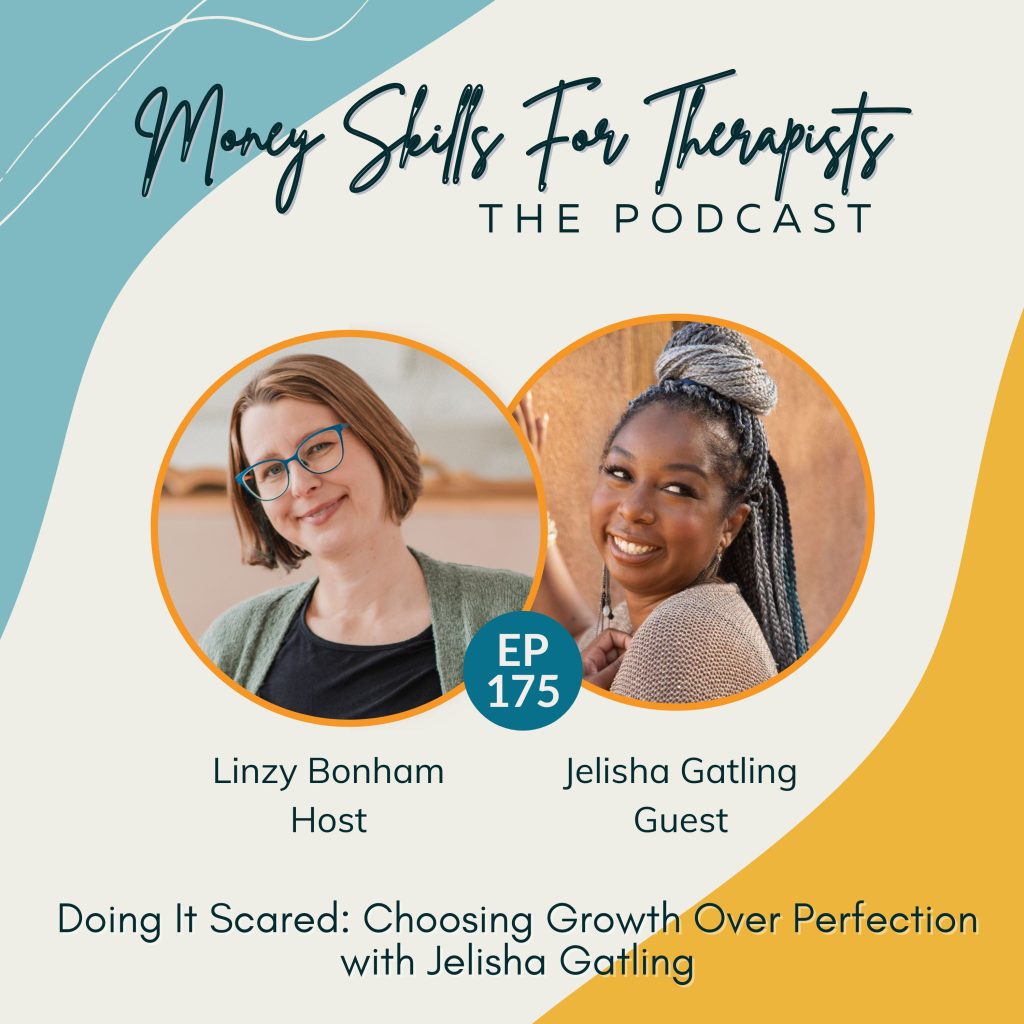
I’m looking for a simpler, calmer life. I feel like I got to a place where I become very stable financially, but now I’m shifting into this place of actual freedom. There’s a difference, for me at least, between stability and freedom. Like what I’m experiencing now is freedom. Like freedom and the time and location and not being tied to one place and just the spaciousness that I have now.”

~ Jelisha Gatling

Meet Jelisha Gatling

Jelisha Gatling is a Licensed Marriage Family Therapist & Private Practice Strategist. She’s an unapologetic boundary enthusiast, who in her off time, indulges in beach naps & reading.

In this Episode...

What does it really mean to be free in your business, and in your life?

In this episode, I talk with Jelisha Gatling, therapist and business coach, about the bold and brave steps she took to create the life she truly wanted. From leaving a group practice and starting over in private practice to moving abroad and unlearning the hustle culture she grew up in, Jelisha shares how she has found clarity in what freedom actually meant for her, and how she built a business to support it.

Jelisha and I talk about how therapists can shift from seeking stability to designing a life of simplicity, alignment, and joy. Jelisha’s story is a reminder that living the life you want often means letting go of perfectionism, questioning your assumptions, and allowing yourself to do it scared.

If you’ve ever felt stuck in cycles of overworking or “waiting until you’re ready,” this conversation will inspire you to take action—before you feel 100% prepared.

Connect with Jelisha Gatling

You can learn more about Jelisha and the work she does with therapists at savingthesaver.com and @savingthesaver on Instagram and TikTok.

For other episodes with Jelisha, check out:
Episode 48 – Helping Shouldn’t Hurt: 5 Financial Boundaries to Set with Jelisha Gatling
Episode 10 – Find Flow with Money with Jelisha Gatling

Ready to feel confident with your money?

Are you a Solo Private Practice Owner?

I made this course just for you: Money Skills for Therapists. My signature course has been carefully designed to take therapists from money confusion, shame, and uncertainty – to calm and confidence. In this course I give you everything you need to create financial peace of mind as a therapist in solo private practice.

Want to learn more? Click here to register for my free masterclass, “The 4 Step Framework to Get Your Business Finances Totally in Order.”

This masterclass is your way to get a feel for my approach, learn exactly what I teach inside Money Skills for Therapists, and get your invite to join us in the course.

Are you a Group Practice Owner?

Money Skills for Group Practice Owners is a six-month course that takes you from feeling like an overworked, stressed and underpaid group practice owner, to being the confident and empowered financial leader of your group practice. Click here to learn more and join the waitlist.

Episode Transcript

[00:00:02] Jelisha: I’m looking for a simpler, calmer life. I feel like I got to a place where I become very stable financially, but now I’m shifting into this place of actual  freedom. There’s a difference, for me at least, between stability and freedom. Like what I’m experiencing now is freedom. Like freedom and the time and location and not being tied to one place and just the spaciousness that I have now.

[00:00:30] Linzy: Welcome to the Money Skills for Therapist podcast, where we answer this question, how can therapists and health practitioners go from money, shame and confusion to feeling calm and confident about their finances and get money really working for them in both their private practice and their lives? I’m your host, Linzy Bonham, therapist turned money, coach and creator of the course, money Skills for Therapists.

[00:00:50] Hello and welcome back to the podcast. Today’s guest is Jelisha Gatling. Jelisha is back on the podcast today for the third time I believe. Jelisha is a graduate from my original cohort of Money Skills for Therapists in 2018. She also coached with us in Money Skills for Therapist. She was the first coach that I hired, and today, Jelisha is going to share about her experience of selling all of her things, leaving the United States in December, just in the nick of time and traveling the world and working as a therapist from wherever she wants to be. Today, Jelisha and I talk about the barriers that were in the way of her making this move that she really wanted to make.

[00:01:30] We talk about the ideas of creating financial stability versus financial freedom. We talk about creating freedom and richness within the context of what you have. Jelisha is not married. She doesn’t have kids. I have a child. I am married. I own a home. So we talk about what connecting with that freedom and richness means in each of our own lives. Jelisha messaged me out of the blue a week or so ago, telling me about her adventures, and I was so inspired that I asked her to come on the podcast right away. Here is my conversation with Jelisha So Jelisha, welcome back to the podcast.

[00:02:15] Jelisha: Thank you for having me.

[00:02:16] Linzy: I’m so excited. This is, I think it’s your third time coming on the podcast. Does that sound right?

[00:02:21] Jelisha: That makes sense.

[00:02:22] Linzy: Yeah, that feels right. And I was just saying to you off mic, before we started recording that,you and I have known each other for seven years now. You were in the very, very first cohort of Money Skills for Therapists. You were in the cohort that I was building the course as I taught it. So I’ve had the honor of witnessing these really cool transformations in your life in the seven years that we have known each other. And I’m excited to dig into what is happening with you right now around money and life and work. ‘Cause you’ve done some cool stuff. So can you tell us about where you are now, what you’ve been doing?

[00:03:01] Jelisha: Yeah, I have continued to be in solo private practice working with couples. December of last year, 2024 I decided to break my lease and get rid of all my stuff. I sold all my things. And I packed two bags and I started gallivanting across the UK. I’m now currently in Southeast Asia. I just left Vietnam. I’m now in Thailand, andI haven’t really talked much about this, but this has been something that I’ve wanted to do, meeting you,So I was like, I absolutely know I don’t want to retire in the US and, working for myself and being able to shift into teletherapy has always been the plan, even pre Covid. So I finally decided to do it. I just ran out of excuses and decided to do it scared and,yeah, I’m on a residency kind of strategy plan. Like I’m looking for some place else to call home. That’s a short summary.

[00:04:03] Linzy: Yes, so this is something you’ve always known you’ve wanted to do, I love the word gallivanting. That’s the word that I use, too. Gallivanting around the world, right? right now, you’re not really tied down to any one place.

[00:04:14] Jelisha: no, not tied down to anything. I went to the UK. I just left the UK in March. I needed some warmer weather, but that was an experience.I was doing some house and pet sitting actually, and so it really like offset costs, and I got to hang out with the best dogs and cats ever. Really, way more meaningful than I expected it to be. Like, I’m still connected with the pet parents, and it’s just been lovely, like Scotland. All the places. It’s been amazing, but anyway, I’m here in Asia now and I’m looking for a simpler, calmer life. I feel like I got to a place where I become very stable financially, but now I’m shifting into this place of actual freedom. And before I used to talk about financial freedom, and there’s a difference, for me at least, between stability and freedom. Like what I’m experiencing now is freedom. Freedom and the time and location and not being tied to one place. And, just the spaciousness that I have now.

[00:05:15] Linzy: Yeah and that distinction between stability and freedom is really interesting, ’cause a lot of folks that I think about that, we’ve supported when you worked with me back in money sales for therapist a few years ago and that we’ve supported first, like stability is what they’re looking for first, right? It’s to get out of that feeling of constantly being behind, financially stressed, like not able to make bills. And so finding that financial stability, which I’m a huge fan of stability, right? I get really jazzed about stability. Helping folks have that, like regular paycheck. Get you out of that “this is an amazing month, I’m rich, and oh my god, I’m poor. How am I going to make my bills?” So let’s get out of the unnecessary emotional rollercoaster that just has to do with your revenue in your business because our emotions should not be dictated by what’s coming into our business.

[00:06:00] So there’s a stability making there, but I’m hearing for you, it’s once you get to stability, that’s not really what you wanted, right? Like people talk about financial freedom, but I also think a lot of folks who get to that point of financial freedom, and I’m putting that in quotations of, where there’s really nothing left to worry about financially, just find other shit to worry about, right? They just yeah, there’s this interesting.. I don’t know, human condition piece that happens there, where you just find other things to be stressed or unhappy about. And I’m hearing for you, once you hit stability. It’s given you the financial means to do things you want to do, right? Like it costs money to get on a plane, and the UK is like not a cheap place to be, and that kind of stuff. What you have, what I’m hearing for you is freedom is what you’re really looking for.

[00:06:47] Jelisha: Yeah, more peace, peace of mind. There’s just so much going on in the US as we all know. It’s so hard and I really want to live in a place where everything is centered around work. I think that’s another piece. Being in these cultures, no one’s asking me what I do for work.

[00:07:06] Linzy: Yes.

[00:07:07] Jelisha: No one cares.

[00:07:08] Linzy: No.

[00:07:08] Jelisha: And it’s helping me to continue to divorce my worth with how much I make or what I do. I feel like that’s been like something I’ve been trying to work on the past few years, and it’s just so much easier. People are like, what do you like to do? Who are you? It’s so interesting, and I love it. Yeah, we are, in North America, such a work obsessed culture and I think part of it is the cost of living is so high, right? Like it costs a lot to live here and especially in Canada where I am, the cost of housing has gone bananas in certain cities, especially,where you have to work so hard just to have a toehold in living in the place that you want to live, So like I think that is part of it is like cost of living when most of your time has to go to not just working but making sure you’re earning a really good living. That is a really important part of your identity ’cause if you neglect that, you’re going to lose your house.

[00:08:06] Jelisha: Exactly, there’s a lot at stake.

[00:08:08] Linzy: There is a lot at stake. Yes.

[00:08:10] Jelisha: It feeds into the anxiety and it’s constant because everything you just said, I totally resonate.

[00:08:16] Linzy: Yeah, and what you’re doing now is what people have referred to over the last few years as a digital nomad kind of life, right? Like you’re able to work in the US so you’re earning US dollars, which is pretty key, I think, to this strategy

[00:08:31] Jelisha: Yes, yes.

[00:08:32] Linzy: To be clear, you’re able to enjoy the cost of living in other places.

[00:08:36] Jelisha: Now that being said, the UK is very expensive. I feel like the geographic arbitrage does not work in the UK,but certainly in Southeast Asia, earning in US dollars. i’m going to assume you’re pretty comfy. I am, it’s interesting because though, more comfortable than I was, I still have to catch myself. Sometimes it’s oh, there’s too much space. Like you said, you find new things to worry about,and so I’m still very much a work in progress on getting out of the productivity trap. So I’m curious, like the lifestyle that you are living right now, do you think this is something specific about your personality? Do you think that lots of folks would benefit from letting themself just explore and wander? I’m thinking about therapists who are listening.

[00:09:20] Linzy: Do you think that it’s a common overlap that therapists also, you know, like really deep down we want to be free, but we’re tied to responsibility?

[00:09:28] Jelisha: I think it’s pretty common. The feedback that I’ve gotten just from sharing with colleagues and therapist friends has been supportive of that

[00:09:36] Linzy: Yes, yes.

[00:09:38] Jelisha: I’m already getting to the point where I want to chill. Like I think I’m going to be in Thailand for a hot minute. Like I was in Vietnam for one month, and it gave me just so much space and time to really explore the neighborhood, and I got to know a lot of locals and I have people that I’m absolutely going to go back and and it was just amazing. I know I’m not the only one because I definitely was looking into different communities of therapists that are doing telehealth around the world. I was I didn’t end up working with anyone specifically in the therapist realm, but was following a few things and was thinking about it. And I’ll also add this. I don’t really have a lot of responsibility. I’m not married. I don’t have anyone else I have to consider. I don’t have kids. And I know that makes a big difference. It’s just me.

[00:10:24] Linzy: Definitely. Definitely. Yes.

[00:10:26] Jelisha: The scary part of that too, where it’s oh, It’s just me. Like it’s on so I’m like, is there something about my personality? I’ve always wanted to travel, so…

[00:10:39] Linzy: Yes,and yeah, I totally hear that. what is amazing about it is also what’s terrifying about it. Like that level of freedom, like freedom from responsibility also means freedom from. I don’t know, there’s a lack of reciprocity there somehow. It’s like you’re not responsible for anybody, but also nobody’s responsible for you.And when I got your message, ’cause we were chatting a little bit before, we started recording. you messaged me. I think two weekends ago now,you sent me a message and I, I try to, I’m, a practicing digital minimalist, to greater or lesser degrees of success, depending on my levels of anxiety.

[00:11:15] And, I saw a message come through from you, which was like 9:00 PM my time on Saturday, which is like pretty, pretty damn close to bedtime and when I saw a photo come through, I was like, this probably isn’t for me. Like Jelisha and I haven’t chatted in probably like a year. I must have accidentally got added to a channel. But then when I saw it the next day, it was all these fucking beautiful pictures from Vietnam. And you were like, “Linzy, I wanted to give you an update.” And interestingly, I noticed for myself, I was like, oh my god, that’s amazing.

[00:11:45] Number two, I was jealous. I was like, dammit, Jelisha off having fun, and I’m parenting, and having challenges in my business. But then number three, inspiration immediately. ‘Cause something that you said in your message to me was that Tiffany and I… I think you mentioned both of us as you often do. I feel like we’re like a pair in your head, Tiffany McClain and I. That we had inspired you in the work that we’ve done with you, not just financially. You can have what you want, but you have the confidence that you can do anything. And that was a really powerful message for me to receive I think at a time where just emotionally, in that moment I was having to make a difficult personal decision and I was like, Jelisha can do anything. I can do anything.

[00:12:26] Jelisha: I love that.

[00:12:28] Linzy: So it was a nice little feedback loop. I felt really grateful for that. I was like, oh, I put something beautiful out in the universe years ago, and now like you’re bringing it back to me. Because I do think, you and I have very different lives, right? I do have a child. Do I ever have a child? So what I’m focusing on right now in my life, my chapter is about creating stability for him, right? 

[00:12:41] And I’m very aware of that, as I’ve zoomed out to do some planning around life and this idea of buckets or chapters… The book Die With Zero I read recently, and he talks about this idea of like your money…] it’s not just saving money for the end of your life where we often think we’re saving for the future, we’re saving for retirement. I’m going to have a great retirement, but not all of us make it to retirement. Or we don’t have health when we’re in retirement, so thinking about your life in terms of these, he describes ’em as buckets.

[00:13:12] I would think about chapters, too, where it’s okay, what are the experiences that you want to have in your forties? What are the experiences you want to have in your fifties? And some of those experiences that you want to have, make a lot more sense in your forties. go do Mount Everest in your forties. Don’t wait till your seventies. It’s going to be a different situation, right? So I like thinking about those buckets. So that has helped me to stop and think about, okay, what are the things I want to do in life, but also what makes sense now? So right now, I’m creating stability for my son. We’re really involved in his school community, right? Like we have an event tonight. I’m the treasurer of the school council. Surprise!

[00:13:47] Linzy: I’m going to pick up the float, drop that off, and count the cash at the end of the night. My partner is going to be like volunteering at the ticket selling table. I got my dad on the barbecue, pulled in the grandparents. This is my chapter, which is actually only probably going to be about 10 more years until my son’s a teenager, and is like “Mom, leave me alone.” So I have noticed that it helps to zoom out and think about, okay, what is this chapter of my life? What needs to happen in this chapter?

[00:14:12] What’s nice to have happened in this chapter and what should actually not happen in this chapter? So I, for instance, have a dream of doing some sabbatical time. I would love to live in Portland for a good six months. We’ll see what happens with the US situation. but then I realized it doesn’t make sense to drag my son to Portland. That’s not good for him, right? It’s not good for a 7-year-old to be removed from his friends and from his school and go live in another city where he doesn’t know anybody for six months. That’s actually not a great experience for a child to have. Like what he needs is the stability to build continual friendships and learn how to work through things with his friends and build a community and a sense of belonging.

[00:14:47] And what I’ve heard from folks who were moved around a lot by their parents, usually for work situations, is that they never felt like they really had a home, Or never felt like they had a community. So that has been a helpful reflection for me to be like, yeah, okay, right now is stability time in my own life. But when my son is off and on his own, oh man, do I have plans? Like I love Iceland. I would love to live in Iceland for a solid year. Fucking love Iceland so much. Twice.

[00:15:14] Jelisha: Oh my gosh. I’m jealous.

[00:15:14] Linzy: Yes. See, you’re jealous of me now and I feel like I’m doing what you’re doing a little bit, but in a little burst. Like last year when I turned 40, I made a really big deal of it when I turned 40 and I went to London, for a week, and I went to Iceland and I went with Tiffany McClain and Maegan Megginson and Annie Wright.

[00:15:35] Jelisha: I’m jealous now, what? You’re going to explode. I can’t take it.

[00:15:42] Linzy: Yeah those three friends who are all those of you listening might recognize some of those therapist consultants in the space. Annie Wright is an incredible therapist who’s now moved into, helping high-functioning women who were under parented,developmental trauma. Amazing, incredible women who I don’t get to see much. So they actually came with me to England, which was fucking incredible, right? so beautiful. So now I have these gorgeous memories of them. And then Annie came with me to Iceland. We stayed at this incredible hotel. So I’m giving myself these little beautiful experiences And also I’.ll say the hotel where Annie and I stayed, later that year the parking lot was filled with lava when a volcano went off nearby. So I was like, great timing for us.

[00:16:19] Jelisha: Oh my goodness.

[00:16:22] Linzy: But I feel like for my life, as I think about, our different levels of responsibility, ’cause I’m responsible for a lot of people right now, I’m giving myself this little, almost like taste of what you’re doing, right? this little burst and doing it the high ticket way, going to expensive places doing all the things. But those memories I have forever now. And just the other day Maegan reflected to me that it’s a year ago that we were in London together. But for my life, given the stability that I need to take for my son, I wouldn’t be able to do what you’re doing now, but I could do it in 10 years. So, stopping and thinking about our context and how do we get what we need in our context?

[00:16:59] Jelisha: I love you sharing this, Linzy, because getting a taste, it’s like getting out of the all or nothing. And I think like I didn’t have a fully fleshed out plan like I thought I should have over the years, but I love you breaking down how you’re getting a taste of those things and like how rich those kinds of memories are and also, we both turned 40 last year. I turned 40 last year and I had a whole, yeah.

[00:17:22] Linzy: Okay. There you go. Yeah, same page and I think part of that illustrates too, like showcase we’re the same age, 1984 babies,how our lives have ended up looking a bit different, but we’re both still seeking how do we have the richness that we seek within the context that we have, And your reflection of getting it out of all or nothing. ‘Cause this is something that I talk about too with my students in the course. It’s so easy to fall into all or nothing all the time, right?It’s like I have to work super, super hard and make a ton of money to make up for these things.

[00:17:52] Or I have to put all my money in debt. Like the fact that I have debt is like the most pressing issue in my life. I have to put all my money there, but usually I find the solution to most of life’s problems is somewhere in the middle. Yes. Yeah, and like seeking, what is it that you’re actually looking for? So I’m curious, you had mentioned earlier that you had all these excuses for not doing this thing that you really wanted to do and eventually you ran out of excuses. What were some of the excuses that you gave for not setting out and traveling in the way that you’ve managed to do now? What was getting in your way?

[00:18:23] Jelisha: Big one, it’s interesting. you don’t have enough money saved, or it just felt like it was never going to be enough. Just finally got to a point where it was like, you don’t know what the hell you need. I don’t know, I think I was approaching it and that you’re never going to be ready. And also thinking about all the scary things that I’ve done financially with you. Even investing in your course and in Tiffany’s course, like for me that was scary as hell. And just thinking about Jelisha, just do it scared.

[00:18:55] You’ve done it scared. So that piece,years ago, it was like, maybe I should wait until I meet someone and I’ve met people, I’ve dated, whatever, but you can’t wait. I knew that logically, but yeah, part of me was like, it would be nice to not do this alone and have someone with me to share all the unknowns, But yeah, so that was probably a thing. Or even like dating someone for a couple of years and like trying to talk them into it, and trying to work out how they’re going to work out their job and do it with me, but them not really truly wanting that for themselves.What were other excuses? I’m not mature enough. I’m not healed enough. I need more therapy. A lot of it was around that.

[00:19:37] Linzy: Oh interesting.

[00:19:38] Jelisha: I’m too depressed. I don’t know that I’m strong enough to do this like yeah, I’d say probably like the top ones where you’re not mentally sound enough to take on this fucking big journey. And being scared that I was just not going to be able to handle it.

[00:19:53] Linzy: I’m hearing just like a lot of, like not enough, money, not enough, companionship. Like somebody should be with me, not enough, like mental fortitude. Like I’m not going to be able to handle it. And I’m curious, how has it been to just do it scared?

[00:20:07] Jelisha: It’s been fantastic. One, I’m not really alone. With the pet sitting in the UK, the pets are the best companions ever. Also, it’s not as if I’m this person who’s super anxious. I go out by myself, I don’t get anxious. I’m fine eating alone. I’ll do things alone. That’s never really been a thing for me.

[00:20:24] And when I go out, like I just do. And so that’s not going to turn off. And also I think I’ve, and this is even pre-leaving, I’ve come to really appreciate shorter term connections, or Like we don’t have to be friends forever, or see each other again or whatnot. And so I feel like I’m just having these meaningful connections with people that I probably will never see again. It’s just been, it’s been really nice and people have been so kind. That’s been blowing my mind,

[00:20:58] Linzy: And I think that is a really world expanding experience to give yourself in itself is just let yourself meet people and realize the goodness of people ’cause if I think about two, things are politically, especially in the states, like in Canada, we just had an election that went remarkably, Canadians listening, everybody might not agree with me, but I feel like they will just given who listens to this podcast, like we were really starting to head down that more divisive road, as America has. And, we fucking turned it around, which is incredible and leaned back into our kind of original values.

[00:21:29] So that has been a real, whew relief. But I feel like this intense divisiveness has really been in the air for the last, let’s say 10 years, where it’s whose side are you on? One of my friends who was a firefighter was saying that he was getting grilled by guys at work with who are you voting for? And he’s dude, I’m not going to tell you who I’m voting for. Like people around the world die for the right, for private votes. They’re like, oh, so you’re voting for the wrong people. You’re voting for these guys are these guys, right? Like this intense like you’re with us or you’re against us,and how poisonous that is to us as people and as communities, and how it just blocks connection and humanness and I think when you just put yourself out in the world in the way that you are, you end up meeting all sorts of people and having all sorts of conversations and just getting exposed to perspectives you never would if you just stayed home and talked to people just like you.

[00:22:17] Jelisha: Totally, exactly, everything you just said. Spot on.

[00:22:20] Linzy: Yeah, and that’s been my experience too when I’ve traveled a bit. It’s like – you make a friend for a night, you make a friend for dinner. when we were in Iceland, we adopted this travel nurse from the US who was there by herself, and we were like, come have. And then, the three of us asked her very detailed system-based questions about the gendered role of nursing, and toxicity in nursing workplaces.

[00:22:39] And she was awesome. We had a great conversation, but she was just our friend for dinner and then she headed on her way. There’s a really beautiful thing about that. So I guess my final question, ’cause we should wrap up eventually, is what have you learned about yourself in taking this step, in doing this thing that many parts of you thought you couldn’t handle and that you couldn’t do? What have you learned about yourself?

[00:23:01] Jelisha: What have I learned about myself? Oh. I am stronger than I thought. It sounds so simple. I’m stronger than I thought, and I got it together. I don’t, I dunno, yeah, I don’t know if this is also answering your question, but this is what’s coming up for me. It’s okay to change your mind. It’s okay to reroute and you’re going to have to, if you take on a journey like this.

[00:23:24] And I think the same thing in private practice, like even in one location, I feel like that’s probably been a huge burning thing when things haven’t gone right? Or the code’s not working to get in, and it’s midnight, and it’s raining and you’re on this hill and the host is not answering.. I can tell you so many stories, but it’s okay to change your mind. It’s okay to think, oh my gosh, I think I really want to live here and then get there. And it’s not what you thought.

[00:23:48] And then I feel like there’s this pressure, and I don’t know if other people resonate with this pressure too. What are you going to do? Where are you going to go? Where are you going to live? Where? And if you know, and if you don’t follow through with that, you feel like a failure. Or if you don’t try to make yourself. That’s been huge and is really helping me move through some of the bumps and the unknowns, and visa stuff. I just have, like you said, I have a whole new set of, I don’t want to say problems, but things to work out.  Even from how to work this washing machine. It’s totally in Thai, and I don’t know what coins it needs. I’m chatting with chatGPT, guessing, I’m hitting it. I don’t know. 

[00:24:31] Linzy: Yes, totally, And I think in those moments we really meet ourselves in new ways with those little moments. I have travel stories that are coming up that I want to tell you, but I’ll tell you after ’cause you know, this is not a travel podcast. But Jelisha, this has been so fun. Thank you for sharing about this most recent leg of your journey. If folks want to find you and learn more about you, ’cause you are a therapist based in New York, where can they learn more about you?

[00:25:01] Jelisha: They can learn more about me at savingthesaver.com. So that’s my handle on Instagram, TikTok, that’s where I’m rocking out, so yeah.

[00:25:11] Linzy: Wonderful. Thanks Jelisha.I love Jelisha’s point about doing it scared. There are so many things in our lives that we want to do that we are holding ourselves back from. Like she was saying with her example, because you don’t have enough money or you don’t have the right person to support you, or maybe you won’t be able to handle it.

[00:25:37] We always have these stories as to why we shouldn’t take that step that we want to take. Whether it’s the step of leaving the agency that you’re at and starting your practice, whether it’s the step of making yourself more visible and maybe putting out a podcast or starting an Instagram and becoming more of like a personal brand, putting your voice and face out there, that’s very scary.

[00:25:57] Whether it is doing like Jelisha has done and traveling. Leaving your home base and letting yourself wander and be free. These things are all scary and they’ll probably always be scary. So there’s so much wisdom in, as Jelisha says, doing it scared and realizing that we’re never going to feel ready, it’s never going to be comfortable. They are, by definition, uncomfortable experiences and that’s also what is so beautiful about them, is whether there is that discomfort, that’s where we have growth. That shows us that we are expanding ourselves and we are moving outside of what we already know, right into these new spaces. So appreciate Jelisha coming on the podcast today to share about her experiences and what it has taken to get her there.

[00:26:42] She is such a treat. You can check her out. We’ve got the link in the show notes where you can learn more about her. She also does things to support other therapists, so definitely take a look into Jelisha. If you’re enjoying the podcast, it’s always helpful if you can leave a review, on Apple Podcasts or Spotify, we’ll put the link in the show notes that links to whatever app you use. It will connect you to a place where you can leave us a review. It is a great way for other therapists and health practitioners to find us and to be part of these conversations. Thanks so much for joining me today.





Picture of Hi, I'm Linzy

Hi, I'm Linzy

I’m a therapist in private practice turned money coach, and the creator of Money Skills for Therapists. I help therapists and health practitioners in private practice feel calm and in control of their finances.

Latest Episodes

Money can sometimes feel easier to manage in your business than in your relationship. In this episode, I sit down with Ed Coambs to gently explore what happens when you bring your money skills home and begin navigating them alongside a partner. We talk about financial intimacy, emotional safety, and what it truly takes to have honest, grounded conversations when two nervous systems — and two lifelong money stories — are in the room.
Listen to this episode »

In this episode, registered psychotherapist Liane Wood and I gently challenge you to explore what it actually means to build a sellable therapy practice—not because you should sell someday, but because thinking this way creates more freedom, sustainability, and financial clarity right now in your personal and professional life. 
Listen to this episode »

For our 200th episode of Money Skills for Therapists, I invited my business besties, Tiffany McLain and Maegan Megginson, to join me for a conversation that was more honest than polished. We unpacked about the real seasons of entrepreneurship — the times when you feel energized, expanding, and deeply aligned… and the times when you feel tired, restless, like you’re questioning everything, or quietly pulling back. If you’ve ever wondered whether it’s normal to feel both love and resentment toward your business at different points, this conversation is for you.
Listen to this episode »
© Copyright 2026 | Money Nuts & Bolts Consulting Inc. | All Rights Reserved

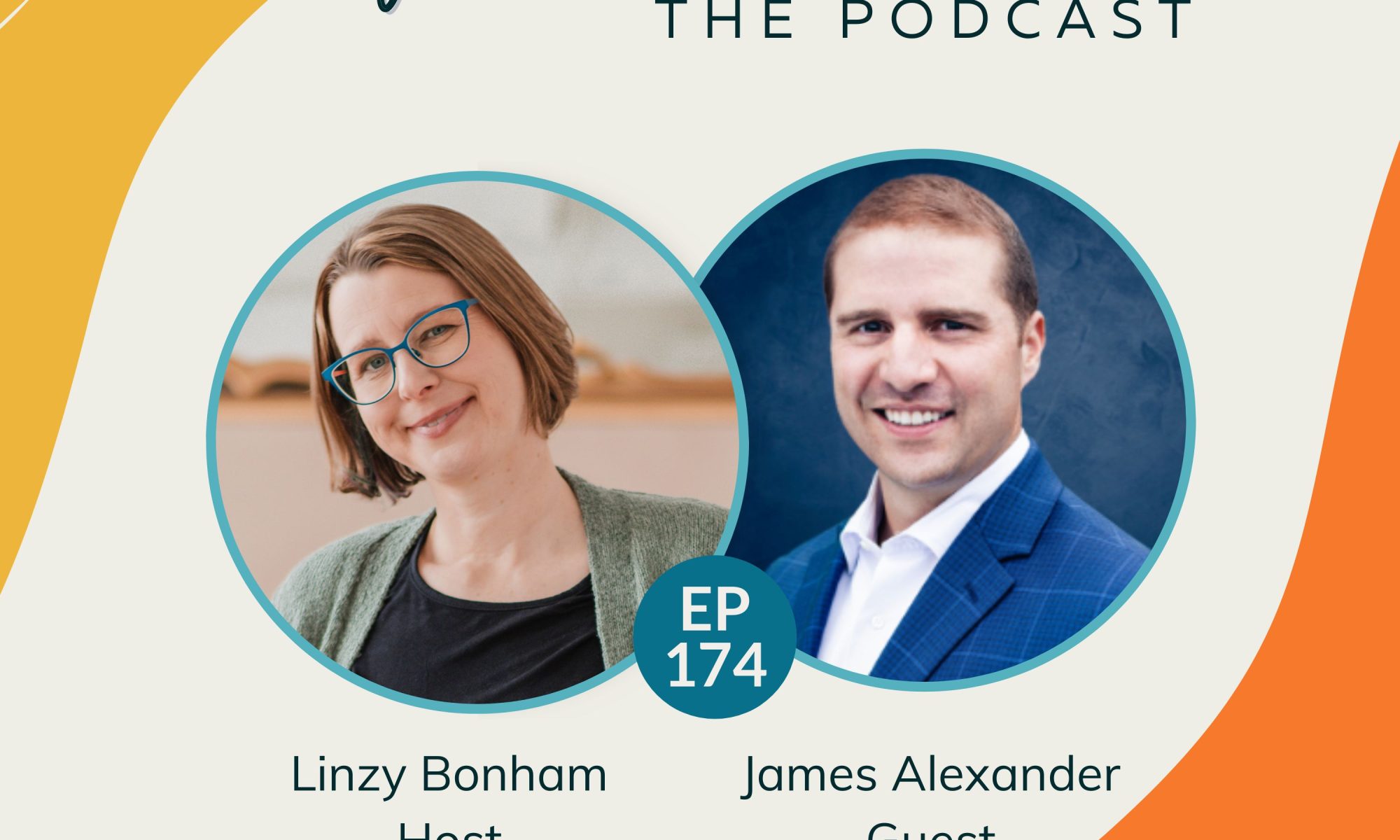
174: How to Plan for Your Future Self with James Alexander

174: How to Plan for Your Future Self with James Alexander Episode Cover Image

174: How to Plan for Your Future Self with James Alexander

174: How to Plan for Your Future Self with James Alexander Episode Cover Image

Let’s automate giving money to our future self. Instead of saying, well, I don’t have that money right now, actually you do, you’re giving it to your future self. I highly encourage after we have a math equation, which I know some people don’t like doing, there are financial calculators out there that can help with that, but once you have that clear roadmap on what you’re trying to accomplish. You can automate as much as you can, have it taken from the top of the paycheck, You’d be surprised at how quickly that can build. “

~ James Alexander

Meet James Alexander

James Alexander is a Certified Financial Planner™ and partner with Edge Financial Advisors. He co-hosts Ed’s Edge, a show geared towards regular, everyday investors looking. With over a decade in finance, James specializes in guiding families, business owners, and consultants to financial peace. His approach integrates sound financial strategies with an understanding of the psychology of money, recognizing how emotions influence decisions. James, based in Chicago with his family, is passionate about empowering clients to navigate finance confidently, emphasizing the importance of emotional well-being in financial planning.

In this Episode...

What does it really mean to play your own financial game?

In today’s episode, I’m joined by James Alexander, a certified financial planner who brings both heart and math to the world of money. James and I explore the importance of defining your personal version of financial success, and we discuss why comparing yourself to others can pull you away from what actually matters to you.

We talk about how to start with your values and vision, and then build a plan to back into those dreams using both emotional awareness and clear financial strategy. James shares a practical framework for allocating your income (his 20/60/20 rule), and we also talk about the emotional weight of debt, managing motivation, and teaching kids how to understand and use money.

This episode is for you if you’ve ever felt behind, overwhelmed, or unsure where to even begin with planning your financial future. This conversation offers both practical advice and deep mindset shifts to help you move forward on your own terms.

Connect with James Alexander

Ready to feel confident with your money?

Are you a Solo Private Practice Owner?

I made this course just for you: Money Skills for Therapists. My signature course has been carefully designed to take therapists from money confusion, shame, and uncertainty – to calm and confidence. In this course I give you everything you need to create financial peace of mind as a therapist in solo private practice.

Want to learn more? Click here to register for my free masterclass, “The 4 Step Framework to Get Your Business Finances Totally in Order.”

This masterclass is your way to get a feel for my approach, learn exactly what I teach inside Money Skills for Therapists, and get your invite to join us in the course.

Are you a Group Practice Owner?

Money Skills for Group Practice Owners is a six-month course that takes you from feeling like an overworked, stressed and underpaid group practice owner, to being the confident and empowered financial leader of your group practice. Click here to learn more and join the waitlist.

Episode Transcript

[00:00:01] Let’s automate giving money to our future self. Instead of saying, well, I don’t have that money right now, actually you do, you’re giving it to your future self.

[00:00:10] James: I highly encourage, after we have a math equation, which I know some people don’t like doing, there are financial calculators out there that can help with that, but once you have that clear roadmap on what you’re trying to accomplish. You can automate as much as you can, have it taken from the top of the paycheck, You’d be surprised at how quickly that can build.

[00:00:30] Linzy: Welcome to the Money Skills for Therapist podcast, where we answer this question, how can therapists and health practitioners go from money, shame and confusion to feeling calm and confident about their finances and get money really working for them in both their private practice and their lives? I’m your host, Linzy Bonham, therapist turned money, coach and creator of the course, money Skills for Therapists.

[00:00:50] Hello and welcome back to the podcast. Today’s guest is James Alexander. James is a certified financial planner. And today, James and I talk about the idea of playing your own game when it comes to money, kind of keeping your eyes on your own work, making sure that you’re setting yourself up financially for the life that you actually want.

[00:01:10] We talk about balancing emotions and math when it comes to money. As James says, there’s an equation, with all financial investments or decisions, but also as we know, people are highly emotional. So how do you balance the emotional components of money and the actual financial hard numbers to make good decisions? And we also chatted about kids and money. We have sons who are similar ages and we started chatting about what we want our sons to learn about money, how we’ve each so far tried to teach our sons about money and how money works. Here is my conversation with James Alexander. So James, welcome to the podcast.

[00:02:00] James: Thank you so much for having me, Linzy. I’m looking forward to the conversation.

[00:02:02] Linzy: Yeah, me too. Me too. So for folks who are listening, can you tell us a little bit about you and what you do?

[00:02:08] James: Certainly, so I’m a financial advisor. I’m also what’s considered a certified financial planner. I love talking about all things money and how money can help people accomplish what they want to accomplish in their life. A little bit of brief background about myself. I’ve been doing this for 16 years. I actually didn’t want to get into the money field originally. I wanted to teach math. I know it is scary to a lot of people to think about math, all these numbers. It doesn’t mean a lot, right? But I landed on money because it’s a math equation. And when I saw what it can do for people, the purpose and how I can help people, educate them in the ways of money is how I landed on what I do, and I absolutely love it.

[00:02:45] Linzy: Because you’re taking those equations and they actually mean something in people’s lives when they can figure out that equation and I have found that over the last couple years, especially, I think I’ve developed that as a phrase in my own vocabulary, talking with students of like, there’s an equation there. For instance with group practice, when I’m working with people who have multiple employees, it’s like there’s an equation there of like how many employees times what you charged times what they get paid plus this, plus this equals a certain outcome. And like once we can figure out the equation, you know how to take action and make things happen.

[00:03:14] But if we’re working the wrong equation, we can work really hard and not see the things that we want to have happen. There is an equation there, but also it’s an equation involving humans who have a lot of feelings. We chatted a little bit, off mic before we got started about this idea of, you know, playing your own game with money. Doing things the way that you actually need to do them. Can you tell me more about this idea and how you use it with the folks that you support?

[00:03:38] James: Absolutely. Yes, I think this is one of the most powerful things to be in the know about, in today’s world and here’s why, is playing your own financial game, nobody else’s. I. What happens in today’s world, especially for you listening, is you might have this idea of, I’m supposed to be having this amount of money by this age of life, or I’m supposed to be having this house, or you know, I’m looking all around myself.

[00:03:59] And then you have the news headlines that come out about target numbers and volatile markets, and just you’re inundated with information and it just comes in all externally to you and you think to yourself, okay. How do I navigate this? I feel like I’m doing something wrong, right? And instead what I help my clients do is have ’em take a step back and say, ignore the outside world for a minute, and just focus internally and think in 10 years what’s the ideal life for you. In 15 years. In five years.And write it down. All of this, by the way, should be non-monetary to start, we will back into the monetary factors later.

[00:04:36] But talking through, be very clear. The analogy I use is, you know, you’re going on vacation. Let’s plan a trip. This is your trip for your future self, right? You’re going on vacation and you first need to decide where you’re going, right? If I’m going to Florida, I’m probably packing something different than if I’m going to Alaska. And so we have got to be clear on what we want and write it all down. Give a timeframe associated with it. Don’t be married to that timeframe, but have an idea and then we can back into, okay, what does it take to get there? So going on that trip, if I’m traveling to Florida, I need a car, I need a reliable car, I need, you know, to pack certain things.

[00:05:13] I need a navigation system.As opposed to Alaska, I’m probably getting on an airplane. That’s a different strategy, a different navigation. And so too many times we look in terms of not playing our own game, and we see our neighbor next door who has the fancy car and all the items, or we see they’re traveling or they’re, you know, their kids are wearing these things and we’re saying, oh gosh, I feel so behind.

[00:05:34] And I’m telling you from a financial advisor’s point of view, that is a recipe for frustration, and that’s a recipe for de-motivation and my goal is to help people get outta that mode and really focus on themselves, and especially those listening and therapists. You’re so great at giving back in this money world. It’s time to be selfish, and selfish in a good way, because when you have things you can have, you can help people in a much more profound manner.

[00:05:59] Linzy: Yeah. And I think that, that’s so accurate. This experience. I think that we have of all this information, this external output of like where you should be, and sometimes I have folks talk to me about the idea that they’re behind, like they’re behind on their retirement savings and,it may possibly be true for their goal, but if you don’t know what your goal is, it’s hard to be behind on it,but also that compare and despair. And like I recently had,I was going through a little thought exercise of like, what if I sold my house or maybe saved up a down payment for another house and I moved to another neighborhood that’s just across the street from us.[00:06:31] my son goes to. It’ll be a lot more money, but we’d be closer to this, but I started to think through it and I actually, I realized, James, I had this thought of like, actually, I feel like for my compare and despair parts of me that tend to compare to other people, I actually don’t want to be in that neighborhood because

[00:06:48]  It’s closer to the school and all the houses are that much nicer. The families are all like high income. So then what their kids are going to be doing is going to be things that cost a lot more money. It’s like, I realize that for myself, that’s actually going to pull me into kind of a, almost like a community where it’s like, I don’t want to actually want to even feel like I have to keep up with that community.

[00:07:06] Whereas the neighborhood I live in right now, is a real mixed neighborhood. Everybody’s kind of doing their own thing, which I think reminds you that there’s so many great ways to live life. There’s not one way to live life. and there’s something about getting out of a monoculture that reminds you: I could do anything. Like this family down the road from us has seven people living in that house of multiple generations and like they’re living this like, rich, interconnected family life that, I’m not going to see when I’m over across the way, but yeah, it was interesting for me to notice like, oh no, that is definitely going to like, potentially pull me into, almost like a lifestyle.I want to call it a one track, I dunno what to call it, like a rut, you know, where you get little boxed in. 

[00:07:41]That I think would actually pull me away from some of the things that I really enjoy about my life I wouldn’t want to change. So there was a little vulnerability that I noticed to myself. We’re all victims of these kinds of things, right? The, like, keeping up with the Joneses, the social media, I feel like is a real feeder for this kind of messaging.

[00:07:58] James: Yeah, I couldn’t agree more. I mean, this is something I’m probably too passionate about, but what is the purpose of the news in social media? We think, especially if we’re watching financial elements in any capacity, whether it’s personal finance and budgeting and savings and investing, or business finance of how much, you know, my profitability of my firm should be, or any of those lines. The purpose of the news is to drive eyeballs, get us to watch tomorrow. That’s their agenda. Their not agenda is to actually obtain wealth, whatever we define wealth as in our world.And so how do they drive eyeballs? They create fear. They’ve learned over years. How do we create fear? I can’t tell you how many times the word recession has been talked about over the last, right.

[00:08:40] And we’re still technically not in one and it’s been two, three years it’s been discussed. So, I think we have to just take all this in context, and that’s why I always go back to what we want? Ignore all that for a minute and then we can go back to the outside world and see, okay, what can we do now and how do we take into account safety and all of that.

[00:08:57] Linzy: Yeah. Put it in context.

[00:08:58] James: I think the reason that’s so important is motivation. I’m probably preaching to the choir how motivation is so powerful. I mean, I have stories of clients where they run the math equation and they’re saying, okay, I have this much debt. It’s very cheap debt. I only pay 3% on my mortgage. I can invest and make more, but one of them can’t sleep at night knowing they have a mortgage. And it’s just, I owe somebody something. And so we have to reframe that and let’s actually get out of debt even though the math says otherwise, so that we feel better about it later. And so there’s that component.

[00:09:29] Linzy: And there’s a dance there I find between, you know, what are emotional aspects of our relationship to money that maybe we can shift and change, right? Like maybe ’cause I see like another potential intervention there to use therapist language would be, could the one partner start to actually shift how they feel about debt. Could it be okay to owe something? You know, like could that money be seen as a gift that allowed them to do this thing sooner than they would’ve been able to otherwise? And there could be gratitude there instead of a sense of being beholden or unsafe, right?

[00:09:55] Like there’s so much to explore in the emotional side of money. And then there’s also these hard numbers. And I think for each of us, it’s this individual dance of what we can like, maybe soften and shift in our own stories that aren’t helpful. ‘Cause for instance, like if you have a really emotional, maybe shame-based relationship or a fear-based relationship with debt, that’s going to make life hard. ‘Cause it’s pretty hard in this day and age to have no debt.

[00:10:18] You know, like my grandparents,they lived on my grandfather’s family farm, and they had no debt. And then when they moved into town in their sixties, they had to get a bridge mortgage, like some bridge financing, until the farm sold. A bridge loan. And I think my grandfather was so stressed about it ’cause like debt, having debt, that created like such a noise for him, but they grew up in a time and age where you could actually not have debt and owned property. For most of us now, debt is not something we can, you know, do without, right.

[00:10:50] Unless you are born into generational wealth and you know, your parents buy you a nice condo by, you know, the ocean. Most of us aren’t in that situation. So, yeah, I think too about, as we think about this math and feelings, and I have Friday episodes as you called, feelings and finances, you know, like speaking to this relationship, it’s like, what can we shift here and like, where is it that the numbers really are telling the truth? We should just follow the numbers. And I’m curious, like with your clients, have you seen examples of where people can change their emotional relationship with money and make a math decision or yeah. What does that bring up for you?

[00:11:24] James: Yeah, I can get very granular on math. I fully realize that it doesn’t resonate with too many people. And so, I have some very basic math equations, for lack a better word, or math mindsets to use is starting to, your example of debt is, I always say, look, to be in a good spot with debt in general, I really like to use the what I call 20 60 20 rule, which is if we can have our debt payments be no more than first 20% of our income, and not including mortgage, I want to be careful on that, That had to be incredibly tough if you could do that. More power to you, but these are things from our past. You can have that be 20% or less. You’re in a really good spot with debt. A really good aspect. The 60% is what I’m paying now for my life, and these are rough numbers, I don’t want people to be married to them. I always say be reasonable, not rational, which is again, seems a little counterintuitive to my linear mindset sometimes, but if we can earmark 20% towards our future self, whatever that might look like. We’re in a great spot, and so we look at, okay, student loans, right? Or, you know, I’m borrowing for the practice that I’m trying to obtain, or, you know, whatever the case may be. If that’s my 20% for my past, now I’m talking about my current reality that includes a mortgage, bills, things of that nature.

[00:12:42] And then I want to keep one other eye on my future self. If I can adhere to something in those lines, I’m in a good spot. So, you know, if people say, well, gosh, I’m way outta whack. Well, let’s talk about… This is what I find so fascinating about that current self is sometimes we have false notions of everyone’s doing this. The herd mentality. Everyone’s paying for cable. I need to have cable. But then you realize I watch like one hour of TV a day. If that, you know, like do I really need that? Versus, I care more about these items. When we look at budgeting especially, which I know is, I call it the big bed B word, because nobody likes doing it, right? But when we’re done after we kind of overcome that aspect, we feel empowered. Like, oh my gosh, I feel like I found money. You didn’t, you just feel like you did. So, anyways, that’s a nugget to help perhaps others.

[00:13:35] Linzy: Yeah, and the guidelines are helpful because it is helpful to have a starting place. For instance, the 20 60 20 rule. Like I’m doing my own math in my head and I’m like, okay. You know, in our case we’d be less here, but we’d probably be more there and then less there again. So it’s like, again, what are the actual numbers for us?

[00:13:52] You know, what are our priorities right now? What makes sense and I think there’s also seasons to this, too, right? Of being oriented to the season that you’re in. So I have a young child. He’s six now and I just did a couple days away on a solo strategic planning retreat for our business just to think. I just went away to think and not step on Lego for a few days of my life. And what I really grounded in when I was there is like, he’s only going to be a kid who wants to hang out with me for maybe another eight or nine years. So it’s like I’ve got this little window of time with him, right, to really be with him. But also I really sunk into the fact that like my parents are now in their early to mid-seventies, I probably only have 10 good years left with them. So like orienting to that. And as I think about our money and what we could do and like we could put money into like expanding our house and having more space. But if I think about that and then I compare it with like, maybe going to Europe with my parents… which, when I was a teenager, apparently at some point I told my dad that when I was older I would take him to Europe, and he has not forgotten this.

[00:14:53] My parents can also pay to go to Europe for themselves, by the way. But it was like this dream and now you know, we are at a place where we can do that. Again, now is the time to do that because in 10 years. You know, my parents probably won’t be up for going to Europe when they’re like 84 years old, but 74, they’re in great health. So I think about that, too. As we think about this conversation of like, what matters to you is also it’s going to shift in different seasons of your life and like coming into my fifties, I’ll probably be putting away more money than I am now because my son will be more independent. You know, I won’t be doing a big trip with my parents,but really being grounded in where you are today.

[00:15:29] James: I think that’s so well said. It’s funny you mention I have a son who’ll be six as well, and I think about that all the time is, you know, we can’t get time back. We can always make more money. We can’t make more time. Right. And so, and furthermore, life is not linear and that’s what makes it exciting, even though it can be nerve wracking.

[00:15:47] Linzy: Yeah, and, I think, yeah, the budgeting perspective, you know, in that thought myself, I was thinking about writing a book this year, and I’m very excited about the prospect of writing a book. and I was kind of almost trying to cram it into this year to be like, it’s important that I write a book. My colleagues are writing books. This person, this conference is writing a book and then I realized. No, just in terms of its budgeting, right? The decisions we make about our life, it’s also budgeting and if I have only so much time, right? And I have to think about using some of that time to make money to pay for our life, and then building up influence through the book, and I can’t have maybe all of these things, what am I going to prioritize?

[00:16:18] I’m going to prioritize time, and like just making enough to pay for our life. But I’m not going to like, spend all my time writing a book, which is a very absorbing process and then maybe have to go speak and do all these things to promote the  book because my son’s only six, and I want to be home. And that’s a budgeting decision. And it hurts to have to say goodbye to something to let something go for now. But as you said, too, it feels really good to be like, huh, I just found all this energy that I was going to give to this thing because my friends are doing it. That doesn’t actually make sense for me.

[00:16:47] James: You have got to, you got it. You know, when you talk about time, it makes me think about, I feel very blessed to work with people at all stages of life, but especially to your point, those that are older in their eighties or nineties, I feel like I learn more from them than they learn me.

[00:17:00] Linzy: I’m sure. Yeah.

[00:17:02] James: And they reflect back on their life when they’re in their forties and fifties and talk about regret, how powerful that is. I don’t hear any regrets of, “I wish I made more money.” I’ve never heard that from a single individual. I’ve heard I wish I spent more time with this person. I wish I stayed in touch with my colleagues from school. You know, all these things that are actually what mattered to them as they reflect back on this last chapter. And I think there’s something to be said there, and so I think if we, speaking back to money, if we use money as fuel and see it as just fuel and nothing more, otherwise, it’s a number on a screen. To accomplish what we want. That’s what we should leverage money for.

[00:17:38] Linzy: Yeah, say more about the analogy of money as a fuel, ’cause I often use the analogy of money as a tool, which, you know, rhymes. So they must be copacetic somehow. But yeah when you say money as fuel, tell me more about that image.

[00:17:50] James: Sure, yeah, so I’m a big analogy guys, so forgive me. but going back to that, traveling and getting from point A to point B and talking about goals and all of that is we can have the biggest goals in the world. If we don’t have fuel to put in our car to actually drive to go get there, we’re never going to get there.

[00:18:08] It’s just the aspect. Conversely, we can have all the fuel in the world if we don’t have the vehicle and the action items. We’re also not going to get there. It ties to what you’re saying really if it’s a tool and nothing more, but to me we need to put energy in money for what we’re actually trying to go after for a fulfilling life. Money allows us to do that, and I think we have to celebrate that, but we might not need a lot for our fulfillment. We might, we might not. It all depends on us. And we just have got to fuel that up according to what we need and want.

[00:18:42] Linzy: So. You know, I’m curious about, from your perspective, somebody who’s, you know, does financial education for people, and who also has a kid. This is a question I ask some of my students sometimes as they’re thinking about their relationship with money. What do you want your son to be learning about money? Like, what are the attitudes that you want him growing up with, or the skills that you’re thinking about for him even now when he’s like five years old?

[00:19:04] James: Gosh, we could spend a whole podcast on this. That’s a wonderful question, Linzy. So a couple of things, especially, so he’s five years old, so I’m going to tackle it out in stages. You know, there’s only so much a 5-year-old can retain, but he’s naturally curious. Anyway, one item is money that is not given to us. We do have to earn it. I want to make sure he understands that, and work for it, and all of that. It’s not just something that falls down from the sky. At the same time, we need to enjoy it. I have family members who have over-rotated to the future and they’re actually not enjoying their money, and there’s regret that falls in there.

[00:19:40] Linzy: Yes.

[00:19:42] James: But we also need to think about our tomorrow. I call it tomorrow instead of future, right? Think about our plans for our tomorrow-self. And so an example I used, this was actually pretty comical according to my wife, but he did a lemonade stand last year. We had garage sales and he made like a hundred dollars, this child. He was great at it, you know? And so he doesn’t really know much. It’s just these coins and dollar bills and whatnot. And I said, okay. So what I did is I carved it out into a couple of pieces. I said, all right, here’s half of it. We’re going to decide on what we want to spend this money on.

[00:20:19] And you can spend a lot of little things, or you can decide on one big thing. The idea is to enjoy it. And then the other half, we’re going to save it in here and every month that we keep it in here. I’m going to add to it. My son’s name is Theo, so I said I’m going to add to it. And so it’s that idea of delayed gratification that I’m trying to teach him. So he has the idea of, I earned it by doing this lemonade stand. I’m going to enjoy some of it, but I’m also going to let this thing grow. And so, we’ll see how it shakes out. He passed that test to start, but we’re early.

[00:20:51] Linzy: So are you’re adding interest to it, basically?

[00:20:54] James Yeah, I’m adding interest to it every month, for a month is like five years.

[00:20:57] Linzy: Yeah, I know, for them emotionally, so what is the interest rate in your house? I’m just curious.

[00:21:02] James: 5% is what I put on.

[00:21:03] Linzy: Solid. That’s, you know, that’s reliable. Yeah,I’m doing a similar thing with my son where I started giving him allowance.I have decided that at his age, what I really want him to learn is how to manage money and how to manage his emotional relationship with money.And I also at this moment adhere to the idea that he shouldn’t get paid to do things in our household because like your responsibility to your family and your home is not, you know, something to be compensated. So, so far he has not been entrepreneurial enough to set up a lemonade stand, but he gets $ 6 a week because he’s six years old. And this is what my mom did too, except for when I was a kid. You got the grade that you were in but, you know, inflation being what inflation is everything’s $5 more now. He has a piggy bank that has four compartments. I don’t know if you’ve seen these. They’re really cool. It’s a save, spend, invest and donate. So there’s the

[00:21:50] four compartments and I give him his allowance in small denominations. So we’re Canadians, so some loonies toonies quarters and then he gets to put $3 of that, about half in his wallet that I keep in my purse. So when we’re out and about, he’s always got his own money. and the rest we divide between the like, save, donate and invest, right? So I invested for him recently. He definitely is not tracking that yet to be like, I’m putting this money away for you and it’s going to grow,but donating, we’ve now been having to have a discussion about donating and like, where do you want to give your money? Like, you’ve got like $70 in here.

[00:22:23] You know, it’s been adding up for a few years ’cause I started when he was three. So until he finds a cause that I find that he’s passionate about, I’m just saving that until he’s really emotionally on board with like, “I want to give it to this”  So we’re, you know, talking about that. But then also what I found is that because he has his own wallet, he doesn’t have to ask me for things in the same way. Certain things, obviously, like a large Lego set takes him a while to save for, but he’s done that too. He bought like a $55 Batman Lego set with his own money.

[00:22:52] James: Good for him.

[00:22:53] Linzy: But also when we’re out, you know. If we go to a candy store or whatever, he’ll say, okay, how much is in my wallet? And I’ll say, okay, you have $8. And then he’ll go around and he will look at all his different options until he finds something that’s in his budget and he’s gotten really good at, like, if he’s got something  in his hand that he wants, but then he sees something he wants more, he’ll put something back to take something out. And it just makes me so happy. Like, I’m like, okay.

[00:23:16] James: He is that responsibility.

[00:23:17] Linzy: The responsibility and the ability to discern between what he actually wants, right? It’s like, I wanted this when I saw it, but now that I see this other option, I’ve decided I actually want that more. And so I’m going to make the decision to prioritize. Right? He’s learning how to prioritize his dollars and that there’s a boundary there. There’s a limit. ’cause like maybe a couple times I’ve topped him up by 25 cents, but really rarely. and now I also find he’s empowered. So if we go to stores, he doesn’t beg me for things, or he is not upset if he can’t get something. ’cause he knows that he actually now has a means to get that thing in the future if he doesn’t have the money now.

[00:23:53] James: So profound, and oh my gosh, that’s absolutely wonderful and I love the idea that you added that donate piece. To be brutally honest, we tried. It has not worked.

[00:24:01] Linzy: No. Well, ours, ours hasn’t worked either, which is why he still has $70 there.

[00:24:05] James: Yeah, right. It’s like the idea of giving it away.

[00:24:08] Linzy: Yeah, I know. He’s like, sorry, but, uh, that’s mine. But, you know, and that’s also part of his development. Like, he’s six now, and I see, you know, he’s developing more and more empathy. I’m seeing that growth in him,but it’s there and ready for when he decides like, I really care about this. So it’s also like I’m also being patient and waiting, you know, for when it’s going to be meaningful for him, when that lesson comes along. ‘Cause I think that a lesson’s not quite available yet, but it might become available in a month or two. And then he’ll be able to give a lot of money to a cause that he cares about.

[00:24:35] James: I think there are parallels to what you just said in that example of him putting back one toy and taking, you know, the one that’s more important, self realizing. You extrapolate that to adulthood of, you know, we’re just so ingrained, I’m supposed to be getting this every single time. I don’t even think about it and not realizing I actually need that.

[00:24:53] Linzy: Yeah.

[00:24:54] James: Right, versus something I want, that’s more powerful for myself. 

[00:24:57] Linzy: Yeah. And I think, you know, I talk a lot with my students about slowing down and being with, you know, like actually slowing down in a decision. Is this still what I want? And of course, now too, so many things that we pay for are on automated subscriptions, so you actually have to choose to not want it rather than choosing to want it. So there’s lots of ways that different industries have taken advantage of this vulnerability in our human psychology, to go along with what we’ve already been doing. It’s harder to stop it, but yeah, it’s a valuable skill that I see lots of adults that I know and myself too, still working on this skill in different facets of my life and so, yeah, that’s something I would encourage, folks listening to think about too, is if you have kids, especially if you didn’t get a direct financial education from your parents, which most of us didn’t.

[00:25:39] What do you actually want your kids to learn? And it can be just like you and I are talking about James, like these small things that we do to help to instill what money means to kids and also teach them the skills to actually manage the money. Like how do you actually manage money? It’s by learning how to put one thing back and only take, you know, the other thing instead ’cause you don’t have money for both. So powerful, mix there of feelings and math. So I’m curious, James, for folks who are listening, if they’re finding themself kind of overwhelmed by the prospect of planning their financial future… ‘Cause I know for some people, all these feelings you talked about earlier, that kind of feeling. Like they’re behind or like this person has this and they don’t. Where do I start? Yeah, where would you suggest that they start if they’re starting to think like, okay, I need to put a bigger plan in place for myself.

[00:26:25] James: Yeah, yeah, so, that income piece is obviously the biggest driver of being able to accomplish this, right? So you take your income, you know, after you go through these non-monetary goals and what do I want, like we talked about earlier, but I go back I say, okay, where are we at today?

[00:26:39] And this is often where shame comes in, unfortunately. To your point, this isn’t taught in schools. This isn’t part of a curriculum. We should not feel bad about having poor money habits and all that. So we have to eliminate that brain, and I’m going to let therapists do their thing because they’re much better at that than myself, and helping hopefully alleviate that mindset, but when you look at the strict practicality of it, all right, here’s where I’m at today. Here’s where I want to be for myself both today and tomorrow. Where are the gaps? A clear example is I want to, you know, have the option, maybe not the requirement to get out of my practice and be done by 60 and transition to somebody else and sell it.

[00:27:19] And what have you. In my sixties, I want to be doing these things in my seventies, I want to be doing these things. We don’t want to be married to those, but we want to have a gauge. And so, now, I’m 48 years old. I’ve got roughly 12 years to go on that. What do I need to sock away today to be able to build up that nest egg for when I’m 60?

[00:27:40] And so you talked about automating. Now you know how these companies are so good at automating, taking money from us. Let’s automate giving money to our future self. Instead of saying, well, I don’t have that money right now… Actually you do, you’re giving it to your future self. Reframe that mind. And so, I highly encourage after we have a math equation, which I know some people don’t like doing, there are financial calculators out there that can help with that. There are advisors obviously that can walk you through that. But once you have that clear roadmap on what you’re trying to accomplish,

[00:28:13] you can automate as much as you can, have it taken from the top of the paycheck, top of what you’re getting before all the rest are taken out. Set and forget it. You’d be surprised at how quickly that can build and then for today, for the budgeting aspect, is just taking that hardcore look and saying, okay, where’s my money going? Do I want to go there? Why is it important to me? Why is it not? And reallocating that, and just kind of going through that. If there’s a shortfall, you know, okay, what can we do about that shortfall? What compromises should I make to your son’s example? You know, I have got to put that back. I want it, but I can’t have both. And just being at peace with that too, I think is important.

[00:28:51] Linzy: I think it’s an ongoing process too, right? Like that budget conversation. Like even as we’re talking now about subscriptions, I’m thinking, oh yeah, I have that subscription that I should probably cancel ’cause it’s going to auto-renew at some point. You know, like we constantly, I think we have to be just spending time with and reassessing, okay, is this actually important to me still? I thought that I’d really like this thing. Do I even really like it? Do I want to keep investing in x, y, z? There’s a continued conversation there about the money and where it would serve you best.

[00:29:17] James: That’s right., And, you know, I want to hit on one topic, especially given the timing of probably when this will come out is, you know, there’s some concerns about if I invest, quote unquote invest in my future self, I have got to do it in things like that. And those are risky and volatile, and when’s the right time to get in and everything else. The short answer is consistent contributions always wins. But especially now when things are dicey, to say t ae least, there’s a common misconception that we have psychologically of I’m doing something wrong, if I put in money and all of a sudden it buys something and then it goes down of like, this is a problem, I need to fix it.

[00:29:55] That is the cost of admission for long-term growth is volatility. If we reframe our mindset with investing as:  I’m putting money in and it’s going to go up and down and everywhere in between, but over time it will pay off and I’m going to educate myself as to why. This is the cost of doing business in the market. Hopefully that helps those listening. You know, we’ve been through times like these before. 2008, 2009, I read headlines that said, you know, the economy was going to collapse and America as we know it would cease to exist entirely.

[00:30:26] Linzy: Right. Sink into the ocean.

[00:30:29] James: Exactly. Fear sells. Remember that.

[00:30:35] Linzy: But yeah, it’s, what I’m hearing is like steady just be steady. There’s going to be noise. And as you mentioned earlier, those news sources benefit from, you know, fear and other emotions like anger and outrage, you know, that fuels clicks and reads of their articles. So yeah, staying steady and continuing with your plan, whatever your plan is in terms of investing.

[00:30:55] James: It will always win. If it doesn’t win, we’re worried about clean water, you know? We’re not worried about our money, so…

[00:31:02] Linzy: Well, James, thank you so much for joining me today. For folks who are interested in what you do, who want to learn more about you, where can they find you?

[00:31:10] James: Oh, certainly. Yeah, so our company, I should start off with, they’re called Edge Financial Advisors. The website is EdgeFA.com. F as in Frank, A as in apple.com. Those that want to educate themself a little bit more, we have a podcast called Ed’s Edge. It’s a tongue twister. We talk about all these topics and ways you can improve your financial knowledge. So I appreciate the question.

[00:31:31] Linzy: Thanks so much for joining me today, James.

[00:31:32] James: Thank you again. It was a pleasure.

[00:31:42] Linzy: I really appreciated James’ emphasis on the mathematical, you know, equation side of money and the emotional side of money. You know, when we neglect the emotional side of money, as we all know, as therapists, usually money just doesn’t work, right? If you have so much shame and overwhelm around money, or as he talked about his example, so much weight and anxiety around having debt, the fact that on paper it makes sense to keep that debt still doesn’t bear out in your lived experience of it, right?

[00:32:13] So we need to balance what makes sense on paper. If we do X, Y, Z it will equal this, and this is what we want. You know, whether it’s this much money for retirement or this much that’ll be available to save for goals. There’s a gap sometimes between what the math tells us and what our actual emotional experience of that is, and then there’s a lot of opportunity there to start to figure out how to bring those things together. Same with those guidelines on, you know, he mentioned the 20 60 20 rule, you know, so putting 20% of your household income towards historical debts, excluding mortgage, 60% towards living your life, another 20% towards the future.

[00:32:50] That’s a good guideline. It’s a good starting place, but then we’re going to have to look at our own pictures, our own emotional relationship to these different pieces and we might choose to do it differently, right? But there’s a difference between making a choice and actually sitting with the numbers and sitting with our emotions and deciding the best plan for us.

[00:33:08] There’s a difference between that, and ignoring these things. So I really appreciate James bringing his perspective and his experience as a certified financial planner to the podcast today. If you are interested in learning more about him or working with him, you can check out the link in the podcast show notes.If you’re enjoying the podcast, it’s a big help if you can leave us a review, you can leave us a review on Apple Podcasts or Spotify. If you just click on the link in the show notes to leave a review, our Fancy Dancey little app shortcut thing, it will take you to exactly which podcast tool you use on your device.

[00:33:47] So reviews are super helpful. They allow people to find us. And if you are interested in working with me and getting help in making money work for you, I have my two courses. Money Skills for therapists is for solo practitioners. Money skills for group practice owners is for group practice owners.And you can learn more about those courses by going to our website, moneynutsandbolts.com and clicking on courses in the top menu. Thank you so much for joining me today.

Picture of Hi, I'm Linzy

Hi, I'm Linzy

I’m a therapist in private practice turned money coach, and the creator of Money Skills for Therapists. I help therapists and health practitioners in private practice feel calm and in control of their finances.

Latest Episodes

Money can sometimes feel easier to manage in your business than in your relationship. In this episode, I sit down with Ed Coambs to gently explore what happens when you bring your money skills home and begin navigating them alongside a partner. We talk about financial intimacy, emotional safety, and what it truly takes to have honest, grounded conversations when two nervous systems — and two lifelong money stories — are in the room.

Listen to this episode »

In this episode, registered psychotherapist Liane Wood and I gently challenge you to explore what it actually means to build a sellable therapy practice—not because you should sell someday, but because thinking this way creates more freedom, sustainability, and financial clarity right now in your personal and professional life. 

Listen to this episode »

For our 200th episode of Money Skills for Therapists, I invited my business besties, Tiffany McLain and Maegan Megginson, to join me for a conversation that was more honest than polished. We unpacked about the real seasons of entrepreneurship — the times when you feel energized, expanding, and deeply aligned… and the times when you feel tired, restless, like you’re questioning everything, or quietly pulling back. If you’ve ever wondered whether it’s normal to feel both love and resentment toward your business at different points, this conversation is for you.

Listen to this episode »
© Copyright 2026 | Money Nuts & Bolts Consulting Inc. | All Rights Reserved

173: Owning Your Power in a Shifting Therapy Landscape with Matt Cohen

Owning Your Power in a Shifting Therapy Landscape with Matt Cohen Episode Cover Image

173: Owning Your Power in a Shifting Therapy Landscape with Matt Cohen

Owning Your Power in a Shifting Therapy Landscape with Matt Cohen Episode Cover Image

“When we think about a lot of therapist dynamics, yes, now we’re seeing clinics and franchises and these virtual companies and what have you, but the majority of therapists historically have either part-time worked in a clinic or worked on their own and things of that nature. And so there’s associations and such, but there’s not really that community of therapists where you’re able to use that broad voice to say, these are our demands in set terms, and actually ensure that you can help yourselves in that way.”

~Matt Cohen

Meet Matt Cohen

Matt Cohen, CEO of PlaySpace, has over 20 years of lived mental health experience and has dedicated his career to the digital health space. With a background working in mental health, medical device, and digital health companies, Matt is driven by his passion to make mental health care accessible to all. His vision is to create solutions that support health practitioners, enabling them to deliver care that is engaging, effective, and available to those who need it most.

In this Episode...

How do we protect the future of our profession in a rapidly evolving mental health landscape?

In today’s episode, I sit down with Matt Cohen, founder of PlaySpace Health, who brings a unique perspective from the world of business and innovation into the therapy room. Matt shares how his company is helping therapists reimagine engagement with young and neurodivergent clients, both virtually and in person, and what it means to build tools that truly serve therapists’ needs. But our conversation doesn’t stop there.

Together, Matt and I explore the rise of venture capital in the mental health space and why therapists often get caught in the middle of business models that weren’t built with us in mind. We talk about the undervaluing of therapists’ work, the structural challenges baked into the system, and how we can step into our power as professionals, both individually and collectively.

If you’ve ever felt the tension between your clinical values and the way therapy is being shaped by outside forces, this episode will leave you thinking about what’s possible when we choose to be term-setters instead of term-takers.

Connect with Matt Cohen

Ready to feel confident with your money?

Are you a Solo Private Practice Owner?

I made this course just for you: Money Skills for Therapists. My signature course has been carefully designed to take therapists from money confusion, shame, and uncertainty – to calm and confidence. In this course I give you everything you need to create financial peace of mind as a therapist in solo private practice.

Want to learn more? Click here to register for my free masterclass, “The 4 Step Framework to Get Your Business Finances Totally in Order.”

This masterclass is your way to get a feel for my approach, learn exactly what I teach inside Money Skills for Therapists, and get your invite to join us in the course.

Are you a Group Practice Owner?

Money Skills for Group Practice Owners is a six-month course that takes you from feeling like an overworked, stressed and underpaid group practice owner, to being the confident and empowered financial leader of your group practice. Click here to learn more and join the waitlist.

Episode Transcript

[00:00:01] Matt: When we think about a lot of therapist dynamics, yes, now we’re seeing clinics and franchises and these virtual companies and what have you, but the majority of therapists historically have either part-time worked in a clinic or worked on their own and things of that nature. And so there’s associations and such, but there’s not really that community of therapists where you’re able to use that broad voice to say, these are our demands in set terms, and actually ensure that you can help yourselves in that way.

[00:00:29] Linzy: Welcome to the Money Skills for Therapist podcast, where we answer this question: how can therapists and health practitioners go from money shame and confusion to feeling calm and confident about their finances and get money really working for them in both their private practice and their lives? I’m your host, Linzy Bonham, therapist turned money coach, and creator of the course Money Skills for Therapists.

[00:00:52] Linzy: Hello and welcome back to the podcast. Today’s podcast guest is Matt Cohen. Matt is the founder of Playspace, which is a tool that helps therapists use play therapy online with their clients. Matt is coming to us today with a perspective we don’t usually get on this podcast, which is the perspective very much of somebody like in the business startup space, right?

[00:01:17] We are aware as therapists of, you know, startups coming into our world, some big tech money came into our scene, especially around COVID. And so now we have these large companies around that, employ therapists or are offering different services and tools to therapists in different ways.

[00:01:34] There’s a lot to that. There’s a lot there, and today Matt and I talk about his perspective on therapists, like what we don’t understand about our position, like the power that we hold as therapists,

[00:01:47] the fact that there’s so much demand for therapy and not enough supply, puts us into a position where we can be really setting the terms of how things are happening, but we’re not really doing that. So we talk about that today. We talk about what these large companies were looking for when they came into our space, what they’re still looking for, what is starting to not work about some of these business models.

[00:02:08] And we talk about different silos in the health sector. This is very much a businessy chat today about therapists. This is great insight into how folks coming into our space, who live in the world of startups and MBAs, and they live and breathe business… Matt gives some great insights into what those folks are seeing when they look at the therapist space and what they’re looking for and hoping for in the therapist space.

[00:02:32] And then what we as therapists can start to do to hold our power and hold our ground, and make our careers and the services that we offer really align with how we want the world to be. Here is my conversation with Matt Cohen.

[00:02:58] Linzy: So, Matt, welcome to the podcast.

[00:03:01] Matt: Thank you so much for having me.

[00:03:02] Linzy: Yeah. I am excited to have you here. In a way I almost feel like you’re like a visitor coming from somewhere else into our space in terms of the knowledge that you’re bringing today. ‘Cause it’s not often on the podcast that we talk to somebody who just has a completely different training and professional experience.

[00:03:18] Most of the folks that I speak to are, you know, therapists themselves or very therapy adjacent and you’ve moved into the therapist space, but you have all this knowledge that we do not have as therapists. So excited to bring you here. Can you tell folks who are listening more about yourself and what you do?

[00:03:33] Matt: Yeah, so, I am not a therapist, as you said, and I just want to say that from the outset, I have a business and finance background, but I say that because I have a lot of lived experience. I’m neurodivergent, I have a number of severe conditions like bipolar disorder, and so I always say that mental health for me is not cured. It’s managed. And so I’ve always been quite passionate about this space because when I was younger, I used to say it was a luxury to destigmatize it. As I got older and people became more aware, I realized the truth in that statement.

[00:04:05] While I say that in this context, I don’t promote that message, but I say that ’cause my therapist of 20 years came to me in Covid and said, you know, Matt, we do Zoom. Now you sit on your couch no problem. But when you came in 20 years ago, you crossed your arms and went and talked to me as a kid,

[00:04:20] and it was board games and art and things like that that allowed us to build rapport, and is there anything out there I can use because I can’t do it on Zoom? And I looked around, I spoke to companies that could, at the time, easily do it, and I was getting a lot of sort of cold reception. And kids don’t make their own care decisions.

[00:04:39] It’s a niche. Play: why is that needed? And what was interesting for me is for all that we’re doing in the space and building these care continuums and innovation, what the therapists actually need and rely on to be effective was not being considered ’cause no one’s in the session seeing that and so there was a bit of a gap there. And that’s why Play space was invented. 

[00:05:01] So Playspace Health is a company that builds software for therapists that work with children, adolescents, and neurodivergent adults to support them with engagement, to build content, and allow care to be more accessible  because it’s quite inequitable today.

[00:05:15] Linzy: Yes, and that’s such a great point about identifying what therapists actually need and are actually asking for ’cause I think so often innovations that come to us come from somebody outside who’s like, you need this, and you’re like, ah, it’s kind of what I need, but it’s not really what I need.

[00:05:29] So what I’m hearing is you solved a problem that was very directly brought to you by your own therapist, which is, how do I engage people in this online space without just us staring at each other? ‘Cause yeah, as you say, those in-person elements of therapy, especially obviously with kids who are dynamic, I think about my own son who goes to an occupational therapist, right?

[00:05:49] So occupational therapists are very physical. We’re taking him there with a suspicion that he probably has ADHD not diagnosed, but if he doesn’t, it would be bizarre in our family, frankly. When I watch him in that space with a therapist, he’s so physically engaged, right? He’s bouncing off the walls and he’s going from this activity to that activity, which actually he doesn’t do in a lot of other environments where that’s not possible.

[00:06:10] And so what I’m hearing you’ve come up with is a way for that to become more possible in the online space for kids who are sitting at the computer, not to just be staring at their therapist, but actually have like creative ways to be together with their therapist, which is essential for working with kids.

[00:06:25] Matt: Yeah, very much so. And I’ll say it’s both for virtual, but what was interesting early on in the company was we started hearing that, for example, our virtual sand tray was actually starting to be used in person because at the time germs were a big deal and sand trays are disgusting. And so there’s that.

[00:06:44] But then, too, kids are used to iPads, right? Kids are used to playing and using technology, and so we have to find ways to bring that in and in some cases make it better. And you know, I use the example of mouse trap, ’cause I don’t know if you remember how long that takes to set up, but now kids don’t have the patience for that.

[00:07:00] So it is both environments but to your point to just start, that was important in that we’re solving a problem that therapists actually have, not trying to capitalize on an opportunity that we believe exists. And I think that’s where the gap is ’cause in health it attracts so many people because it’s, there’s so much opportunity and it’s so big, but yet there’s sometimes the gap between where we want to go, and where we’re starting from, and how we need to get there and so that disconnect is really what we sort of wanted to avoid.

[00:07:36] And really starting with understanding where therapists are today. And the reason I bring that up in the in-person side is because after Covid, while most therapists stayed online, and today 55% of sessions are actually done online,

[00:07:51] for children 90% of sessions went back to in-person and it’s ’cause they didn’t have the tools. And so we’ve almost reinforced this perception that it can’t be possible or we believe that there’s virtual happening, and it’s all accessible and it’s changed when in reality they are in person today. So when it snows, or when someone’s sick, or when you have to go on vacation, that’s not the time to learn a new tool.

[00:08:18] So if we meet them where they are today in person, then it creates that continuity and familiarity that I think will allow us to be successful over time by meeting them on the evolution or adoption curve where they are today.

[00:08:30] Linzy: Yeah, and just to you know, bring that into thinking in therapist speak, if we’re talking about the evolution and adoption curve, we’re talking about, you know, it takes a while for us to get used to something, and you and I chatted about this when we chatted once before, is therapists,

[00:08:44] we’re not super fast to adopt. We’re probably not the first people to buy a new type of technology. Like I will say for myself personally, when there’s a new technology that comes out, if it’s some sort of AI, or a new phone or whatever, I just wait and watch other people use it, right?

[00:08:59] Like I’m not an early adopter kind of human. I’m like, I’m going to let other people work that out. I’m going to see how it goes for them. Then I might think about trying it myself. And so I find with many therapists, we don’t tend to be fast movers. We’re not the first to jump on something, but once we decide to do something, we’re usually quite committed to it and we stick with it, right?

[00:09:19] Matt: Yeah, and I’d say that’s true for all really in the health space, but what’s interesting about it and why I think that exists is because, and this is sort of again, where there’s sometimes a disconnect. You know, therapists go to school, they get real training and they know what they’re doing.In any role, let’s say you are in business development or

[00:09:37] sales in a company, you’re willing to try different things all the time because you’re maybe in a new role, maybe selling a new product, maybe trying to do something more innovative. Whereas in health, you’re following what the research says and that doesn’t change by the day,

[00:09:52] and your training is much more robust. And so you feel comfortable following your training and if you’re going to do something, it’s because you have a real strong belief that is worth potentially employing long term in your practice rather than every day when I see something new, I’m going to try new things and, you know, run fast and break things as they sometimes startups.

[00:10:15] Linzy: Running fast and breaking things in the mental health space is not good. It’s actually our ethical obligation to not break things. So yeah, that’s an excellent point. I think about the training that we have that makes us more rigorous and thoughtful about what we’re doing and why.

[00:10:28] And so I think that’s an excellent distinction between maybe the orientation of people in health, you know, the actual providers, therapists and practitioners and doctors too. There’s a different orientation there, as you say, compared to like a sales person or marketing or I’ve got this great idea, let’s go.

[00:10:44] but these worlds are kind of colliding now, you know, as we see more startups and more venture capital coming into the therapist space. So I would love to hear your perspective as somebody who’s very much from the business space, but has a deep personal appreciation of therapy. What do you see happening in the landscape right now? How would you describe what’s happening with all of this big money coming into the therapy space?

[00:11:09] Matt: Yeah, so just to give some context even to what exists now in that vein, I think it’s important to just give a little bit of context on how we’ve gotten here over the past few years and I say that because. Prior to, let’s call it twenty fifteen, twenty sixteen, mental health was not in vogue. It wasn’t being talked about in the same way that it was today.

[00:11:30] And we’ve seen an incredible change where now we are talking about it, people are more aware and that’s created business opportunities. And so I was actually part of the founding team of the first digitally native mental health product in Canada, which used a therapist to connect with an individual with asynchronous messaging or you know, not live messaging.

[00:11:50] And then had content and it was CBT, based care, they called it T-I-C-B-T Therapist Assisted internet delivered Cognitive Behavioral Therapy. And so I say that ’cause that was the first, and so what’s happened is between 2016 and 2015, and now, you know, we’re talking 10 years. That’s not a long time in health, which collectively moves slowly.

[00:12:13] And it has to, for safety. And so what’s happened is that between, let’s call it 2015 and then into Covid, everything was just about the opportunity of itAnd in Covid, now all of a sudden it wasn’t just, oh, technology can help this. Now technology is the only way that you can do this. You know, potentially it depends on, you know, what was happening. And so that was sort of the peak and then covid was, I’m using air quotes here. is was

[00:12:43] over, so to speak, or the peak of it passed, and then reality set in. And yes, a lot of therapists continued with Zoom, but for example, pediatric therapists largely went back in person, you know, even if they were using Zoom as part of their practice, they weren’t using all the other piece of technology that you would have to use to really move the needle and make it worthwhile for a lot of companies. And so from aventure capital, which is, you know, where you’re investing in these early stage companies, you are betting on that velocity. And so all these people just looked at the upside and then sort of the bubble burst and valuations came down. And so you have all these venture capitalists and that are now nervous to invest and have a lot of money in companies that they don’t know how to get that money out of because they invested their money,

[00:13:34] let’s say at a valuation of the company, let’s just call it a billion dollars, and then immediately after Covid, they don’t know how they’re going to make it worth a hundred million dollars or whatever it might be.

[00:13:46] And so that’s where we’ve gotten to today, which is there’s still a lot of bets being placed, but what’s happened is that people that are making some of these big bets from the investment side are using their singular context or their limited context to and think, oh, well maybe it was just this thing or that thing not really understanding that there were some real fundamental problems with these business models that are largely being continued

[00:14:16] in these new companies that they didn’t necessarily diagnose as the root of those problems. And so we’re seeing it happen again, and this is where the whiplash comes in for therapists that are parts of these organizations, and I’ll just pause there, but I think that’s, you know, that change, that cycle, like therapists are essentially becoming sort of Guinea pigs in these models,

[00:14:36] and that’s part of the problem and what’s happening is that there hasn’t been a historically scalable and sustainable way that not only engages therapists appropriately and you know, serves the patients truly in a way that delivers outcomes, but also then is able to deliver investor returns in an appropriate, truly ethical and impactful way.

[00:15:00] Linzy: Yeah, ’cause what I’m hearing is a lot of these companies and just to kind of describe the kind of companies we’re talking about. These would be like online platforms, where therapists can, you know, be matched with clients, easily because these platforms have large advertising budgets and you know, you might hear them mentioned on every podcast you listen to.

[00:15:19] That’s the kind of company we’re talking about. So people came in with millions of dollars, they expected those to turn into billions of dollars. ’cause they expected this trajectory of this is the new way. ‘Cause with Covid it was, as you say, the only way, it was the only way that we could get that support in Covid,but things are changing back to normal. So to speak nowit’s been an experiment is what I’m hearing. Partially like it was an experiment that seemed like a super good idea. Some people saw their fortunes, you know, being made from this experiment ’cause obviously, this was the new way that therapy was going to be done.

[00:15:51] But more and more we’re seeing that it’s not actually the only way that people want to receive therapy. Like there is a demand and an interest for in-person coming back. I’m seeing that, like you mentioned, 55% of sessions are happening online, still, but that also means 45% are not happening online and I’m hearing and starting to see this in, for instance, with the group practice owners that I work with where like people who are online are getting harder to fill now because clients want to see people in person again now that they can. So like again, it’s a slow shift back, you know, like the peak of Covid was a couple years ago now,

[00:16:25] but now more and more when people want to see a therapist, they would like to sit in the same room as them and they would like to go to their office. So yeah, there’s this bubble burst that’s happening. But what I think I’m hearing from you is that these companies still haven’t necessarily caught up with that reality. Like they’re still based on some of these assumptions that this is workable.

[00:16:45] Matt: I think it’s not only about the in-person and not, I think… It’s about the fact that… That’s one of the examples, but let’s take another one. There’s been some incredible companies, some of which are still very large and doing great work and are doing well today, but there was this massive idea of, okay, well most therapists in this, if we go back to, you know, years ago, but I’ll use just children today because it’s actually a perfect example about in-network providers, Most therapists in 2016 were not in network full stop. And so what’s happened is that let’s take children for example. Only one in 10 therapists that work with children are in network. So if you are a venture capitalist and or you’re an entrepreneur or business person and you’re like, oh, what’s a big opportunity that can be quote unquote solved.

[00:17:32] It’s you want something that’s intense wise that’s, you know, about a big opportunity. You have the perfect solution that’s going to be the panacea of the future and what ends up happening is great. Yeah, 90% of therapists are not in network, so there’s a massive opportunity to build a company, to bring them in network, but the real question is it because. Truly it was just the administrative burden of being in the network, or is it also the payouts?

[00:17:59] Are there many other things that need to be considered? And so what happens is, and we’re seeing this now with a lot of the pay cuts and some of the challenges people are having, it’s, you can bring them all in network, but if you don’t have a model financially to support them and to scale them and really empower them in this model, then

[00:18:15] they’re not going to stay and they’re not going to tell their friends and colleagues and others to participate. And that is not scalable or sustainable. And so you might get some that are willing to do it in a certain extent, but you don’t go to school this time and put all this work to make pennies and give it all to someone else.

[00:18:34] Linzy: No.

[00:18:34] Matt: Or work in a model that is just not conducive in general. And I think these companies fall in love with their solutions or the opportunity more than necessarily the root problems that exist in it because they know they can’t change those ones. And it’s just a misguided sort of approach to it. And I’m not saying there again, there haven’t been some that have done it well.

[00:18:55] But again, there’s going to be that challenge on an ongoing basis ’cause now they’re dependent on, let’s call it insurance companies or payers or regulators that are out of their control. And any minute can undermine their business model. And what are they doing to ensure they’re going to protect therapists and provide an alternative if should that happen.

[00:19:14] There’s no answer to that. And so again, it’s this idea that it’s big opportunities that they look at, but then we’re not solving the root problems that actually make those big opportunities sustainable over time.

[00:19:27] And then once you’ve reached that sort of that high, and you reached a sort of critical mass or threshold that you know is growing, it becomes diminishing returns and you struggle because there’s way more demand for therapy than there are supply of therapists and there’s not enough therapists full stop and so when your business is predicated on, let’s call it owning or managing therapist capacity, and that’s the scarcity, that’s a very challenging model regardless of the rest of the context.

[00:20:02] Linzy: Yeah, And I so appreciate you bringing that up. Because I was talking about kind of the, maybe the demand side of the equation, right? Which is people aren’t looking for online therapy so much anymore. They want to go in person, but you’re talking here about the supply sides or like the work conditions basically of therapists.

[00:20:15] There’s a reason that therapists were choosing not to be in the network, for American therapists who have that big choice to always make: do I go on insurance, do I not go on insurance? You know, in network, not in network. There are reasons that people were not in network that was not just as you say, because the paperwork, as you mentioned, like therapists pay so much for our education, right.

[00:20:34] And I’ll say that that’s not the case in a lot of Canadian contexts. So, you know, myself being Canadian, I didn’t actually pay a lot for my education, but I work with American therapists who have $200,000 of debt in order to get where they are. Therapists don’t take on all that debt and then feel satisfied making $40 an hour.

[00:20:52] That’s just like bad math. The math doesn’t work for them. But, yeah, if companies don’t recognize or understand that, there’s a problem there, but I also loved what you mentioned there, and you’ve mentioned this to me before in, in our conversations, is. There is so much demand for therapy and so little supply, like there are not enough therapists for all the folks out there who would love to get good therapy. And like, I think in many kinds of industries, if that was the case, I think there would be maybe like there’s more empowerment, excitement, recognition of that. We don’t feel like that as therapists.

[00:21:30] Matt: I mean, Economics 101. when there’s more demand for a good, then there is supply of that good. Then supply is the term setter, and so if we’re looking at economics, if there’s way more demand, there is supply, then you increase the price because now that balances it out hypothetically.

[00:21:49] You know, if there’s an abundance of something, then you can make it more affordable, but when there’s not, it’s then a scarcity, and therefore there’s a premium to it. But the problem is that. You have to then be a term setter in that.

[00:22:01] And I think what’s happened in therapy, and this is why I brought up the context earlier, is that It has not been a mature industry. It’s still in its early innings, and it doesn’t mean the practice and profession is immature. It means the business side, the industry of it, like the corporate side of it that is not there. And so when When we think about a lot of therapist dynamics,

[00:22:25] yes, now we’re seeing clinics and franchises and these virtual companies and what have you. But the majority of therapists historically have either worked part-time in a clinic or worked on their own and things of that nature. And so there’s associations and such, but there’s not really that community of therapists where you’re able to use that broad voice to say, these are our demands in set terms, and actually ensure that, you know, you can help yourselves in that way. And I think that’s what’s made it vulnerable because now it’s made it that now all these companies can come in,

[00:22:59] they can get people to be part of their group, set whatever terms that they want, and then hope that’s going to get them where they want to go. And when it doesn’t, I mean now you need to start changing how you pay therapists or cutting the therapists you have, or making it not conducive to therapists.

[00:23:14] And while, as you said, if you’re trying to be in the network, I can acquire the patients, I could do your finances, I can do your admin, we can do your count. We could do everything for you, but if the last sentence of this is you make $35 an hour, well then that undermines everything else that I just fell in love with that you said, and I think that has never been solved for. And so, that’s, where we have to change the 

[00:23:37] dynamic here because any of these companies that are not thinking about the therapists, putting them first and really building for them, they’re inherently not scalable. When you take advantage, you are not creating an advantage. You’re creating a temporary opportunity that if you can get out in great, maybe you can make a return for your investors, but you’re not going to have any sustainability if you’re taking advantage there.

[00:24:02] Linzy: Yes, yeah, and I mean, there’s a few things that come to mind for me here as we think about what we’re hearing, what you’re saying is that therapists, we are in the position where we could be, as you say, the term setters. We have this incredible service to offer that folks want and need.

[00:24:17] There’s more folks needing the service than the services available. There’s just not enough therapists to meet it. So being the term setter, you know, if I think about private practice could be like, you can set the fee that you actually need to earn, right? There is enough demand out there that if you set the fee, as long as you, you know, market effectively and people understand what you do and who you’re there to serve, you know, there is enough demand that can be met

[00:24:39] but there’s so much that gets in the way for therapists. As I’m thinking about it, I’m like, so why don’t we just do that? So many reasons. First of all, I don’t think we really recognize that we are professionals, in the way that a doctor would recognize that they’re a professional. I think there’s something about the fact that, and we’re talking about mental health therapy here too, but I think it also does apply to some of the other kinds of manual practitioners, too.

[00:24:59] There is a lack of reverence that we have for what we do ’cause often we’re so naturally good at it that we don’t realize that no, it’s really special. Like many people can’t and would never be able to do that. They could study for a hundred years and they won’t be able to do what you do

[00:25:12] because it’s a combination of natural gifts plus education that allows you to do it. But I also, I just came back from a conference in Orlando, Florida, the American Counseling Association Conference, and we had so many grad school students come into our booth. You know, they’re going to be therapists in a few years.

[00:25:28] They have to go through the licensure process, which is a whole other story of you know, they just need to work for free for a thousand hours before they’re allowed to, you know, make money. But they were saying to us, they’re not allowed to talk about money in grad school. If they bring it up, their professors say, that’s not why you’re here.

[00:25:43] There’s kind of this dismissive hand wave. I had another person come to the booth like, share this phrase, which is about the outcome, not the income. It makes my blood boil because here we are. We’ve sunk so much money into education in so many cases. So talented people have this thing that’s in super high demand and yet we are actively being shamed into not even thinking that we deserve to make, like sometimes, Matt, I’m serious, like a middle class income. Folks have to wrap their mind around the fact that maybe they deserve to make a middle class income

[00:26:13] and that I think is systemic and structural. In our industry, like our industry is cutting us off at the knees by telling us we’re not supposed to earn money. And then you have all these other folks and they look at our industry and they see nothing but dollar signs. ’cause they’re like, look at all the demand.

[00:26:28] Matt: I think that’s exactly right, is that there’s we talk about schooling and even you mentioned, what you pay for school, but it’s not only the paying for school, it’s the time and the extra time you’re putting into school and the opportunity cost, which is what you could otherwise be doing during that time. And so say, let’s take myself, I have an undergraduate degree. I don’t have a master’s.

[00:26:47] I don’t have a PhD. I don’t have anything like that, but what I’m going to tell now, people with PhDs who have been in school for so long, how should they practice? Never. That doesn’t even make sense. But if I have a good idea, I can talk about ebitda. A RR, and I can keep throwing out terms that are just, you know, random letters like that gives almost me some credibility

[00:27:11] with people who then have the money to invest and that’s a big problem. And I’d say the other thing is, again, going back to the context of this, prior to 16, mental health was not spoken of in the same way, and even now when we talk about mental health, we talk about mental health and physical health.

[00:27:25] We don’t talk about leg health, we don’t talk about heart health. We talk about mental health and physical health and as if those are separate things. And don’t get me wrong, they are, but everything in health is a separate thing. Health is a collection of markets and services and cases and causes. So I think just even just the broader sort of sentiment around it being a separate sort of health function or, you know, I think that feeds into all of this.

[00:27:55] Linzy: Yeah, for sure, and actually, you know that sparks another thought that I was having earlier, too. We are so siloed even within the silo, right? So let’s say mental health is a silo ’cause really we know that, you know, health is a combination of all these systems that result in like ultimate, like you’re doing well or you’re not

[00:28:12] because of all of these different things together. Within mental health, we have all these silos and we’re told that there’s something distinctly different between whether you’re a marriage and family therapist or a counselor or a psychotherapist or a social worker or a psychologist. Like we are actually taught that those things have real distinction and difference.

[00:28:34] And if I am a counselor. I’m taught to think certain ways about social workers and social workers are taught to think certain ways about psychotherapists. And it’s such bullshit and we do it to ourselves. I don’t know if it’s even being done to us. I think it’s very much like a kind of you know, I think about this a lot.

[00:28:50] Canadian politics. The left is very good at fighting with ourselves. We break up into eight or 10 small groups, the right, much more strategic. They’re like, nah, I don’t agree with everything, but let’s stick together. There’s so much power in sticking together and being a cohesive group and we are so splintered. That kind of bargaining power that we would have, that ability to set the terms as a larger profession right now feels really far away.

[00:29:13] And I am happy you said that because I remember even, again, going back to, let’s call it, you know, 2015, in different geographies, whether Canada, the UK, Australia, United States, they had,they’ve all done this at different times, but psychotherapist as a term. if you were a psychotherapist and not a social worker, let’s say, or a PhD, like insurance wouldn’t even accept that.

[00:29:36] Matt: And there were many psychologist associations that were preventing psychotherapist associations and or regulatory bodies from becoming that to almost to defend their territory when the reality of that is they’re holding back the industry.

[00:29:52] And this is where even when we think about companies and why I approach it slightly differently than a lot of these companies, a lot of these companies, it’s about, you know, we need to win.

[00:30:03] When I look at this market as something so early that we need to get to where it needs to go. And so at some point, a rising tide floats all boats. And so rather than having that infighting where you’re actually not going to get anywhere, ’cause we can’t graduate enough PhDs to treat everyone.

[00:30:21] And so if it was only PhDs right now that we’re delivering mental health, then anyone that would be afraid of a chatbot taking over would have a very valid, you know, concern because that would have to be the case.

[00:30:32] Linzy: Totally.

[00:30:33] Matt: But the point is, if we don’t make it such that we create situations that are not tenable and not sustainable, and that are creating the opportunity and creating leverage. And it’s all about leverage. You know, there’s power in numbers, there’s power in that and there’s power in the opportunity. And who best to realize that opportunity and so anyways, that’s what needs to start happening. But that’s an interesting thing just within the psychotherapist term because there’s a lot of silos and I’d say that’s healthcare.

[00:31:03] Linzy: Yes.

[00:31:04] Matt: Before Covid, you could not even practice over state lines, right? You had to be in the state, you had to be in the province, you had to be in the geography, and it’s creating limitations almost to protect yourself, but then at the end of the day, that is limiting any type of growth. That is limiting your flexibility or therapist’s flexibility in taking advantage of the opportunities they want to, because they put up these sort of artificial barriers to protect themselves, but it sort of insulates them in their silos.

[00:31:30] Linzy: It’s protectionism, right? And we’re seeing this a lot now in the world in general. When there’s protectionism, you block out growth and, innovation to use a certain term, but I think about, for example, in the Canadian context, medical doctors migrating to Canada from Columbia or Afghanistan or Sierra Leone and having to

[00:31:50] jump through hoops, right, to be recognized in Canada. And you have like incredibly talented folks, you know, driving cabs who should be practicing family medicine, which we desperately need in this country, but again, these barriers put in the way and there has to be some balance, of course between the importance of regulation.

[00:32:08] and again, as we talked about earlier, like these professions, you know, we have a lot of education. We’re doing things in ways that are evidence-based. We’re not just kind of picking up the new ideas. So there has to be some balance there between regulation and just sure whatever, come on in, but I think right now we are too strong on the protectionism side in the health field.

[00:32:25] Matt: And I think why that’s happening, just as we said, just quickly on that is, because if you speak to, let’s just say a physician that’s gone to school in Canada, that’s compromised a lot to do so, and then they look at some of these other schools, and it’s not that these people are not talented or these schools are not reputable in any way, but it’s just some of them are much shorter in nature, much, you know, less sacrifice.

[00:32:47] And what happens is that let’s say a physician would recognize the capacity issues that we need more folks. It’s like, that’s not fair. And what happens is that then you get the bodies that take advantage of that

[00:32:58] and exploit that and I think if they said, like if we do this, like that doesn’t impact you at all, maybe there’s going to be something that can actually benefit you because we can do something more and be more effective and have some of these folks and there’s a different way, then it might make them more open. But I think the way it’s positioned is that it is potentially a threat or an inequity, you know, or a cheating of what they feel is fair.

[00:33:20] And it’s not natural to them ’cause they want to help people and it’s just that, you know, they are so passionate about what they do and they have put a lot of sacrifice in. There’s not an alternative being presented that of course, you’re then naturally going to agree with that.

[00:33:35] I remember when I was having the conversation with my old company on this CBT team, and we were sitting in a room with psychologists and it was 12 psychologists and we were pitching them like on, what we were doing and psychologists who, you know, I need to be with someone to do a course with CBT 12 to 16 sessions in person, and you’re telling me that an online thing where they’re reading some articles and then someone’s texting them like not in real time is going to be as effective as that is they were not happy with at least. And I understand what they’re saying. We’re not… it wasn’t trying to diminish it, but it’s saying, it’s not that it’s mutually exclusive, it’s that yes, it would be great for everyone to get 12 to 16 sessions, but when everyone has, let’s say $500 towards mental health and their insurance and your $250 an hour, what do you do after that second session? Nothing.

[00:34:32] Or if all these people need to go to you and there’s not capacity for that, what do we do? And so it’s not about is this the best and should replace this. It’s, let’s be open to the conversation of where this fits and I say that too because this is where, as much as I say that it’s about potentially being exploited, I also think this is where on the therapist side, there needs to be not only the understanding of business, but maybe the openness to what we were talking about before of evolution, right? And what your role is in evolution, and if you prevent change, then you’ll get left out of change, or you’ll be the term taker of

[00:35:11] the change. But if you lean into change in a pragmatic way, which I’m not saying there’s one way to do it, but that’s what we have to explore, then you can be part of the term setters of that change and do that. And I think even for us, what we’re doing now with play space. There are providers that go, well, no, I should be in person;

[00:35:31] that’s best practice. And I go, absolutely. But are you going to want to drive back to the clinic after dinner, after you pick your child up from school to do that one session? Or can you do that from home when it snows and you get cancellations? Or if someone doesn’t live in your geography, whatever it might be, is there no case for this?

[00:35:48] And then if there is a case for this, then let’s work together to think about how you say jump. We’ll say how high, because you are the conduit to that change and we need to support you, but if you don’t want me to tell you what that is, then you need to tell me what that is. because I’m willing to listen and support.

[00:36:06] Linzy: Yeah, and I’m hearing here, part of it is as a profession, getting out of some of the rigidity that we can have around, you know, black and white thinking of it’s this or nothing, because we know nothing is not good. Folks getting no mental health care, because they can’t drive in person or whatever.

[00:36:22] They don’t have enough to pay outta pocket. That’s not a solution. So, yeah, what are some of these creative ways that we can meet the needs that are out there and make sure that we as therapists are being compensated well and appropriately, and working on our terms? Yeah, I think there’s a lot here that you’ve brought to the table, Matt, in terms of bringing in some of these, what’s in the oxygen for you?

[00:36:44] I think in the space that you occupy, in the business innovation space that we have just very little of in our space, and I love the idea of us starting to bring more of this flexibility and creativity and owning our collective power as a profession, into the way that we think about therapy.

[00:36:59] So thank you so much for joining me on the podcast today, Matt, and for folks who want to learn more about Play Space, where can they do that?

[00:37:08] Matt: Yeah, go to Playspace Health and look around, see if there’s any interesting tools that resonate with you or that you use. We’d be happy to see how we can meet you where you are today and not change or prescribe what you’re doing at all because you know better.

[00:37:24] Linzy: Yes, yes, but great tools. We all need lots of tools in our toolbox. So thank you so much, Matt, for joining me today.

[00:37:30] Matt: Thank you so much for having me.

[00:37:40] Linzy: I so appreciate Matt coming onto the podcast today to bring us a lot of language and theories that are certainly not how I think and speak, about business, but really, really, really helpful to understand just all these ways of thinking and understanding business that we have not been taught as therapists.

[00:38:00] I mean, we’re not taught business at all as therapists, but we’re certainly not taught to think about economics and markets and understand how we fit into this, this broader world in terms of the service that we’re providing. So lots of food for thought there. I especially, I’m feeling fired up about the need for therapists; we need to

[00:38:21] really communicate with each other across silos, right? Get out of the [silos of] I’m a social worker, you’re an MFT, you are a psychiatrist, or you’re a psychologist, and we do things differently, and we shouldn’t talk to each other. We need to be speaking to each other to understand what is happening in our different spaces.

[00:38:38] You know, what are different insurance companies offering different professions? The more that we speak to each other and the more that we own the fact that we have power. We are offering a service that’s really valuable and it’s really needed. The more we can actually start to take care of ourselves as people and offer services in a way that is effective.

[00:38:58] You know, we have a lot of education. We have a lot of knowledge and insight. We understand what this field needs to look like, and I’m feeling really fired up right now about the need for us to step up and claim that power and claim those roles and, start really recognizing that we are offering something really valuable in the world and that’s valuable in multiple senses, emotionally and societally and financially what we do is really valuable.

[00:39:19] So thank you so much to Matt for coming on the podcast today. You can check out Play Space. We’ll put some links in the show notes for you to check out these great tools that Matt and his team have developed to make play therapy and online work with kids and teens and neurodiverse adults more effective.

[00:39:36] Thanks to Matt for joining us today. You can follow me on Instagram at Money Nuts and Bolts. And if you’re enjoying the podcast, it’s really helpful when you tell your friends and colleagues about it. That is the way to get more therapists and health practitioners in on these conversations. Thanks for joining me today.

Picture of Hi, I'm Linzy

Hi, I'm Linzy

I’m a therapist in private practice turned money coach, and the creator of Money Skills for Therapists. I help therapists and health practitioners in private practice feel calm and in control of their finances.

Latest Episodes

Money can sometimes feel easier to manage in your business than in your relationship. In this episode, I sit down with Ed Coambs to gently explore what happens when you bring your money skills home and begin navigating them alongside a partner. We talk about financial intimacy, emotional safety, and what it truly takes to have honest, grounded conversations when two nervous systems — and two lifelong money stories — are in the room.

Listen to this episode »

In this episode, registered psychotherapist Liane Wood and I gently challenge you to explore what it actually means to build a sellable therapy practice—not because you should sell someday, but because thinking this way creates more freedom, sustainability, and financial clarity right now in your personal and professional life. 

Listen to this episode »

For our 200th episode of Money Skills for Therapists, I invited my business besties, Tiffany McLain and Maegan Megginson, to join me for a conversation that was more honest than polished. We unpacked about the real seasons of entrepreneurship — the times when you feel energized, expanding, and deeply aligned… and the times when you feel tired, restless, like you’re questioning everything, or quietly pulling back. If you’ve ever wondered whether it’s normal to feel both love and resentment toward your business at different points, this conversation is for you.

Listen to this episode »
© Copyright 2026 | Money Nuts & Bolts Consulting Inc. | All Rights Reserved

172FF: Building Systems That Support You and Your Brain: Linzy Answers Listener Questions

172FF: Building Systems That Support You and Your Brain: Linzy Answers Listener Questions Episode Cover Image

172FF: Building Systems That Support You and Your Brain: Linzy Answers Listener Questions

172FF: Building Systems That Support You and Your Brain: Linzy Answers Listener Questions Episode Cover Image

“ So what costs you the most emotionally? Because as a therapist, your emotional energy is your main resource that you’re using. So if there’s a task in the business that you find really draining and you just hate it, getting services and support to streamline that task is going to give you back your emotional energy. It’s going to give you back your time, and then that time and energy can be used either in your practice seeing another client, or it’s time and energy that can go back into your life.

~ Linzy Bonham

In this Episode...

Are you caught in the loop of thinking you need to learn just a little more before you take action — or feeling totally stuck when it comes to choosing the right tools for your practice?

In this full-length Feelings and Finances episode, I’m answering two powerful questions from therapists working through real-life challenges. Edgar, a Money Skills for Therapists grad, shares their story of moving from insurance to a successful cash-pay practice — and now wondering how to balance learning with doing, and how to stay grounded while being a self-advocate as a queer therapist of color. Rachel, who’s new to private practice, opens up about the overwhelm of deciding which services are worth paying for — from billing support to HIPAA-compliant email tools — all while managing ADHD and a full client load. 

I dig into how to figure out the real emotional cost of certain business tasks, how to recognize when it’s time to stop gathering information and start taking action, and how to make spending choices that truly fit your brain and your values. If you’re wrestling with questions around growth, capacity, and trusting yourself in business, this episode is for you.

Interested in working with Linzy?

Are you a Solo Private Practice Owner?

I made this course just for you: Money Skills for Therapists. My signature course has been carefully designed to take therapists from money confusion, shame, and uncertainty – to calm and confidence. In this course I give you everything you need to create financial peace of mind as a therapist in solo private practice.

Want to learn more? Click here to register for my free masterclass, “The 4 Step Framework to Get Your Business Finances Totally in Order.

This masterclass is your way to get a feel for my approach, learn exactly what I teach inside Money Skills for Therapists, and get your invite to join us in the course.

Are you a Group Practice Owner?

Join the waitlist for Money Skills for Group Practice Owners.This course takes you from feeling like an overworked, stressed and underpaid group practice owner, to being the confident and empowered financial leader of your group practice.

Want to learn more? Click here to learn more and join the waitlist for Money Skills for Group Practice Owners. The next cohort starts in January 2026.

Episode Transcript

[00:00:01] Linzy: What costs you the most emotionally? Because as a therapist, your emotional energy is your main resource that you’re using. If there’s a task in the business that you find really draining and you just hate it, getting services and support to streamline that task is going to give you back your emotional energy. It’s going to give you back your time, and then that time and energy can be used either in your practice seeing another client, or it’s time and energy that can go back into your life.

[00:00:29] Welcome to the Money Skills for Therapist podcast, where we answer this question: how can therapists and health practitioners go from money shame and confusion to feeling calm and confident about their finances and get money really working for them in both their private practice and their lives? I’m your host, Linzy Bonham, therapist turned money coach, and creator of the course Money Skills for Therapists.

[00:00:50] Hello and welcome back to the Money Skills for Therapists podcast. Today we’re going to be doing something a little bit different. Rather than doing our Friday Feelings and Finances episodes this season, we’re going to do a couple of Tuesday episodes, this being the first.  So I’m going to answer a few listener questions today, and the first questions come from Edgar.

[00:01:12] Edgar: Hi, Linzy. My name is Edgar and I am a therapist based in Los Angeles. This is my second time asking you a question. I am a graduate of Money Skills for Therapists. It’s been about maybe six months since I’ve graduated and, before I ask my questions, I just want to share that my therapy practice is doing the best it ever has. This last month I made the most I’ve ever made in my practice and when I started Money Skills for Therapists, I had just transitioned from getting off insurance panels and starting to accept only cash payments. I raised my fee by a hundred dollars and was really nervous about my practice. I was like, am I going to make it?

[00:02:05] And I’m just so proud and happy to say that I’m on the other side of that. I have a full practice. I have a wait list, and I am the most comfortable I’ve ever been in my life, and so I just wanted to share that and share my gratitude and to say that I also have, you know, translated a lot of the skills that I learned in Money Skills for Therapists into my art business, and it’s really helped me get a handle of my finances in that business, and also help me have a lot more clarity in what I’m doing. And I think this is connected to one of the questions I wanted to ask you, which is, as I’ve opened up the Pandora’s box of business and marketing and you know, learning about finance, like I’ve really seen how deep that rabbit hole goes and how much there is to learn, and I’m always tempted to buy a new course or to learn a new technique, you know, or learn about a new strategy or to, you know, re-edit my website. There’s always something you could be doing and, you know, I’m curious for you, how do you find the balance between working in your business and working on your business?

[00:03:20] I know that you have a support team with you. I’m, I guess, speaking as a solopreneur, how do you find that balance or at what point do you know when you need to bring other people on? And then I guess the other question I have around this is when do you know you’re done learning? When do you know that you’ve learned enough to have a sustainable business, and/or is it a process of always learning? Is there always more to know or is there like a book or a resource that can give you a map of everything you should know to really be set up? Just curious about that. 

And then also I do have one more question that is more about maybe mindset or emotion, which is as I’ve grown my practices, my businesses, I’ve also grown my ability to be an advocate for myself and to really share the boundaries and standards that I have for my business and practice, and I definitely have a lot that comes up for me when I ask for more, when I advocate for myself or when I say no because, you know, people aren’t able to meet what I need, and I’m a queer person. I’m a person of color. I also come from a really low income family that never had their own businesses.

And so I just wanted to ask you from your own perspective or from what you know, what is helpful when you notice those voices come up that are really afraid or outraged or confused as to how you can be such an advocate for yourself? And yeah, it’s definitely something I’m pushing up against, but I wanted to see your thoughts, and again, I want to say thank you so much for everything you do in this world, for your work and for how much you help change people’s lives. As I’ve shared, your work has really, really been deeply impactful on my own, so thank you.

[00:05:18] Linzy: Well, first of all, thank you so much, Edgar, for that lovely, lovely message as well as your questions. We had had a contest to ask folks to submit questions for Feeling & Finances, and Edgar had won that contest by submitting their question. We also got to have a conversation, so some of these things we’ve actually got to talk about face-to-face, which was such a treat. And I’m excited to also talk about these questions here on the podcast, but thank you so much, Edgar, for also sharing your progress and your wins. It’s really just so exciting for me to see all that is happening for you because of the work that you’ve done in your finances. So let’s start with that first question about always having something to learn.

[00:05:59] How do we balance working in the business versus working on the business? So it is absolutely true that there’s always more to learn in business, especially when you’re a solopreneur and you’re wearing every single hat. Every area of the business has endless things that you could learn, and when you are the marketing department, when you are the actual service delivery, when you are the CEO and the CFO and the administrator,

[00:06:25] there are never ending things to learn in all of those roles because when you’re a solopreneur, you really are playing the operations manager role in every aspect of the business. So a really helpful thing to think about, Edgar, is what actually needs to be fixed at this time because truly, there’s probably a dozen courses we could take at any given moment that would be interesting and fun and might also speak to parts of us that have fear and feel not good enough and are maybe comparing and despairing to a colleague of ours who has an incredible Instagram feed or somebody else who has really great systems. There’s always things to be improving, so it’s helpful to stop and ground into what is actually a problem right now. Is there something that’s actually causing issues in the business?

[00:07:09] And part of being able to identify what is actually a problem in the business, is having the data to see what’s not working. So for instance if people are not contacting you. If you’re noticing, okay, I have no referrals, doesn’t sound like that’s where you are right now, Edgar. You know, you’re full and you have a wait list, but, as an example, you know, if you’re noticing that there’s no referrals coming into your business, then you can start to look into, well, what’s happening? Are people seeing your Psychology Today profile, if you have one up, or another directory? Are people landing there?

[00:07:40] If you make some tweaks there, do people start to contact you? Like, where are you losing people or where is the connection not happening? Starting to look at that as data. What is the information you have and what is that information telling you about what’s actually not working? So in this example, if you are getting people contacting you, but they’re not converting, right. They’re not sticking around. Then is the question of, well, what’s not working there? Are you attracting the wrong people? Is there something about the way that you’re having those conversations in your systems that needs to be improved? Those would be examples of focusing in on your marketing funnel and your lead funnel to see where the actual problem is.

[00:08:18] And once you identify an actual problem, so many of our problems, Edgar can actually be fixed without taking another course and maybe even without reading another book. Although I do love reading books, I will say that reading business books is a great way to get so many great ideas and have, just an endless flow of people’s wisdom and knowledge without having to pay a bunch for courses and commit a bunch of a time to courses. So it’s identifying what actually is a problem, or you can identify what stage of business you’re in and what actually needs to happen now. So for instance, the stage of business that I’m in right now, we’ve gotten to the point that our sales are going well, you know, our revenue continues to grow year over year.

[00:08:58] So we know that we’ve mostly worked out our sales process. There’s always tweaks to do, but generally speaking, we have figured out how to attract the right people. We figured out how to sell to those people. So what kind of comes next is having systems so that as our team grows, and our team changes over, there’s clarity and clear SOPs and clear manuals, so it gets out of our heads and onto paper. That’s what in my own business I’ve identified is important for us right now. We figured out how to attract people. We figured out how to get the right people into our courses. We figured out how to make money basically. So now how do we build up order instability? And there Mike Michalowicz’s book, which I’m going to say I have not read, but is on my own list, is Fix This Next, and that could be a great place to look for a framework of what a healthy business looks like in terms of stages of development? Identifying what stage you’re in, and by identifying what stage you’re in, you can think about, yeah, what are the actual problems that I have to fix at this stage?

[00:09:55] Or what are the things that I need to build out at this stage to take care of my business where it is right now. But that doesn’t mean doing everything. It doesn’t mean doing things that you’re going to need to do in three years, but that doesn’t actually make sense right now. It’s identifying how much energy you have to actually work on the business, and then using that energy that you have in a thoughtful, kind of budgeted way to basically learn about one thing at a time, work on one project in the business at a time. I give myself, maybe one business development project per quarter and just do that one thing. Whether that’s SOPs or whether that’s learning marketing, you can really only take on one thing at a time. So those are my thoughts in terms of that first piece of working in the business versus on the business. Most of your time as a solepreneur, you’re still going to be working in the business because you are the therapist, you are the creator of the great things that come into that business and then using. Let’s just say five hours a week on business development, focusing in on one thing that actually needs your attention and letting the rest of them be as they are.

[00:10:59] The next question you had is: when you know you’re done learning, you gave the answer that I’m about to give in your question, which is that we’re never really done learning. What I have found with business growth is: new level, new devil. As we get into a new stage in our business, there’s always new things to learn and making friends with that is nice and enjoying that is nice. Balancing the need to learn and grow with what the business actually needs is really important. So much of our learning I found as therapists can come from that, not good enough, and that constantly trying to fill this hole of being better and being better. So staying out of that impulse and making sure that the learning that we’re doing actually makes sense for the business, is solving an actual problem, or is feeling like nurturing and generative. There are never ending things to learn in business, and we don’t need to learn them all right now. You can just be in the stage that you’re in. Learn the things that you need to learn now to solve the problems you actually have, and enjoy that and know that you’ll continue learning about business until the day you shut your business down.

[00:12:01] The last thing that you asked is about growing in your own advocacy, but that internal discord that comes up, those parts of you that have fear or outrage or confusion when you are advocating for yourself. And I certainly have had this as well and in my own experience coming from a different identity, but certainly having been raised with a nervous system that learned that being small is safe. When I come up against this in myself where I am selling something, asking for something, and there’s parts of me that are afraid, or like, who do you think you are? You had mentioned outrage. I think that’s not an experience that I’ve had a lot if I think about it, but, when I come up with those parts of myself, it’s noticing that part is there and reminding myself and being curious about what is that part trying to do, and generally speaking, I find that parts that come up that interfere or that make noise, I guess, when we are stepping up and advocating for ourself, they’re all about trying to keep us safe, right? There’s parts of us that have learned that being small is safe. Don’t ask for too much. Make sure that people like you and as women and queer folks and people of color, I think this is especially something that we get like, don’t rock the boat. Don’t make too much noise. You’ll be accused of being X, Y, Z.

[00:13:18] So noticing and naming that that is what’s happening, or whatever it is that is happening for you, Edgar, being curious about how this part is trying to keep me safe? How is this a strategy that may have been helpful in keeping me safe in the past, and then being with that part and updating it, that things have changed, you know, whatever conditions that part needs to know about, that it doesn’t, that you’re an adult now, that you are a skilled professional, that you’ve accomplished all these things. Conditions have changed is the therapist phrase that I would’ve used sometimes with my own therapy clients. Those parts of you are in trauma time, and they are using strategies that they needed to use at a certain point to help you stay safe. And those parts of you, if you want to think about it from an IFS lens or the parts of your brain that are trapped in a survival response, if you want to think about it from a trauma therapy lens, insert your therapeutic lens here.

[00:14:08] There needs to be an update and a releasing there so that you can just be in the present and really be connected with what you have built, which is extraordinary and more than you ever could have imagined when you were growing up, and more than your parents could have imagined, and there is going to be a discord there ’cause you’re doing something totally new. So it’s helping those parts of you to realize that is actually a safe thing to do at this point of your life and career. So I’m so excited for you Edgar. I’m so grateful for your questions and I’m also grateful for your words of appreciation and just so glad that I’ve been able to support you in this work and you are doing such incredible work in the world. So thank you so much, Edgar, for your questions.

[00:14:49] Our next question is from Rachel Richards, and here is Rachel’s question.

[00:14:55] Rachel: Hi Linzy. My name is Rachel Richards. I started a private practice in North Carolina. Actually just about six months ago I moved to North Carolina and my plan was to work for an agency for a couple of years, get settled here and then, do the big transition and, long story short, I fled. kind of resonated what you talked about, I just can’t stay here. Mine was for some ethical reasons, so I’m trying to figure out, I’ve opened my practice. I have a full caseload, probably two full, I don’t do numbers well in my head. I have a lot of stress around finances and I just don’t retain numbers.

[00:15:36] A little bit of dyscalculia and things like that. The question I have for you right now is. There’s so many services being offered, right? Like services to your billing or services to manage your money. Then you have Alma and Headway, and then you have to pay for HIPAA compliant business G Suite, and I feel like there are all these different things with that. On one hand offer a level of peace and security, but on the other hand, just slowly chips away at my revenue. And then, I get in this anxiety spiral of how can I be sure I’m making enough money? What do I need to be an ethical and successful therapist?

[00:16:29] I don’t want to be pennywise and pound foolish down the road, but also don’t want to get caught up in paying for unnecessary expenses. I don’t know if you have any advice or rules of thumb that can be applied to that as well. I recently heard about recognizing people with ADHD, just this ADHD tax and how to support it. Recognizing that, you know, there just may be some extra costs due to supporting the way your brain works. So are some of these services freeing up some mental load, maybe that’s worth it. Anyways, you can see where my mind goes. I don’t know if you have any helpful tips or tricks in making those types of calls. Thank you very much.

[00:17:18] Linzy: Thanks so much for this question, Rachel, and I appreciate your mentioning this idea of the ADHD tax because this is an important part of the equation that you are talking about. So I’m hearing overwhelm here, right? Like there’s so many things. It’s kind of like what we were just talking about in Edgar’s question in terms of, you know, professional development, and in this case, we’re talking about tools and services, like there’s just so much out there. They’re each going to market themselves as essential because in their perspective they are, you know, they’re passionate about the problem that they’re serving. They want you to use their services. So I’m hearing from your experiences, there’s just so much out there.

[00:17:54] There’s so much to choose from and if you took on all of it, it would add up a lot and it would cost a lot of money. So the first thing that I would encourage you to do with this is slow down and be with what you need. You need to be with what you need in two ways. First, what problems do you actually need to solve in the business? You know, thinking about the ADHD tax that you pay, what are some services that really would be valuable to you in terms of buying back your time and buying back your emotional energy? It’s kind of like, one way to think about it is what do you hate the most? How can you get that off your plate first, right?

[00:18:29] So what costs you the most emotionally? Because as a therapist, your emotional energy is your main resource that you’re using. So if there’s a task in the business that you find really draining and you just hate it, getting services and support to streamline that task is going to give you back your emotional energy. It’s going to give you back your time, and then that time and energy can be used either in your practice seeing another client, which it sounds like maybe is not what you need to do if you have more clients than you can handle right now or it’s time and energy that can go back into your life to take care of yourself and just enjoy your life.

[00:19:03] So there’s this buying back your time aspect to making any of these kinds of investments and services but in your case, you’re also talking about buying back your bandwidth and paying that ADHD tax in order to create more ease in terms of these tasks that are just going to be challenging for you and they’re not going to be fun and your brain is not going to like them. And with your finances, it’s important that you can understand what your numbers need to look like. but you don’t necessarily need to be the one who’s doing every little thing, right? Figuring out what tools help to create ease, buy back your time and energy. ‘Cause then the other piece is financial clarity, right? Like what do you need financially? And that is going to help you determine how much money you have to spend on these services. Like what is your budget, right? So as you’re looking at your financial picture, you’ve got money coming in the door from clients. I’m hearing that you’re seeing lots of clients

[00:19:59] So, stopping and being with what is actually coming in the door from clients. What is already going out the door in terms of maybe fixed expenses that are not so negotiable, like your rent, maybe your EHR. There’s going to be certain things that you have to pay, your annual licensure, your insurance, those are what we’d call your fixed expenses that are foundational expenses that are not negotiable. Maybe rent is negotiable, but we’ll leave that aside for now. Those other pieces added on top of those services that you could have or not have as you start to get clear on this, is how much money comes in the door. This is how much I need to pay myself. This is what my actual paycheck going home needs to be.

[00:20:39] Then you’re going to start to see what’s left to invest in these services, and then you actually have a budget to work with. Like let’s say you have a certain $10,000 coming in the door. And you identify that 5,000 of that needs to go home to you. Let’s say another $2,000 of that needs to go towards taxes. So that leaves $3,000 left. Now you have a budget and some of that $3,000 is already going to be committed to things in your business. Let’s say you have $1,500 of overhead expenses. So now there’s $1,500 left of what we would call variable spending that you can do. That’s the money that you can use to decide: is it really great to have a bookkeeping service on board?

[00:21:14] Is that a great way to buy back your time? Do you bring on a VA to help you with some organizational tasks? Because that’s an incredible use of your time. Money is a tool and when you can decide and create that clarity of this is my budget, this is how much of this tool I have to spend, then you can decide what you want to exchange it for, to bring more ease into your private practice. You know, like where is your ADHD tax going to go, in terms of the money that you’re paying to make your life easier to offset the way that your brain works, right? And to take care of some of those tasks that are not going to be easy or fun for you and are going to create emotional drag. Getting rid of those is so valuable, but we can’t outsource every single thing.

[00:21:59] And there’s limited money. So that’s a great place to start. And I know Rachel, that you have signed up for Money skills for Therapists. So this is work that we will be able to do with you in the community to help you get clear on exactly how much do you need to bring home, get you paid, and then how much money is there to take care of these things in the business and slow down and be with where can this money have the biggest impact for you? So I’m excited for you, Rachel, that you are already stepping into doing this work in Money Skills For Therapists, and I’m excited that Diane and I can support you in figuring out this question, but yeah, it’s really about slowing down, creating clarity, and then from that place you can authentically choose what you actually need help with in your practice. Thank you so much, Rachel and Edgar, for your questions today. Thank you everybody for joining me today to talk through these questions. So many therapist questions around money are similar, ’cause we’re all walking that same path.

[00:22:56] So if you are interested in getting my support like Edgar did, and like Rachel is doing with your finances, the way to do that is through Money Skills For Therapists. If you’re interested in working with me in Money Skills For Therapists, the way to do that is to check out my masterclass. I will put the link in the show notes. That masterclass, you can think about it like my intake process, that walks you through the three biggest mistakes that therapists make in their private practice finances. It walks you through my framework for getting your finances, working for you, and you’re going to learn all about Money Skills For Therapists and how I and my team can support you inside that course to get to the place that Edgar is, get to that other side of actually having your private practice working for you.

[00:23:36] Thank you so much, Edgar and Rachel for your questions today. And thank you to you, the lovely therapists and health practitioners who listen to this podcast. Thank you to you for joining me

Picture of Hi, I'm Linzy

Hi, I'm Linzy

I’m a therapist in private practice, and a the creator of Money Skills for Therapists. I help therapists and health practitioners in private practice feel calm and in control of their finances.

Latest Episodes

Money can sometimes feel easier to manage in your business than in your relationship. In this episode, I sit down with Ed Coambs to gently explore what happens when you bring your money skills home and begin navigating them alongside a partner. We talk about financial intimacy, emotional safety, and what it truly takes to have honest, grounded conversations when two nervous systems — and two lifelong money stories — are in the room.

Listen to this episode »

In this episode, registered psychotherapist Liane Wood and I gently challenge you to explore what it actually means to build a sellable therapy practice—not because you should sell someday, but because thinking this way creates more freedom, sustainability, and financial clarity right now in your personal and professional life. 

Listen to this episode »

For our 200th episode of Money Skills for Therapists, I invited my business besties, Tiffany McLain and Maegan Megginson, to join me for a conversation that was more honest than polished. We unpacked about the real seasons of entrepreneurship — the times when you feel energized, expanding, and deeply aligned… and the times when you feel tired, restless, like you’re questioning everything, or quietly pulling back. If you’ve ever wondered whether it’s normal to feel both love and resentment toward your business at different points, this conversation is for you.
Listen to this episode »

© Copyright 2022 | Money Nuts & Bolts Consulting Inc. | All Rights Reserved